
Human Resources Management is a critical function in any organization. The role of HRM is to ensure the organization has the right people in the right place at the right time. As with any business function, specific skills and abilities are required to succeed in HRM.
According to PayScale, the average salary for HR professionals ranges from $44,000 to $102,000. Many factors influence how much an HR manager makes. Let's take a closer look at some of them.
The average salary for a human resources manager is $104,440
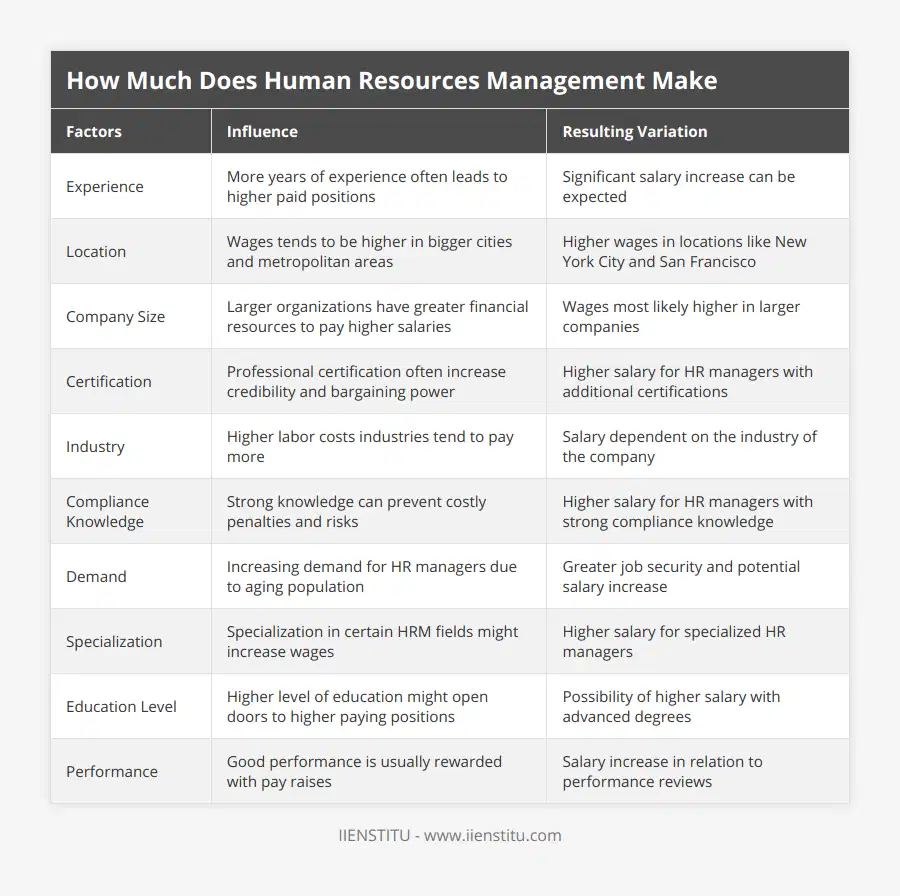
However, salaries can range from $44,000 to $187,199 per year. Several factors influence how much a human resources manager makes. Experience is one of the most important factors when it comes to earning potential in human resources management. Certification can also lead to higher salaries for human resources managers.
Organizational size is another critical factor influencing HRM salary levels. Small organizations typically pay less than large corporations. Location is also a factor. For example, human resources managers in New York City and San Francisco earn more money than those in other parts of the United States.
In conclusion, a number of factors influence how much a human resources manager makes. The most important factors are experience and certification. Organizational size and location are also important factors.
Do you have what it takes to be a successful human resources manager? If so, start planning your career path today!
The mean annual wage of human resources managers in the United States increased steadily from 2013 to 2020. In 2013, the mean annual wage was 111,180 dollars. By 2020, it had increased to 134,580 dollars. The greatest increase occurred between 2017 and 2018, when the mean annual wage rose by 3,190 dollars. Although the rate of growth has slowed in recent years, the mean annual wage of human resources managers is still increasing. This upward trend is expected to continue in the coming years.
Several factors influence how much a human resources manager makes.
Human resources managers are responsible for making sure that employees have what they need, like jobs and benefits. They develop and implement policies, manage employee benefits, and handle payroll and other administrative duties. The average salary for a human resources manager depends on several factors, including the company's size, industry, and location.
In general, human resources managers in larger companies and industries that have higher labor costs earn more than those in smaller companies or less competitive industries. The location also affects salary levels, with managers in larger cities earning more than those in smaller towns or rural areas. With experience, human resources managers can also expect to see their salaries increase.
1. Increased earning potential
A human resources manager who understands the legal and compliance aspects of the industry can earn a lot more money than other human resources managers. Having up-to-date knowledge on compliance guidelines can help a human resources manager create a more effective and efficient workplace.
By understanding the full extent of the law, a human resources manager can help their company avoid costly penalties. In addition, a human resources manager who is well-versed in compliance can help to identify potential risks and implement strategies to mitigate those risks. As a result, a human resources manager with strong compliance knowledge is an invaluable asset to any organization.
2. Greater job security
As our population ages, the demand for human resources managers is expected to grow. The need for greater job security and a more supportive work environment comes with an aging workforce. Human resources managers are uniquely positioned to provide this support. They are responsible for planning, organizing, and directing the activities of an organization's human resources department.
In addition, they play a vital role in developing and implementing policies and procedures related to employee health and safety, benefits, and compensation. The demand for human resources managers will only increase as the aging population continues. The opportunities for career advancement are endless for those with the skills and experience needed to excel in this field.
3. Variety of career paths
Human resources management is a broad field with many different career paths. You can enter the field with a degree in human resources, business, or a related field. Alternatively, you may start your career in a related field such as recruiting, labor relations, or employee development. There are also many ways to specialize in human resources management.
For example, you can focus on talent management, organizational development, compensation, benefits, or another area that interests you. No matter what path you take, you can be sure there will be many opportunities to learn and grow in your career.
4. Interesting and challenging work
Human resources managers are responsible for playing a pivotal role in the successful operation of any organization. As the manager of a human resources department, you will need to oversee different important processes. This includes recruiting and hiring new employees, managing employee benefits and training programs.
This work can be exciting and challenging, providing plenty of opportunities to learn and grow. You will also develop your problem-solving and decision-making skills by managing people and processes. Human resources management may be the perfect fit if you are looking for a challenging and rewarding career.
Experience is one of the most important factors when it comes to earning potential in human resources management.
HR professionals who understand the importance of staying up-to date with all regulations will be able to create a more effective workplace for employees because they know that today's corporate environment can get dangerous without proper guidelines!
As our population ages, the demand for human resources managers is expected to grow. The opportunities for career advancement are endless for those with the skills and experience needed to excel in this field.
Certification can lead to higher salaries for human resources managers.
If you want to make more money, then get a degree in human resources. It's the best way for HR managers with an understanding of legal and compliance aspects within this industry can earn higher salaries than their peers!
HR professionals who understand the latest guidelines and regulations will be able to create a more effective workplace for their employees. They know that in today's corporate environment, litigation is not just costly but also highly dangerous. This makes them cautious and careful when doing it wrong could lead to court cases or even worse- injury!
As our population ages, the demand for human resources managers is expected to grow.
Certification can also lead to higher salaries for human resources managers.
Human resources managers who have a strong understanding of legal and compliance aspects can earn more than others in the industry.
Human resources managers who are certified in today's high-demand field can earn a higher salary than their peers. In addition, being up to date on all of the latest compliance guidelines will benefit an organization by creating an efficient and effective workplace for everyone involved!
As our population ages, the demand for human resources managers is expected to grow. For those with the skills and experience needed to excel in this field, the opportunities for career advancement are endless.
Human resources managers play a critical role in any organization, and their salaries reflect that importance. The average salary for a human resources manager is $104,440, but they can make up to $187,199 per year with the right experience and certification. There are several factors that influence how much a human resources manager makes, but those two are among the most important.
Our human resources course can help you become a human resources manager or advance your career in human resources. With expert instruction and plenty of opportunity for hands-on practice, you will be ready to face any challenges in human resources management.
Frequently Asked Questions
How much money can you make as a human resources manager?
Human resources managers are responsible for the oversight of an organization's HR department. Their duties include developing and implementing policies related to employee benefits, compensation, and training. They also work to ensure compliance with labor laws and regulations. In large organizations, human resources managers may supervise a team of HR specialists. The median annual salary for a human resources manager is $116,720, according to the U.S. Bureau of Labor Statistics. However, salaries can vary depending on factors such as experience, location, and size of the organization. Human resources managers who work in smaller organizations or in rural areas may earn less than those who work in larger organizations or in urban areas. In addition, human resources managers who have more experience or higher levels of education may also earn higher salaries.
What kind of duties would you expect to perform as a human resources manager?
As a human resources manager, you would be responsible for overseeing the HR function for your organization. This would include managing Employee Relations, recruitment and selection, training and development, and compensation and benefits. You would also be responsible for developing and implementing policies and procedures, as well as ensuring compliance with all applicable employment laws. In addition, you would be tasked with developing and maintaining positive relationships with employees, government agencies, and other stakeholders. Ultimately, your goal would be to ensure that your organization has the right mix of talent to meet its business objectives.
What is the most important thing to keep in mind when managing people?
When it comes to managing people, the most important thing to keep in mind is that every individual is different. While there are some basic principles of effective management that apply to everyone, the reality is that each person has their own unique set of needs and motivations. As a manager, it is your responsibility to learn as much as you can about each individual on your team, and to adjust your management style accordingly. By taking the time to get to know your team members and tailoring your approach to fit their needs, you will be in a much better position to achieve success.
Is HR a stressful job and what factors typically contribute to this stress?
HR as a Stressful Job
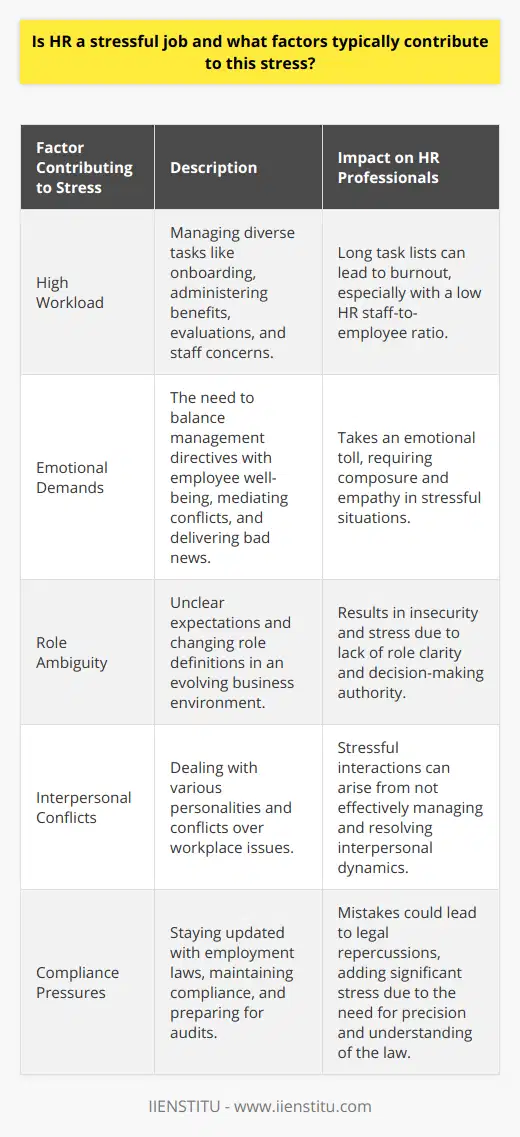
Indeed, Human Resources (HR) can be considered a stressful job due to various factors that typically contribute to the challenges faced by HR practitioners. These factors can be categorized into five predominant areas: high workload, emotional demands, role ambiguity, interpersonal conflicts, and compliance pressures.
High Workload
HR professionals often find themselves overloaded with tasks and responsibilities, such as recruitment, training, employee relations, and payroll management. Coping with these multiple responsibilities, along with meeting deadlines, can lead to increased work-related stress.
Emotional Demands
Dealing with emotional demands is another significant stressor for HR practitioners. They are required to handle sensitive issues such as layoffs, terminations, and interpersonal conflicts between employees, which can be emotionally taxing and induce stress.
Role Ambiguity
HR professionals may encounter role ambiguity due to the evolving nature of their job. With the continuous development of new policies and practices, they may not always possess a clear understanding of their responsibilities, leading to uncertainty and job-related stress.
Interpersonal Conflicts
HR professionals are frequently exposed to interpersonal conflicts. They may face disagreements with management, employees, or other HR team members, which can increase tension and contribute to a stressful work environment.
Compliance Pressures
Lastly, HR professionals experience stress due to the need to comply with various laws, regulations, and internal policies. Navigating complex legal requirements, while ensuring the organization is in compliance, can be both time-consuming and mentally demanding.
In conclusion, HR can be considered a stressful job due to various contributory factors including high workload, emotional demands, role ambiguity, interpersonal conflicts, and compliance pressures. To alleviate stress, it is essential for HR professionals to develop effective strategies that enable them to cope with these challenges, ensuring they maintain their well-being and job performance.
Can one achieve a salary of 100k or more in the field of human resources and, if so, what positions and qualifications are generally required?
Earning Potential in Human Resources
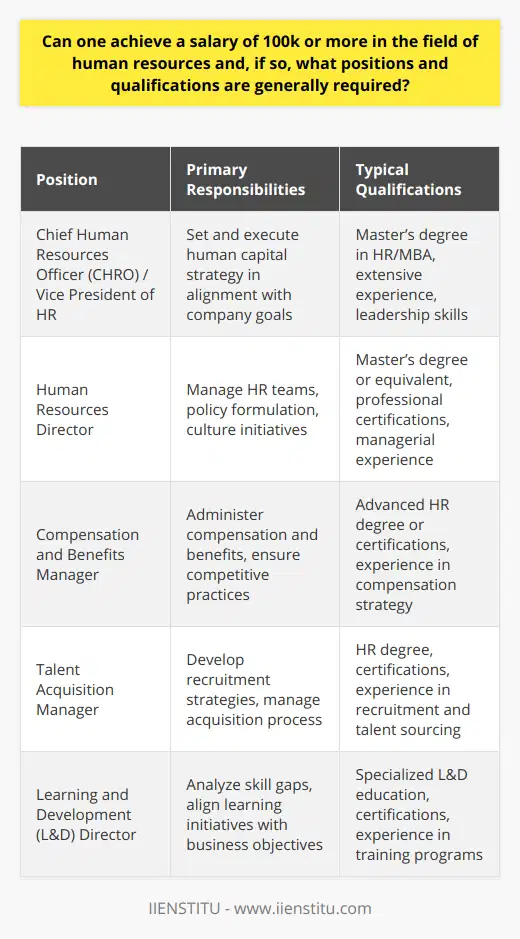
Yes, it is possible to achieve a salary of 100k or more in the field of human resources. Achieving this level of compensation typically requires holding high-level positions and possessing relevant qualifications.
Positions with High Salaries
In general, higher salaries can be found in more senior positions within the human resources field. Some examples of jobs with potential six-figure salaries include:
Human Resources Director: As the highest-ranking HR professional within an organization, these individuals are responsible for overseeing overall HR strategy and ensuring its alignment with company goals.
Compensation and Benefits Manager: These professionals are in charge of the development, implementation, and management of employee compensation and benefits programs.
Talent Acquisition Manager: Responsible for attracting, selecting, and retaining top talent within an organization, these managers play a crucial role in maintaining the human capital necessary for business success.
Organizational Development Manager: These individuals focus on improving organizational performance and effectiveness by designing and implementing strategies for employee and leadership development.
Qualifications for High-Paying Positions
To secure high-paying human resources roles and earn a salary of at least $100,000 per year, applicants should possess specific qualifications that employers find valuable. Key qualifications include:
Education: Most high-paying human resources jobs will require a bachelor's degree in human resources or a related field. In many instances, a master's degree in HR, Business Administration, or Industrial-Organizational Psychology may further bolster one's earning potential.
Professional Certifications: Obtaining industry-recognized certifications such as the SHRM-CP (Society for Human Resource Management Certified Professional) or the PHR (Professional in Human Resources) can demonstrate expertise in human resources best practices and increase opportunities for higher compensation.
Relevant Experience: As with most fields, accrued experience and a demonstrated record of success in human resources positions will strengthen candidates' earning potential. Progressing through the HR ranks over time can lead to higher salaries as one takes on roles with increased complexity and responsibility.
Specialized Expertise: Developing a niche expertise, for example, within HR technology, talent analytics or diversity and inclusion, can create demand for your skill set and lead to more lucrative job offers.
In conclusion, a salary of 100k or more is achievable within the field of human resources for those who assume high-level roles and present the relevant qualifications. Building one's qualifications and experience and strategically targeting key positions will facilitate access to these high-paying opportunities.
In terms of challenges and skill sets, how difficult is it to be an HR manager compared to other management roles?
Challenges Faced by HR Managers
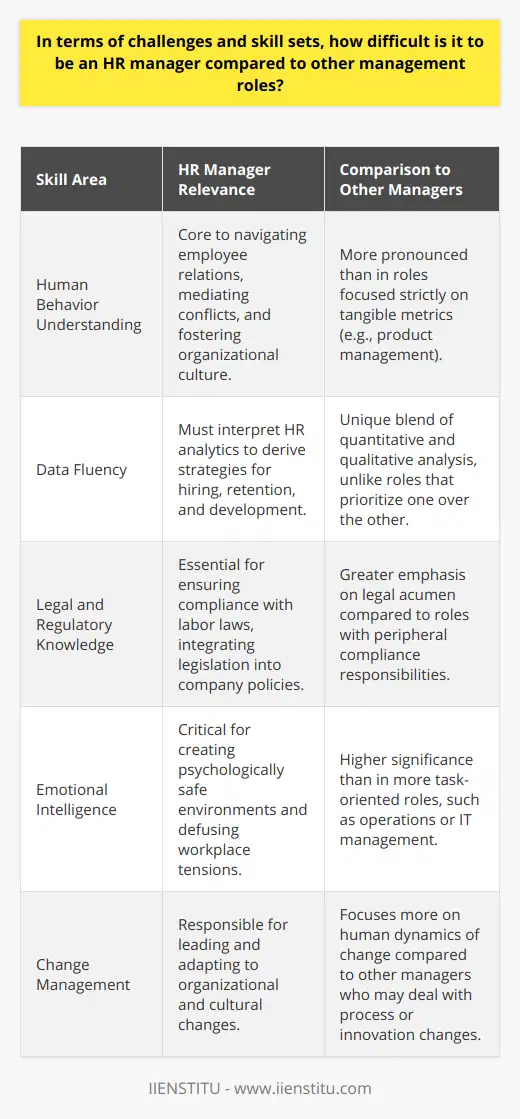
The difficulty level of being an HR manager compared to other management roles can be seen through various challenges and skill sets required for the job. Firstly, HR managers need to deal with diverse interpersonal dynamics, as managing the labor force is their key responsibility. This includes addressing problems related to employee relations, performance management, and talent development. To effectively address such issues, they must develop a deep understanding of human behavior, making it more challenging than other management roles where the primary focus is limited to technical aspects.
Skill Sets Required by HR Managers
Furthermore, HR managers need to be proficient in handling both qualitative and quantitative data. They must possess skills in HR analytics to make effective decisions related to recruitment, retention, and succession planning. This makes their role more challenging than other management positions that primarily deal with only one kind of data. In addition, HR managers must be well-versed in labor laws and compliance, requiring them to stay updated on any legal amendments or newly introduced policies to ensure congruence with organizational practices.
Role of Emotional Intelligence in HR Management
Another challenge lies in the emotional intelligence needed by HR managers. Their ability to empathize and understand the emotions of employees, combined with effective communication skills, is crucial in resolving conflicts and contributing to a productive work environment. This adds a layer of complexity to their job, as other management roles may not emphasize the importance of emotional intelligence to the same degree.
Adaptability and Change Management
The dynamic nature of the HR landscape also makes it difficult for HR managers to navigate. They must continuously adapt to the ever-changing work environment, preparing themselves and their organization for various situations, such as mergers, acquisitions, or changes in cultural norms. Change management is an essential skill for HR managers, whereas in other management roles, the need for adaptability may not be as frequent or significant.
In conclusion, it is evident that the challenges and skill sets faced by HR managers make their role considerably difficult compared to other management positions. Dealing with varied interpersonal dynamics, leveraging both qualitative and quantitative data, staying updated on labor laws, demonstrating emotional intelligence, and managing change are just a few aspects that contribute to the complexity of the HR management role.
What factors influence the earning potential of HR professionals?
Earning Potential Determinants
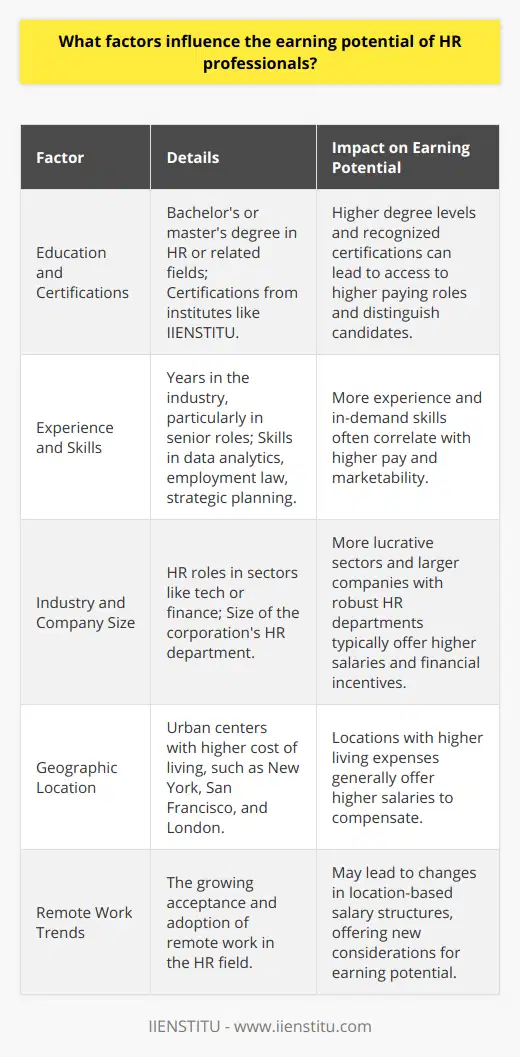
The earning potential of HR professionals is influenced by several factors, including education, experience, industry, company size, and location. Each of these components plays a significant role in determining the compensation potential for HR practitioners in today's competitive job market.
Education and Certifications
The academic qualifications and certifications of HR professionals directly impact their earning capacity. Those who possess advanced degrees in human resources management, industrial-organizational psychology, or a related field are likely to command a higher salary. Likewise, certifications such as the Professional in Human Resources (PHR) or the Senior Professional in Human Resources (SPHR) demonstrate proficiency in the field, further increasing one's earning potential.
Experience and Skills
The amount of experience an individual has in the HR profession also factors into their salary prospects. Seasoned professionals with extensive HR experience can expect higher compensation compared to their less experienced counterparts. Additionally, specific HR skills, such as expertise in compensation and benefits or talent management, can increase earning potential as these skills are highly sought after by employers.
Industry and Company Size
The particular industry and size of the organization employing an HR professional can also impact their earnings. Industries with more significant revenue streams, such as technology or finance, often offer higher salaries to their HR employees. Additionally, large corporations tend to have more extensive HR departments, providing more opportunities for career growth and higher earning potential compared to smaller companies.
Geographic Location
Finally, the geographic location of an HR professional's employment plays a role in determining salary levels. Major metropolitan areas typically boast higher salary ranges due to increased demand for skilled HR practitioners, higher living costs, and a more competitive job market. Conversely, smaller cities or rural areas may have lower earning potential as a result of limited job opportunities and decreased cost of living.
In summary, the earning potential of HR professionals depends on a combination of factors related to education, experience, skills, industry, size of the employing organization, and location. Understanding these determinants can enable HR professionals to make informed decisions about their career development and salary expectations.
How does the level of stress in HR positions compare to other industries?
Overview of Stress in HR Positions
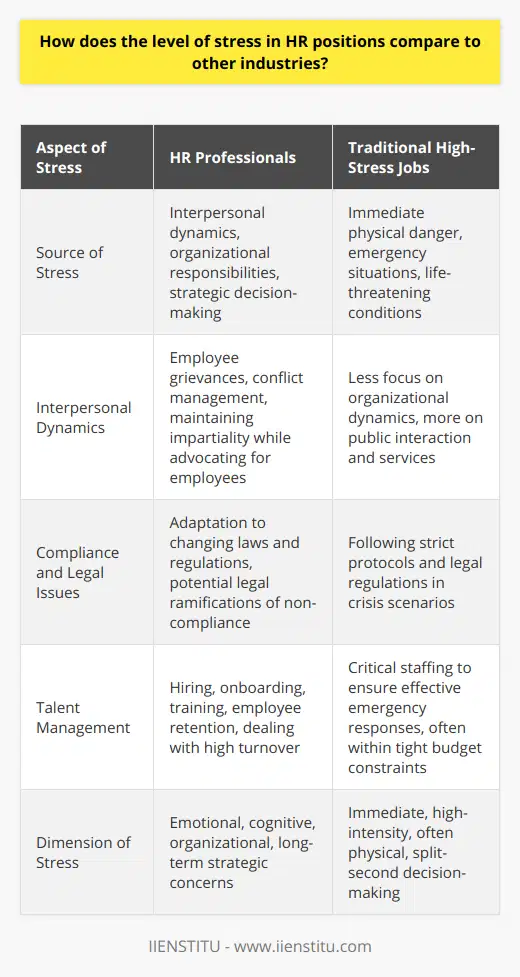
Stress is prevalent in many industries, but research suggests that Human Resources (HR) professionals face unique challenges that contribute to heightened levels of stress compared to other professions. The demands of HR positions vary, necessitating a closer comparison with other industries to gain a comprehensive understanding.
Comparing HR to High-Stress Professions
High-stress professions such as those in healthcare or law enforcement are known for their demanding work environments, long hours, and life-or-death situations. While HR professionals do not grapple with these particular stressors, they confront different issues related to personnel management, conflict resolution, and adherence to legal and ethical guidelines. These factors lead to significant mental and emotional stress uniquely experienced by HR professionals.
Conflict Resolution as a Stressor
HR professionals are often tasked with resolving conflicts between employees, which can lead to amplified stress levels. Navigating tense workplace situations, mediating disputes, and ensuring a harmonious work environment require continual diplomacy and patience, placing a significant emotional burden on HR professionals. This form of stress, specific to HR roles, may not be as prevalent in other industries.
Legal and Ethical Guidelines
Adhering to legal and ethical guidelines is essential for HR professionals, as non-compliance may lead to costly legal consequences for their organizations. HR professionals must be vigilant in staying current on new regulations and adapting their strategies accordingly. This responsibility adds a unique layer of stress to HR roles compared to other industries, where legal and regulatory knowledge may not be as pressing.
Employee Turnover and Retention
Another stressor faced by HR professionals is managing employee turnover and devising strategies for talent retention. The constant need to recruit, onboard, and retain top talent adds to the demands of HR roles, further elevating their stress levels. This challenge may not be as prominent in other industries, where skilled workers are more abundant, and turnover is not a significant threat to organizational success.
In conclusion, while Human Resources positions may not face the same acute stressors as other high-stress professions, they nonetheless confront a unique set of challenges that contribute to elevated stress levels. Conflict resolution, adherence to legal and ethical guidelines, and management of employee turnover and retention are among the primary factors that distinguish the stress experienced by HR professionals from other industries.
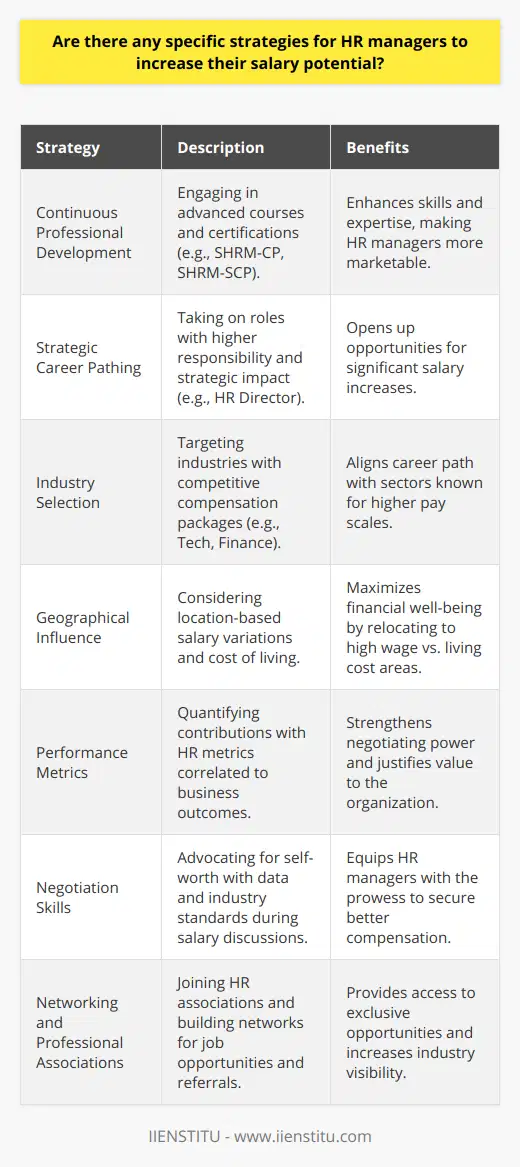
Are there any specific strategies for HR managers to increase their salary potential?
Understanding the Factors Influencing Compensation
To increase salary potential, HR managers must first understand the factors that influence their earnings. These factors typically include education level, years of experience, industry, company size, and geographical location.
Investing in Higher Education and Skills Development
One effective strategy for HR managers to enhance their salary prospects involves investing in higher education and skills development. By obtaining advanced degrees and certifications, such as a Master's in Human Resources or the Professional in Human Resources (PHR) certification, professionals can demonstrate their expertise in the field and command higher salaries.
Gaining Experience and Career Advancement
As with most professions, the salary of an HR manager is directly correlated to years of experience. HR managers seeking higher salaries should focus on gaining quality experience through diversified roles and responsibilities. Joining professional organizations and networking can also provide crucial career advancement opportunities that may translate into increased salary potential.
Choosing High-Demand Industries and Large Companies
HR managers can also increase their salary potential by targeting high-demand industries and large companies. Certain industries, such as technology and healthcare, generally offer higher salaries for HR professionals. Similarly, working for larger companies often translates into higher incomes, as they typically have more resources and larger budgets allocated for HR functions.
Relocating to Areas with Higher Compensation Rates
Finally, considering a relocation to areas with higher compensation rates can be another strategy for HR managers to increase their salary potential. Researching salary data by location, factoring in cost of living differences, and targeting areas known for higher wages can help HR managers maximize their earning potential.