
A young man was determined to get a degree in business, but he knew that it would require a lot of hard work. He went to the local school and signed up for classes, but when he looked at the schedule there were so many courses! His favorite class was Management 101 which had been moved from Wednesday to Tuesday morning. But his other classes conflicted with this change- Marketing 102 on Monday mornings and Finance 103 on Thursday afternoons.
"I can't take these other classes," said the young man as he anxiously tapped away at his phone while trying to decide what to do next."The only way I'll be able to get my degree is if I drop out of school!"
He closed his eyes and imagined graduating from college. But when he opened them again he couldn't get out of bed. He was doomed to fail - all because of a schedule conflict! And if this young man had shut down the entire school in order to resolve a course schedule, it would have been called a strike or sometimes a boycott.
In the above example, the student is refusing to go to class for personal gain while trying on moral high ground by saying that not going will help everyone. In truth, the only person gaining anything from this action is himself. It is never okay to use 'the end justifies the means' as an excuse for bad behavior. The ethical issue at play here is that this young man values his own convenience over the good of the community. He is not living up to his ethical responsibility to do what is best for all people, even if it means making some personal sacrifices. This is a common issue in business, where people often have to make tough decisions that affect other people.
One of the most important things to remember in business ethics is that there is no one right answer - every decision is going to be controversial. What might be okay in one situation could be completely unethical in another. That's why it's so important to think carefully about each decision you make, and to always try to put yourself in the shoes of the people who will be affected by your choices.
Lessons In Business
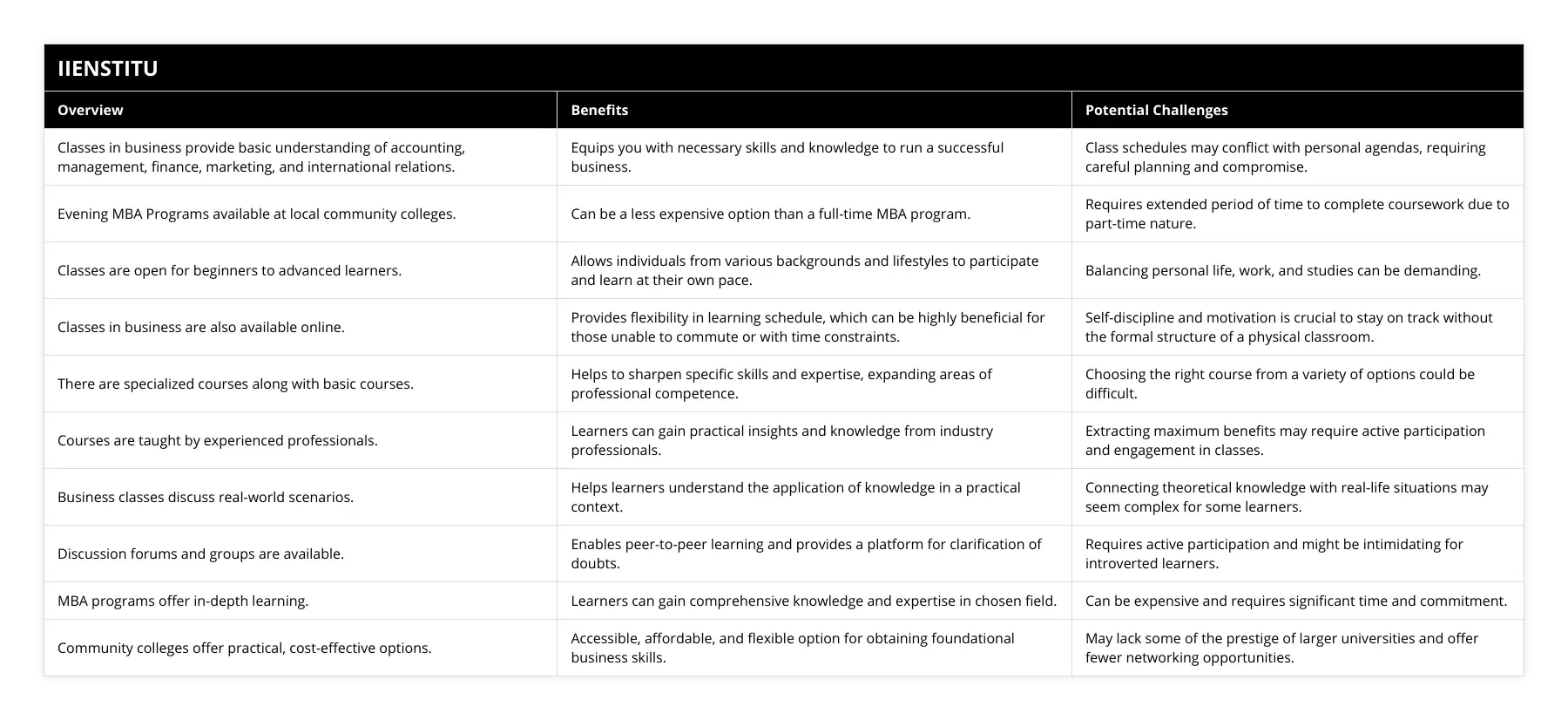
Classes in business are a great way to learn the basics of accounting, management, finance, marketing and international relations. Many people take evening MBA programs at their local community college to learn about the basics of these subjects. Often this will be cheaper than taking an MBA program full-time for two years - but it takes more time to complete the coursework.
If you're looking to start a career in business, or just want to learn more about these important topics, then signing up for some classes is a great idea. You'll get to learn from experienced professionals who can teach you everything you need to know about running a successful business. And once you've completed your classes, you be ready to tackle anything that comes your way.
Business classes are great for both beginners and advanced learners. There's no need to worry about whether you're "smart enough" or did the prerequisites; everyone is welcome, and there are plenty of people with different backgrounds in business who can help you. Classes in business are designed to get students from all kinds of lifestyles involved with the topics that interest them most. It doesn't matter if you have a family or take care of an elderly parent - you'll be able to fit your studies into your busy schedule without problem! From courses about management to marketing seminars, there is something for everyone in these types of classes.
There are classes in business available online as well. This can be a great option if you're unable to attend classes at a physical location, or if you want more flexibility in your learning schedule. You'll be able to access the materials whenever you want, and you can work at your own pace. There are also many discussion forums and groups available online, so you can get help from other students if needed.
Classes In Business: How To Build A Successful Business
If you're looking for classes in business that will give you a strong foundation in the basics, then your best bet is to look for community colleges near you. However, if you're interested in more specialized courses or want to learn from the best professors in the world, then an MBA program might be a better choice. Whichever route you decide to go, make sure you do your research and find a program that fits your needs!
Classes in business are a great way to learn the basics of accounting, management, finance, marketing and international relations. Many people take evening MBA programs at their local community college to learn about the basics of these subjects. Often this will be cheaper than taking an MBA program full-time for two years - but it takes more time to complete the coursework.
If you're looking to start a career in business, or just want to learn more about these important topics, then signing up for some classes is a great idea. You'll get to learn from experienced professionals who can teach everything you need to know about running a successful business. And once you've completed your classes, you'll be ready to tackle anything that comes your way.
Business classes are great for both beginners and advanced learners. There's no need to worry about whether you're "smart enough" or did the prerequisites; everyone is welcome, and there are plenty of people with different backgrounds in business who can help you. Classes in business are designed to get students from all kinds of lifestyles involved with the topics that interest them most. It doesn't matter if you have a family or take care of an elderly parent - you'll be able to fit your studies into your busy schedule without problem! From courses about management to marketing seminars, there is something for everyone in these types of classes .
There are classes in business available online as well. This can be a great option if you're unable to attend classes at a physical location, or if you want more flexibility in your learning schedule. You'll be able to access the materials whenever you want, and you can work at your own pace. There are also many discussion forums and groups available online, so you can get help from other students if needed.
If you're looking for classes in business that will give you a strong foundation in the basics, then your best bet is to look for community colleges near you. However, if you're interested in more specialized courses or want to learn from the best professors in the world, an MBA program might be a better choice. Whichever route you decide to go, make sure you do your research and find a program that fits your needs!
Business classes can help entrepreneurs start their own businesses.
There are many business courses available for college students. Often, these courses are offered as electives, and they cover topics such as accounting, finance, marketing, and management. Students who take these courses often have an easier time starting their own businesses after they graduate. In fact, many successful entrepreneurs attribute their success to the knowledge they gained in business classes.
If you're interested in starting your own business, then it's a good idea to sign up for some business classes. You'll learn everything you need know about how to run a successful company, from accounting to marketing. Taking these classes will also give you a better understanding of the business world and what it's like to run a company. If you have an idea for a new business, then taking some classes can help turn that dream into reality!
There are many online business courses available as well. These courses usually cover a wide variety of topics related to starting and running your own businesses. It's a good way to learn about different aspects of entrepreneurship without paying for expensive college tuition fees. You'll be able to access the materials from anywhere at anytime so long as you have internet access, and there are discussion forums where you can get advice from other students as well as course mentors who can answer any questions you might have.
Business courses for college students are a great way to prepare yourself for the future. You can learn as much or as little as you want, and there's no reason not to sign up! Whether you're looking to start your own business or just gain a better understanding of leadership and management, these classes will help you get there. With so many online options available, all from the comfort of home, it's a great time to learn about business!
Related Course: Leadership Development Course
Courses on how to start a business look at both small-scale operations and large corporations. It teaches how they got started and what they have done wrong along their journey so others don't make those same mistakes.
Business classes at the community college offer an affordable route to learning about business. Often, these classes are general in nature and cover a wide variety of topics related to business. You can find classes on entrepreneurship, accounting, marketing, and more. Community colleges also offer certificate and degree programs in business, so if you're looking to specialize in a particular area, this might be the route for you.
An MBA program at a top university is one of the best ways to learn about business. These programs are designed for working professionals, so you can continue to work while you study. You'll gain an understanding of all aspects of business, from accounting to marketing to strategy. Plus, you'll get to network with other professionals who are interested in or currently working in business. This can be a great way to meet potential clients or collaborators for future business endeavors.
Now that you have learned about different types of business courses, look into all your options and choose which one is best for your goals! Whether you're looking to start a company of your own someday or just want to get ahead at work, learning about business can help you achieve it. You'll be able to do more research if necessary, form ideas on how to run a business, and learn how other companies operate as well. No matter what your reason may be for wanting to take classes in business, there's bound to be something that fits your needs perfectly!
Now that you are growing older, the time is to start thinking about your future. Do not waste time in doing other stuff because soon your parents will be asking you what's next for you after high school. The good thing is that there are several business courses available online which can help you get a job after graduation. These classes are offered by top universities and colleges in the world. Classes include entrepreneurship, how to start a business, etc.
1) Harvard Business School
You can take free courses from one of the best business schools in the world - Harvard Business School . No matter if you could not finish your degree or did not have enough money to pay college fees, these classes will help you get closer to your dream career even without a college degree.
2) Wharton Business School
The University of Pennsylvania's Wharton School of Business is another great place to learn about business. They offer a range of courses, from accounting and finance to entrepreneurship and marketing.
3) Stanford Graduate School of Business
Stanford Graduate School of Business offers online business classes that are open to anyone who wants to learn more about business. The school also has a free online magazine which you can read for more insights into the business world.
4) Community College
Community colleges often offer introductory business courses which can help you get a better understanding of what businesses do and how they operate. These classes are usually shorter in duration but can be just as informative as those offered by top business schools.
5) Coursera
Coursera is another great source of free business classes. You can sign up and learn for free about topics such as managing finances, entrepreneurship, and product management, all from some of the best universities in the world including Stanford University , University of Michigan , and more.
Frequently Asked Questions
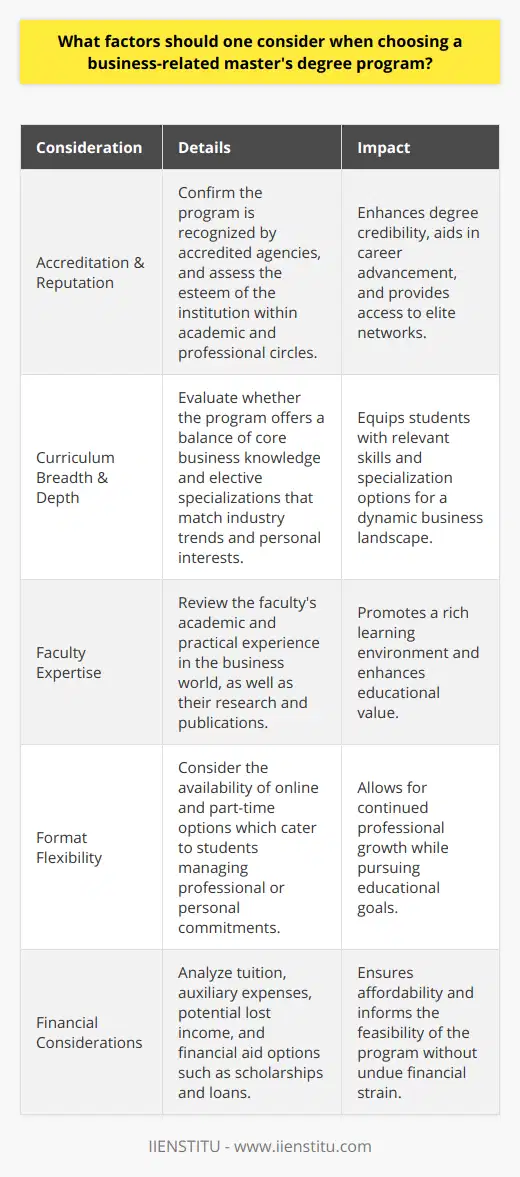
What factors should one consider when choosing a business-related master's degree program?
Accreditation and Institute Reputation
One of the primary factors to consider when choosing a business-related master's degree program is its accreditation status. Accreditation ensures that the program meets the quality standards set by an independent organization. Enrolling in an accredited program also increases your eligibility for financial aid and job opportunities. Other than accreditation, you should also consider the reputation of the institution. A well-regarded school can provide a valuable network, contribute to employability, and enhance your overall educational experience.
Curriculum and Specializations
Another essential factor to assess is the curriculum offered by the degree program. Ensure that the course content aligns with your career objectives and provides up-to-date knowledge in your field of interest. You may compare different programs by researching course offerings, electives, and opportunities for experiential learning. Additionally, consider the specializations available, as they will enable you to focus on specific areas of business, such as finance, marketing, or entrepreneurship. This focused knowledge will be instrumental in advancing your career.
Faculty Expertise and Student Support
The quality and expertise of the faculty play a crucial role in student success. When evaluating a business-related master's degree program, research the faculty's academic qualifications, industry experience, and research focus. Well-qualified professors can offer valuable insights, knowledge, and professional connections. Furthermore, consider the support provided by the institution in terms of academic advising, career counseling, and networking opportunities. A strong support system will significantly contribute to your academic and professional success.
Flexibility and Program Format
For working individuals or those with personal commitments, the flexibility offered by a program is an essential factor to consider. Some institutions offer fully online, blended, or part-time formats, allowing you to balance your work, personal life, and educational pursuits. Assess your availability and choose a program that fits your schedule.
Cost and Financial Aid
Lastly, the cost of the program and the availability of financial aid should also be considered. Tuition, fees, and living expenses can be significant, and it is critical to make a realistic assessment of your financial resources. Research scholarship opportunities, grants, and student loans available to help finance your education. Investing in a business-related master's degree program can lead to long-term career benefits, but financial planning is necessary to ensure its affordability.
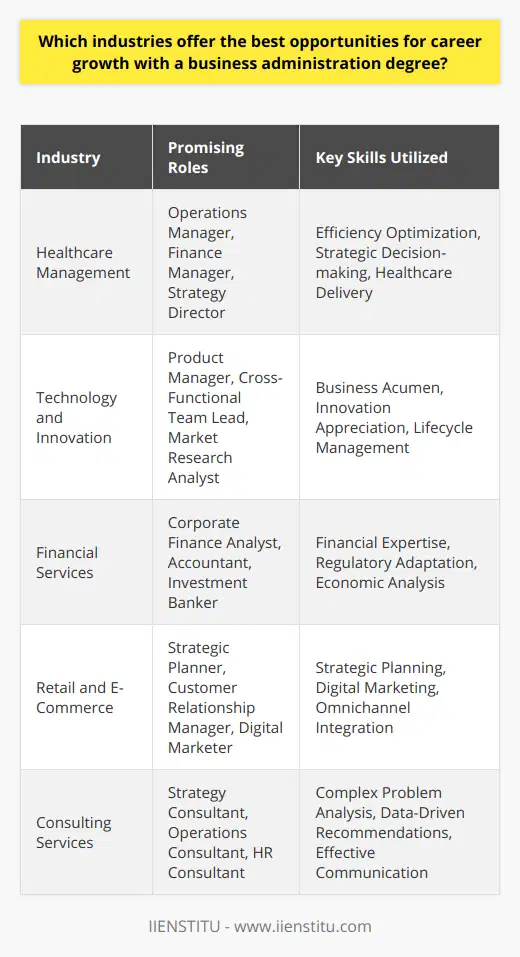
Which industries offer the best opportunities for career growth with a business administration degree?
Career Opportunities in Diverse Industries
A business administration degree can open up a vast array of career opportunities in various industries. One of the top industries offering growth and development is the healthcare sector. With an ever-increasing demand for healthcare professionals, business administrators can find roles in hospital management, healthcare consulting, and pharmaceutical companies.
Technology and Innovation
Another industry where business administrators can thrive is the technology sector, which continually evolves and expands. Roles such as product management, marketing, and operations management are in high demand within this industry. Business administrators can also benefit from lucrative opportunities in emerging fields like artificial intelligence, fintech, and renewable energy.
Finance and Banking
The finance industry remains a popular choice for business administration graduates seeking fast-paced, challenging environments. Opportunities in this sector include investment banking, asset management, risk management, and financial consulting. These roles require a strong understanding of financial markets and sharp analytical skills, allowing graduates to connect their academic knowledge with real-world scenarios.
Retail and E-commerce
With the rapid growth of e-commerce, business administrators can find ample opportunities in retail and e-commerce sectors. They can pursue roles in supply chain management, marketing, logistics, and inventory control. Additionally, the increasing popularity of online shopping platforms offers exciting possibilities in areas like consumer behavior, data analytics, and digital marketing.
Consulting Services
Another industry offering promising career opportunities for business administration graduates is management consulting. This field offers the chance to work with a range of clients across various sectors, providing valuable experience and networking opportunities. As consultants, graduates can play a crucial role in streamlining operations, enhancing profitability, and driving overall business performance.
Conclusion
Overall, a business administration degree provides versatile career options across diverse industries such as healthcare, technology, finance, retail and e-commerce, and consulting services. The wide range of possible roles and sectors allows graduates to find opportunities that align with their interests and long-term career goals, ensuring a successful and fulfilling career path.
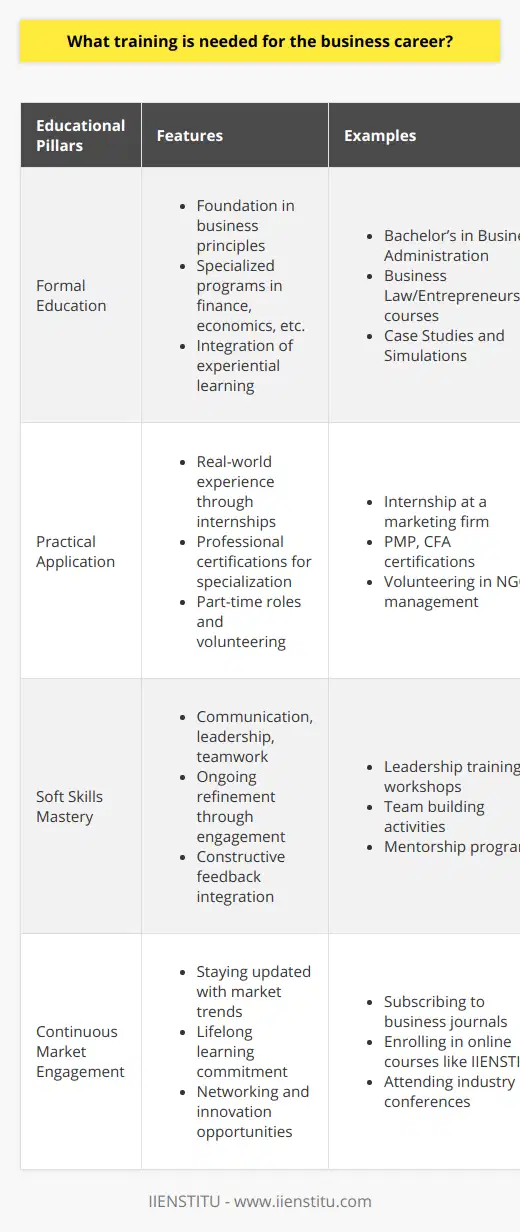
How do transferable skills gained from a business administration degree apply to various job roles in different sectors?
Transferable Skills in the Workplace
A business administration degree equips students with a diverse skill set, preparing them for a wide range of job roles across various sectors. Some of the key transferable skills gained from this degree include critical thinking, communication, leadership, and problem-solving abilities. These skills are essential in today's dynamic business environment and can be applied in various job roles, from marketing and management to finance and customer service.
Critical Thinking and Problem Solving
Graduates with a business administration degree have honed their ability to think critically and solve problems through analytical thinking. This skill is crucial for roles such as finance analysts, consultants, and logistics managers, who must identify patterns, trends, and potential issues, and develop solutions to drive growth and efficiency.
Communication Skills
Strong communication abilities are indispensable in any job role, and business administration graduates possess both written and verbal communication skills. In positions such as sales representatives, client services managers, and public relations specialists, these skills enable professionals to effectively convey messages, negotiate terms, and cultivate relationships, fostering success in their respective fields.
Teamwork and Collaboration
The ability to work well in a team is crucial to success in any sector, and business administration graduates are proficient at collaborating with colleagues and clients alike. In project management, human resources, and customer service, these teamwork skills help ensure smooth operations and a harmonious work environment.
Leadership and Management Abilities
In addition to strong teamwork skills, business administration graduates are often expected to assume a leadership role in their chosen field. Positions such as marketing managers, finance executives, and operations directors require individuals to guide teams, making informed decisions and executing company goals. Their education in business principles and management strategies enables them to effectively lead diverse groups of professionals.
Adaptability and Innovation
Lastly, the fast-paced and evolving nature of industries today demands professionals who can adapt and innovate. Business administration graduates have been exposed to diverse challenges and processes, developing their resilience and creativity. This adaptability is vital in embracing new technologies and practices, positioning organizations to thrive in a competitive landscape.
In conclusion, a business administration degree offers a versatile skill set that can be effectively applied across various job roles in numerous sectors. These transferable skills, which include critical thinking, communication, leadership, and problem-solving abilities, enable graduates to excel in their chosen fields and contribute significantly to the success of their organizations.
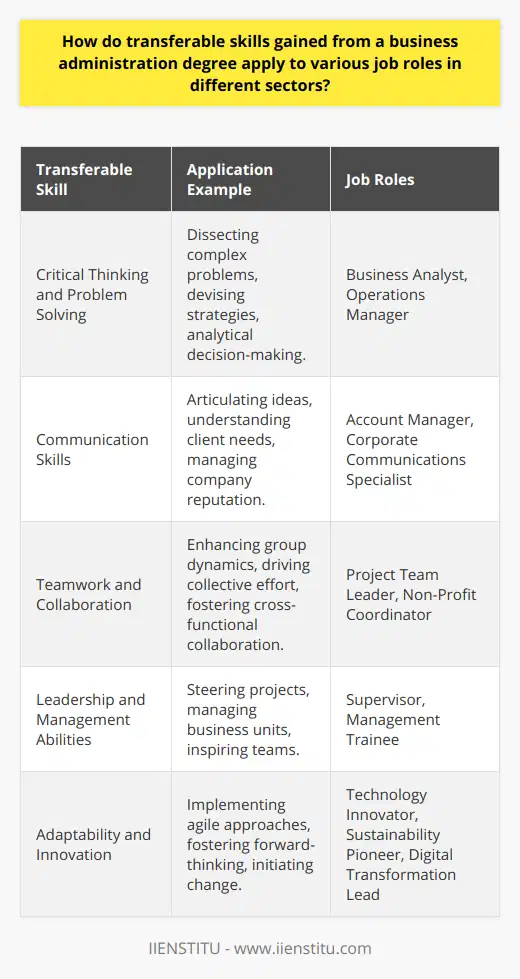
What do business students do after graduation?
Post-Graduation Options for Business Students
Career Opportunities in Various Industries
Upon graduation, business students explore diverse fields and industries depending on their individual interests and acquired skill sets. Some popular sectors for business graduates include finance, marketing, human resources, and consulting.
Pursuing Higher Education
A significant number of business students choose to pursue higher education for specialization or career advancement. They opt for master's degrees, such as an MBA (Master of Business Administration), or focus on a specific discipline, such as finance, marketing, or human resources.
Entrepreneurship and Startups
Business students often possess an entrepreneurial spirit, leading many to establish their own businesses or join startups. Building a company or contributing to a young organization enables them to apply the knowledge and skills they acquired during their studies.
Nonprofit and Social Impact Work
Some business graduates are attracted to nonprofit organizations and social enterprises, where they can utilize their skills to create positive impacts in local or global communities. Roles in this sector may involve project management, fundraising, or program development.
Technology and Innovation
Business graduates with a passion for technology may explore job opportunities in tech firms, e-commerce, or digitally-focused roles within traditional industries. As innovation continues to drive the modern business landscape, these graduates can remain at the forefront of change.
International Careers
Many business students aspire to work in international environments or global corporations. Their business education often equips them with valuable cross-cultural communication skills and an understanding of international operations, making them ideal candidates for multinational companies.
Network Expansion and Professional Development
Regardless of their chosen career paths, business graduates are always encouraged to invest in networking and continuous professional development. Joining professional associations, attending conferences, and participating in workshops can help them stay current in their fields and create valuable connections.
In conclusion, business students typically have various career options after graduation, spanning multiple industries and roles. They can pursue higher education, start their businesses, join startups, work for nonprofits, focus on technology or international careers, or invest in professional development to continuously evolve in their professions.
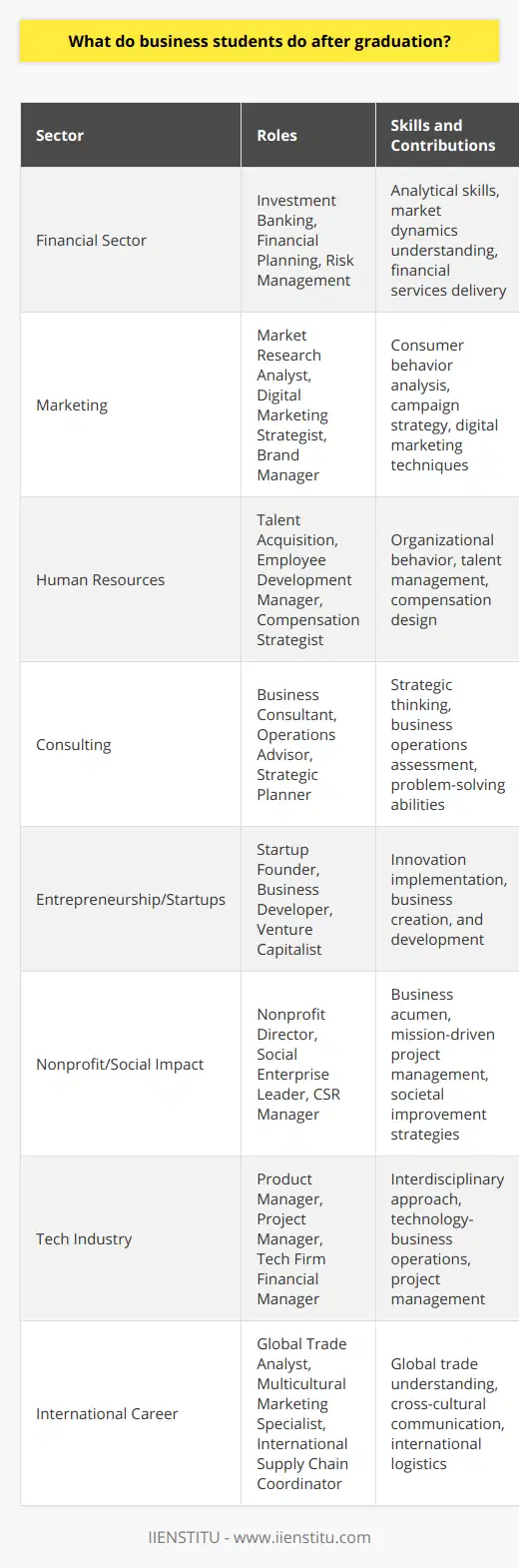
Where do most business graduates work?
Industry Distribution
Upon receiving their degrees, the majority of business graduates find employment in a wide range of industries. The most common industries where these graduates work include finance and insurance, consulting, marketing and communications, and technology companies.
Finance and Insurance Sector
Business graduates frequently enter the finance and insurance sector, which offers various job opportunities such as financial analysts, risk managers, insurance adjusters, and underwriters. This industry requires strong analytical and problem-solving skills, making it a fitting choice for graduates with a business background.
Consulting Sector
Consulting is another industry where many business graduates find employment, providing services to organizations seeking external advice and expertise to improve their business operations and strategy. Graduates working in consulting utilize their knowledge and understanding of business processes, helping companies identify and solve problems, become more efficient, and achieve growth.
Marketing and Communications
A significant number of business graduates find positions in marketing and communications, where they create and implement strategies to promote and sell products or services. These graduates may work as marketing managers, social media strategists, or public relations specialists, using their skills to communicate a company's message effectively and contribute to its growth.
Technology Companies
Lastly, technology companies have increasingly become a popular destination for business graduates. As technology continues to evolve and disrupt traditional industries, these graduates are valuable assets to companies seeking to enhance their competitiveness and innovate. Business graduates can work in various roles at technology firms, such as product managers, business analysts, and project managers.
In conclusion, most business graduates find employment in finance and insurance, consulting, marketing and communications, and technology companies. These industries offer diverse career opportunities for business graduates, allowing them to utilize their skills and knowledge in solving problems, driving growth, and adapting to a rapidly changing business landscape.
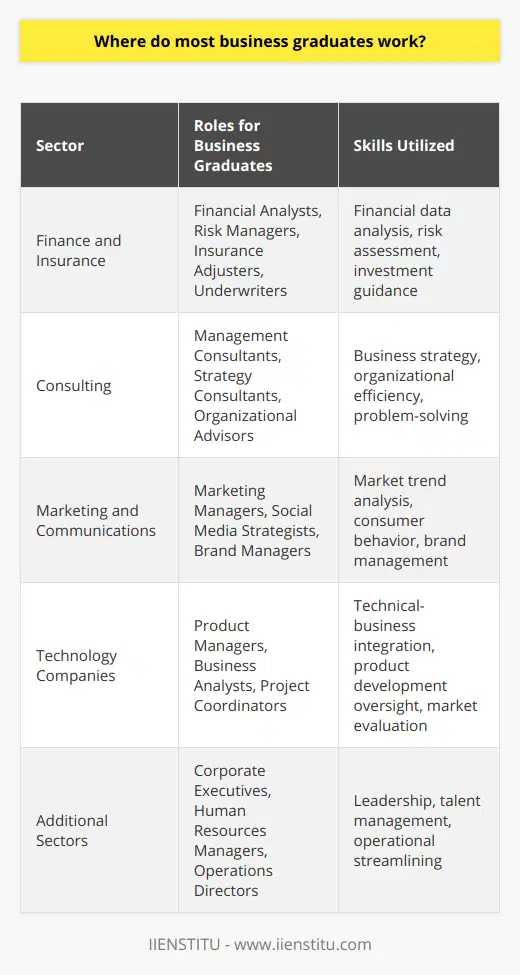
What training is needed for the business career?
Training Requirements in Business
To thrive in a business career, individuals should prioritize acquiring both technical and soft skills through a range of formal and informal education pathways. A strong foundation can be achieved with a bachelor's degree in business administration or a related field such as finance, marketing, or economics. Degree programs provide students with knowledge of business principles, strategies, and best practices, while also incorporating opportunities for internships, projects, and case studies that simulate real-world situations.
Developing Practical Skills
In addition to formal education, practical skills and experience are essential for career advancement in the business world. The application of theoretical knowledge in real-life situations can be acquired through internships, part-time jobs, or volunteering opportunities in organizations that align with one's career goals. Additionally, obtaining professional certifications, such as the Project Management Professional (PMP) or Chartered Financial Analyst (CFA), can further enhance one's business acumen and credibility in the industry.
Cultivating Soft Skills
Developing soft skills is equally significant in shaping a successful business profile. Communication, leadership, and teamwork are crucial when working with diverse groups of people in the industry. Moreover, the ability to adapt to changing environments, problem-solving, and decision-making skills contribute to achieving success in the business landscape. Acquiring these skills requires consistent practice, self-reflection, and an openness to learn from experiences and feedback.
Industry and Market Awareness
Aspiring business professionals should also be well-versed in current industry and market trends. Regularly reading business publications, attending conferences and workshops, and even engaging in online courses can provide valuable knowledge about the latest developments and strategies in the field. These opportunities allow individuals to develop a comprehensive understanding of their chosen sector, expand their network, and stay competitive in the dynamic business landscape.
In conclusion, a combination of formal education, practical experience, soft skills development, and industry awareness will equip individuals with the necessary training to embark on a successful business career. Continuing to acquire knowledge and skills throughout their career will further enhance their professional profile and open up new opportunities for growth and success in the business world.
Which business degree has the most job opportunities?
Business Degree with Most Job Opportunities
In the contemporary employment landscape, pursuing a business degree with the most job opportunities is a wise decision for potential students aiming for a successful career. Among the various business degrees available, a Bachelor of Business Administration (BBA) stands out as the most versatile and promising in terms of job prospects.
Diverse Specializations in BBA
One of the significant reasons behind the high employability of BBA graduates is the diverse range of specializations offered within the degree, such as marketing, finance, human resources, and supply chain management. These specializations cater to various industries, allowing graduates to have a more extensive selection of career paths.
Applicable Skillset
BBA programs equip students with a comprehensive understanding of business management principles, which in turn develop a crucial skillset that is transferable and relevant across numerous employment sectors. These skills include critical thinking, problem-solving, effective communication, and teamwork, which are highly valued by employers.
Employment in Various Industries
Graduates with a BBA degree have the advantage of pursuing careers in various industries, ranging from finance and consulting to technology and healthcare. This flexibility enables them to adapt to shifting market demands and enhances their employability.
Higher Earning Potential
A BBA degree can also lead to lucrative career opportunities with a higher earning potential. According to the U.S. Bureau of Labor Statistics, the median annual wage for business and financial occupations was $69,820 in May 2019, significantly higher than the typical median wage for all occupations.
Conclusion
Based on the diverse specializations, applicable skillset, vast employment opportunities in different industries, and higher earning potential, the Bachelor of Business Administration emerges as the business degree with the most job opportunities. BBA graduates not only exhibit versatility in their career paths but also have a strong foundation in business principles, setting them up for a fruitful and prosperous professional journey.
Are business degrees worth it in terms of return on investment and long-term career prospects?
Evaluating the Return on Investment
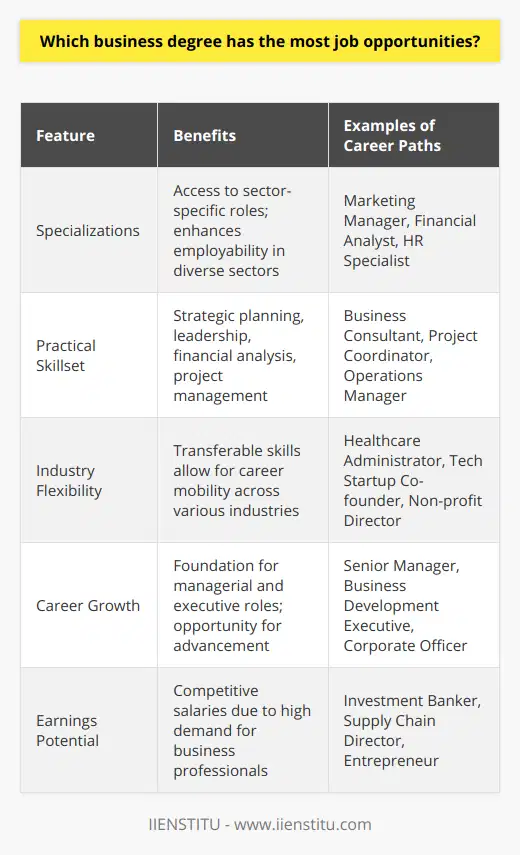
When considering the worthiness of obtaining a business degree, the return on investment (ROI) is an essential factor to assess. The ROI for a business degree is determined by measuring the increased income and career advancement potential against the cost of obtaining the degree. Research shows that business degree holders, particularly those with a Master's in Business Administration (MBA), enjoy significant income growth and expanded career opportunities over time. Furthermore, the lifetime earnings of MBA graduates are notably higher than those of individuals holding only a bachelor's degree.
Long-term Career Prospects
In addition to financial ROI, long-term career prospects play an essential role in determining the value of a business degree. Obtaining a degree in business provides a solid foundation for various career paths, including management, marketing, finance, and entrepreneurship. This versatility increases many business graduates' employability, enabling them to secure high-paying positions and progress in their careers rapidly. Additionally, business degrees are recognized globally, which allows graduates to seek better job opportunities across different markets and industries.
Impact of Networking Opportunities
A less tangible but critical aspect of valuing a business degree is the significance of networking opportunities. Business schools often place great emphasis on creating diverse and well-connected networks for their students, including alumni, professors, and industry professionals. These relationships can be instrumental in securing job offers, internships, and invaluable business connections to propel one's career, thereby positively affecting ROI and career prospects. Acquiring a business degree from a reputable institution often opens doors to an extensive network, potentially improving an individual's social capital and professional opportunities.
Career Adaptability in a Changing World
A business degree's worth must also be assessed in the context of career adaptability and flexibility in an ever-changing global economy. In times of economic turmoil, business graduates have demonstrated a higher likelihood of maintaining employment or successfully pivoting to alternative industries due to their comprehensive skills and education. A business degree provides transferrable skills such as critical thinking, communication, and problem-solving that make graduates highly adaptable to various work environments and job demands. This adaptability ensures long-term employability and strengthens an individual's career prospects.
In conclusion, considering the various factors of return on investment, long-term career prospects, networking opportunities, and career adaptability, obtaining a business degree is a worthwhile choice. Business degrees provide individuals with a broad skillset, global recognition, and access to professional networks, which can lead to increased earnings, job stability, and career advancement over time. As a result, business degrees are valuable investments in one's future, both financially and professionally.
How can one optimize their business education to ensure success in a constantly evolving job market?
Embracing Flexibility and Adaptability
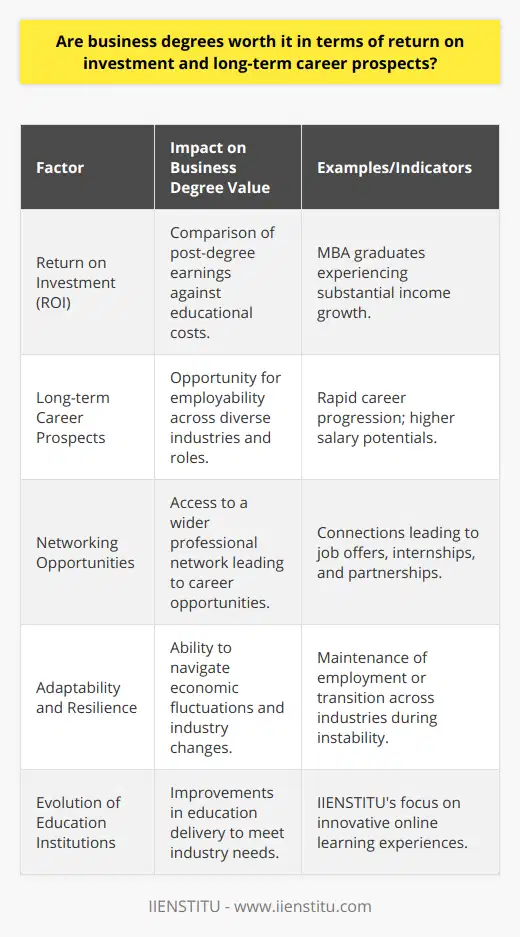
To optimize one's business education and ensure success in a constantly evolving job market, it is crucial for individuals to embrace flexibility and adaptability. This involves developing the ability to learn new skills, adjust one's thinking patterns, and stay current with industry trends.
Expanding Skill Set
Engaging in continuous professional development helps to expand one's skill set, making them a more attractive candidate for various job opportunities. This can be done by attending workshops, participating in online courses, or pursuing further academic qualifications. It is essential for individuals to identify the skills most relevant to their industry and focus on developing those competencies.
Developing an Entrepreneurial Mindset
Cultivating an entrepreneurial mindset is another critical component of optimizing business education. This mindset promotes innovation, problem-solving, and resilience, which are valuable in navigating the ever-changing corporate world. Individuals can develop this mindset by actively engaging in networking events, participating in business competitions, or joining entrepreneurial clubs.
Emphasizing Interpersonal Skills
Fostering strong interpersonal skills is an essential aspect of success in today's job market. Effective communication, collaboration, and emotional intelligence are vital in building strong professional relationships and navigating challenges. These skills can be developed through work experiences, group projects, and participation in clubs or organizations.
Staying Current with Industry Trends
Lastly, individuals need to stay current with industry trends and market developments to maintain a competitive advantage in the job market. Subscribing to relevant publications, following industry experts on social platforms, or attending conferences are effective ways to monitor these trends. Furthermore, joining industry-specific professional organizations can facilitate networking, gaining knowledge, and staying abreast of potential opportunities.
In conclusion, to optimize one's business education, one must focus on developing flexibility, expanding their skill set, cultivating an entrepreneurial mindset, emphasizing interpersonal skills, and staying current with industry trends. This multi-faceted approach will ensure success in a constantly evolving job market and increase an individual's career prospects.
What are the essential skills and qualities required for a successful business career?
Analytical and Decision-Making Skills
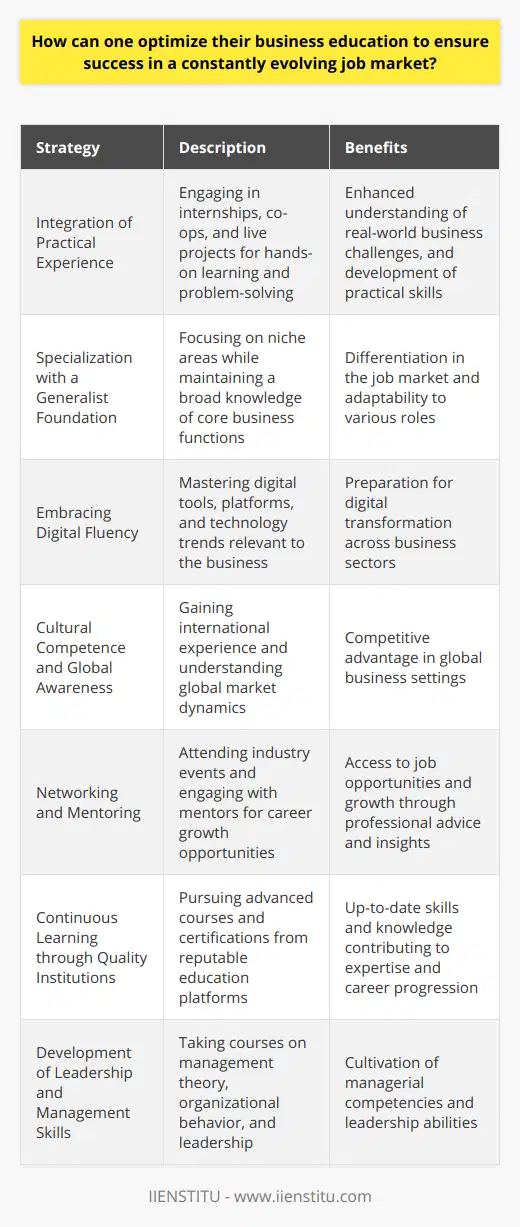
Success in business requires exceptional analytical skills. These skills involve comprehending and evaluating complex information. Concurrently, professionals need sharp decision-making abilities. These allow them to make informed choices that benefit their company.
Leadership and Management Skills
A business career also demands strong leadership and management skills. Individuals must inspire and influence their employees. They must manage projects effectively and efficiently while leading their teams.
Communication Skills
Effective communication skills constitute another vital aspect of a successful business career. These include verbal, written, and non-verbal communication. Professionals should clearly express their thoughts, and ideas. Their clarity fosters understanding and healthy relationships.
Adaptability
Adaptability is an essential quality in today's dynamic business world. Professionals should embrace new systems and technologies. They should adapt to changes quickly to stay competitive.
Creativity and Innovation
Creativity and innovation are important for a thriving business career. These qualities help professionals come up with unique ideas and solutions. They contribute to the company's differentiation strategy, aiding competitive advantage.
Ethics and Integrity
Lastly, a successful business professional demonstrates high ethics and integrity. They treat clients and colleagues with respect. They conduct business dealings honestly and stay transparent. These qualities build trust and enhance the company's reputation.
In conclusion, a successful business career depends on a combination of skills and qualities. These range from analytical to creative abilities, with ethical conduct tying everything together. Cultivating these skills and qualities is, therefore, crucial for anyone aspiring to thrive in the business environment.
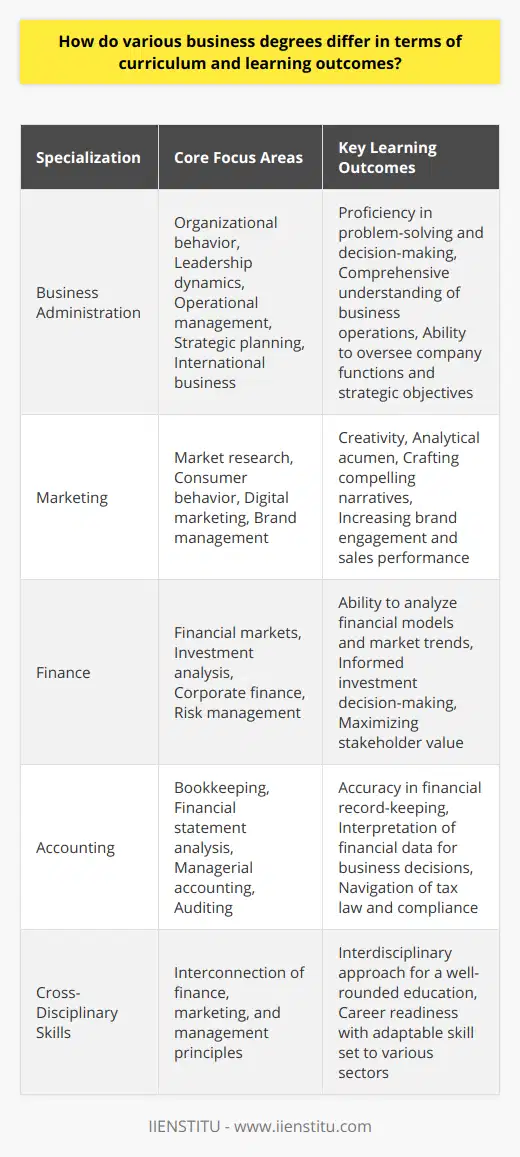
How do various business degrees differ in terms of curriculum and learning outcomes?
Business Degrees: Core Curriculum
Various business degrees often share a common core curriculum. Fields such as Business Administration, Marketing, Finance, and Accounting typically require basic coursework in areas such as economics, calculus, and business law. However, there's divergence when it comes to specialized studies.
Specializations: Focal Point of Study
Business Administration degrees provide an overarching view of business operations, focusing on areas such as human resources, project management, and strategic planning. The goal is to equip students with broad knowledge for managing resources and policies in a business context.
Marketing Degrees: Consumer Engagement
In contrast, a Marketing degree emphasizes consumer behavior, advertising, public relations, and sales strategies. The core learning outcome is to equip students in designing and implementing effective marketing campaigns.
Finance Degrees: Capital Management
A Finance degree is nuanced towards capital management, financial planning, and investment strategies. The curriculum offers detailed insights into financial instruments, banking systems, and economic forecasting. The aim is to enable students to manage wealth and make investment decisions.
Accounting Degrees: Financial Literacy
Accounting degrees focus predominantly on financial recording and reporting, taxation laws, and audit processes. This curriculum aims to foster a deep understanding of financial documents and their implications for decision making within the business world.
Conclusion: Curriculum Influence on Learning Outcomes
In conclusion, the specifics of the curriculum in each business degree influence their learning outcomes. While all prepare students for the world of business, each focuses on different skillsets — broad business strategies, engaging consumers, managing finances, or maintaining financial records. Therefore, the degree one chooses should align with their desired career path and interests.
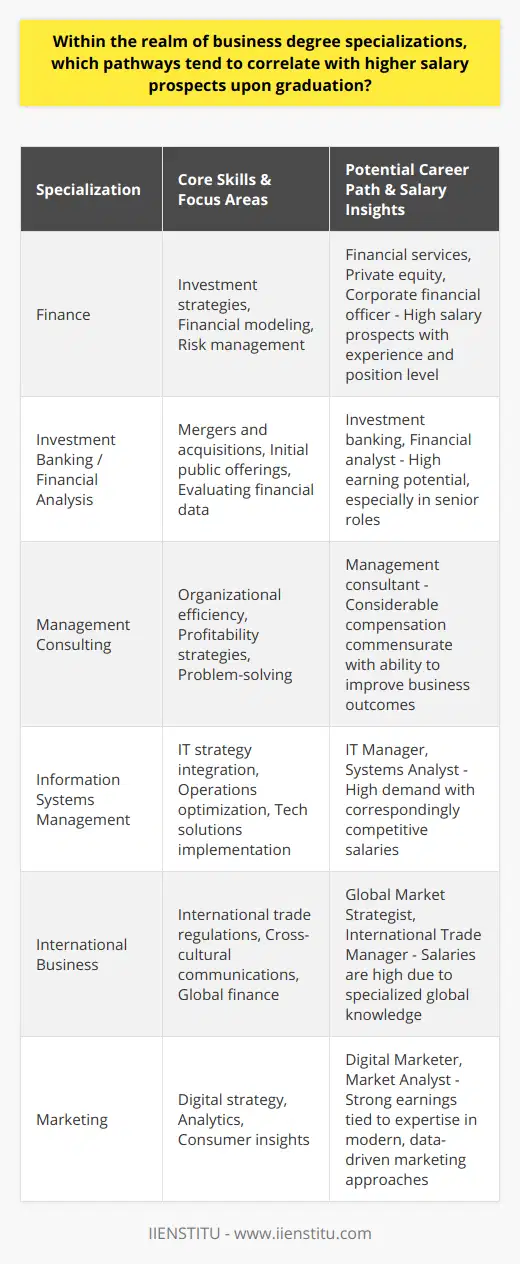
Within the realm of business degree specializations, which pathways tend to correlate with higher salary prospects upon graduation?
Business Degree Specializations and Salary Prospects
Among the various business degree specializations, a few stand out for leading to higher salary prospects upon graduation.
Finance Specialization
A finance specialization typically paves the way for high-paying roles. Understanding investments, financial planning, and market analysis allows finance graduates to secure lucrative jobs in banking and corporate finance.
Investment Banking and Financial Analysis
Choosing investment banking or financial analysis as a concentration within finance can lead to even higher earnings. These specializations connect the theoretical world of finance to the practical world of corporate decision-making, creating a highly sought-after skill set.
Management Consulting
Another specialization that often correlates with high salaries is management consulting. In this field, graduates use their strategic and analytical skills to solve complex business problems, earning substantial incomes in return.
Information Systems Management
In the digital age, information systems management is now another pathway to a high salary. These professionals bridge the gap between technology and business, ensuring efficient and optimal use of information technology in achieving business objectives.
International Business
For those with a global mindset, international business is a promising specialization. Graduates can expect high salaries on account of their ability to navigate complex, multicultural landscapes in a business context.
Marketing
Lastly, in the era of big data and digital marketing, a specialization in marketing has gained relevance. Professionals with deep understanding of consumer behavior and strategic marketing concepts often earn above-average salaries.
In conclusion, the specializations within a business degree that often correlate with higher salaries include finance, investment banking, financial analysis, management consulting, information systems management, international business, and marketing. These fields offer graduates the skills and knowledge necessary to excel in today's competitive business world.