

Why Should We Take Free Online Courses?

Sezin GökSezin Gök
Updated:
11 min read
Why Should We Take Free Online Courses?
Loading...

Many people are intimidated about the thought of taking free online courses. But there are plenty of benefits to doing so, especially if you're working on your career or looking for ways to better yourself! 

For one, these classes can help boost your skills in a certain profession or trade. They also benefit you by adding to your resume and opening doors of opportunity for future jobs. Even if that doesn't happen, they are still an excellent learning resource that will help you grow as a professional. 

Free online courses offer something for everyone who's willing to learn - no matter what the subject is. Unlike classroom courses where students have set schedules and curriculums, it's up to you how much time you dedicate to watching lectures and doing readings for online courses. This type of freedom can be a great way to learn new things without the pressure of grades or having to attend class every day. 

So if you're looking for a way to improve your skills, get ahead in your career, or just learn something new, free online courses are definitely worth considering! And the best part is, most of them are absolutely free! So what are you waiting for? Start learning at IIENSTITU now!

Summarize

1. How can free online courses help our careers?

2. There are many free online courses available

3. You can take these courses at your own pace and on your schedule

4. These classes offer the same quality as their campus-based counterparts 

5. Taking a course will help you learn about something new or develop skills that you didn't know you had 

6. Free online courses allow for more time to focus on other aspects of life, such as work, family, and friends

How can free online courses help our careers?

By taking free online courses, we can improve our skills and knowledge in various areas. These classes also offer us opportunities for future jobs and can help us  grow as professionals.

Many people are hesitant to take free online courses because they believe that it's useless or that there would be no benefit, but the truth is that these classes have a lot of benefits to offer! One of them being that you can learn whatever you want - you don't have to follow any curriculums or schedules. This freedom can be beneficial because not only will you have fun learning new things, but it'll also help give you more time for your personal life and other activities. 


Free online courses are simply amazing because they're very flexible and open up opportunities for everyone who wants to learn something new. These classes are perfect for those who seek an education outside the classroom or want to improve their logic skills. This type of course is also great for people who want to gain new skills and knowledge in a certain trade or profession. And if that's not enough, online courses are an excellent way to improve your resume! 

In conclusion, free online courses have plenty of benefits that everyone should consider. So what are you waiting for? Start taking some classes now! And don't forget to tell your friends about it! They'll be grateful that you did. 

There are many free online courses available

You can find free online courses on just about any topic you can think of. Whether you're interested in learning a new language, taking a course in business or finance, or studying history and social studies, there's likely an online course that can accommodate your needs.

One of the great things about taking online courses is that you can do so at your own pace. If you have a busy schedule, you can take modules or lessons one at a time to fit into your day. Alternatively, if you have more time on your hands, you can complete the entire course in a shorter amount of time.

Another advantage of online courses is that they're affordable. In most cases, there's no charge to sign up for and take these courses. And, if you're interested in obtaining a certification or degree after completing a course, many institutions accept online courses for credit.

If you're looking for a way to learn new things or improve your skills, check out the free online courses that are available. You're sure to find one that's a good fit for you.

You can take these courses at your own pace and on your schedule

This is great news for people who want to continue their education while working full-time or taking care of their families. You can now study on your own schedule, without having to worry about being away from class for too long or feeling overwhelmed by tough course material. Plus, you can take these courses at your own pace, meaning you can move through the material at a pace that works best for you. This is a huge advantage over traditional classroom settings, where you're often forced to move at a pace set by the professor.


So if you're looking for an easy way to get ahead in your career or further your education, online courses are definitely the way to go. And with so many different courses available, there's something for everyone.

These classes offer the same quality as their campus-based counterparts

The quality of an online course is equal to or better than the average campus-based course. Instructors must meet the same high standards as they would in a physical classroom, and many times they have more flexibility in terms of what they can teach. The use of multimedia tools, discussion boards, chat rooms, and other technology allows students to get more out of the class material than they would if they were attending a face-to-face lecture.

Some people may feel that online courses are not as personal as traditional in-person classes; however, this is not the case if students take advantage of all the social media tools that are available to them. In addition, online courses provide opportunities for one-on-one interaction with the instructor through email and virtual office hours. 

The bottom line is that online courses offer the same quality as their campus-based counterparts, but with more flexibility and convenience for the student. With so many advantages, it's no wonder that this type of education is growing in popularity every day.

Taking a course will help you learn about something new or develop skills that you didn't know you had

When it comes to online courses, there are plenty of things that you can learn about and develop skills that you didn't know you had. For example, I took an IELTS course through IIENSTITU because it looked interesting and would be perfect for me! The instructor was engaging; he made fun of himself which kept us laughing throughout class- even when questions stuff got tricky (which happened often). Plus there were really benefits things included in each lecture as extra material so we could all relate better together. In the end, I not only learned a lot about programming but also developed problem-solving skills and critical thinking abilities that I never knew I had.

So if you're looking to learn something new or  discover new skills, you should look into taking an online course. There are plenty of options out there; all you have to do is find the one that's right for you. I think IIENSTITU good choice for you.

Free online courses allow for more time to focus on other aspects of life, such as work, family, and friends

Online courses offer a time-saving and cost effective alternative to traditional education. The benefits of taking free online courses are that they allow you more freedom in life while maintaining your work schedule, family obligations or other social commitments without having any need for additional funding from parents who may not be able afford it themselves!

For example, if you work full-time, have children, and want to continue your education, online courses are a perfect fit for you. With so many different types of courses available, you can find one that fits your needs and busy lifestyle. In addition, most online courses are now offered free of charge! So there is no need to worry about how you will pay for them.

Another great benefit of online courses is that you can study anytime, anywhere. Many popular online courses are offered on sites like IIENSTITU that allow students to access the course materials from any computer with an internet connection. You can then complete quizzes or exams when it is most convenient for you!

Online courses also offer more flexibility than in-classroom settings. When taking online courses, there really aren't any strict schedules to follow since you work at your own pace. The only time requirement is when final examinations take place in order to receive a grade for the course. This allows you to fit studying into your daily routine without too much disruption in your daily life.

Since many online courses are free of charge, this makes earning a college degree more affordable for students. In addition, many employers are now recognizing the value of online courses and are providing employees with tuition reimbursement for taking these types of courses. So if you are looking to improve your career prospects, online courses can be a great way to do this!

So if you are looking for a cost effective and flexible way to continue your education, online courses should be at the top of your list! With so many different types of courses available, you are sure to find one that fits your needs and busy lifestyle. And best of all, most online courses are now offered free of charge! So there is no need to worry about how you will pay for them. Start improving your life today by signing up for an online course!
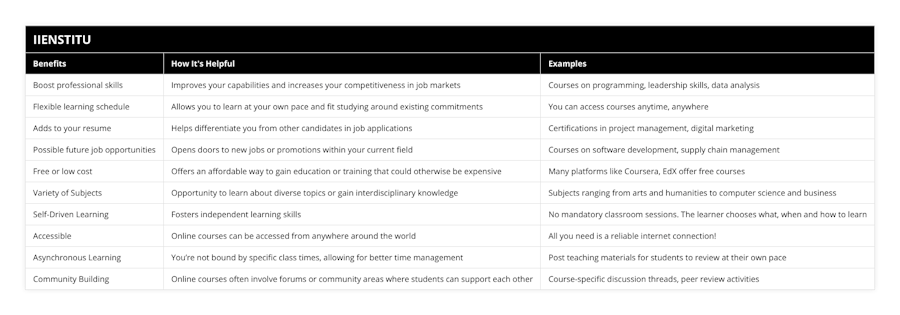
Boost professional skills, Improves your capabilities and increases your competitiveness in job markets, Courses on programming, leadership skills, data analysis, Flexible learning schedule, Allows you to learn at your own pace and fit studying around existing commitments, You can access courses anytime, anywhere, Adds to your resume, Helps differentiate you from other candidates in job applications, Certifications in project management, digital marketing, Possible future job opportunities, Opens doors to new jobs or promotions within your current field, Courses on software development, supply chain management, Free or low cost, Offers an affordable way to gain education or training that could otherwise be expensive, Many platforms like Coursera, EdX offer free courses, Variety of Subjects, Opportunity to learn about diverse topics or gain interdisciplinary knowledge, Subjects ranging from arts and humanities to computer science and business, Self-Driven Learning, Fosters independent learning skills, No mandatory classroom sessions The learner chooses what, when and how to learn, Accessible, Online courses can be accessed from anywhere around the world, All you need is a reliable internet connection!, Asynchronous Learning, You’re not bound by specific class times, allowing for better time management, Post teaching materials for students to review at their own pace, Community Building, Online courses often involve forums or community areas where students can support each other, Course-specific discussion threads, peer review activities

Frequently Asked Questions

Free online courses can help your career by giving you a more targeted and specialized skill set.
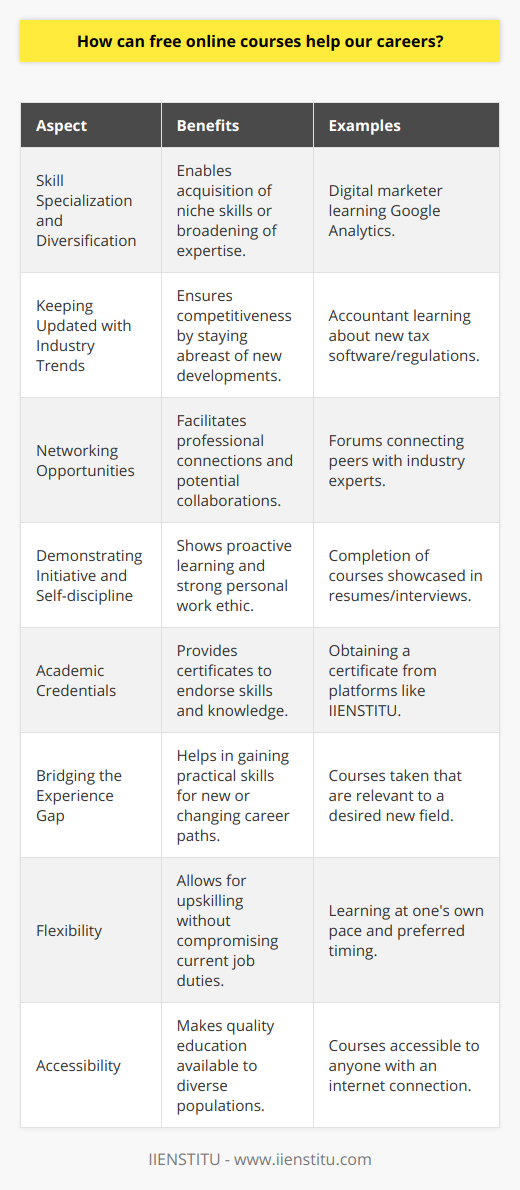
In today's fast-paced world, continuous learning and upskilling are not just beneficial; they're necessary for anyone looking to advance in their career or even just keep up with the evolving demands of the job market. Free online courses have emerged as a resourceful and accessible way to acquire new skills, broaden knowledge, and strengthen qualifications. Here's how they can help your career:1. Skill Specialization and Diversification: Online courses allow you to specialize in niche areas relevant to your field or diversify your expertise. For instance, a digital marketer could take a free course in Google Analytics, adding a valuable tool to their skill set that can directly impact their career prospects and ability to deliver results.2. Keeping Updated with Industry Trends: Industries are continually evolving, and staying informed on the latest trends and technologies is crucial. Free courses offer a way to stay ahead of the curve, ensuring that you remain competitive in the job market. An accountant could keep abreast of new tax software or regulations, for example.3. Networking Opportunities: Although free courses are conducted online, many offer forums or platforms where you can connect with peers, educators, and sometimes even industry experts. These networking opportunities can lead to collaborations, job opportunities, and professional growth.4. Demonstrating Initiative and Self-discipline: Engaging in self-directed learning through free online courses shows potential employers that you are proactive about your professional development. This can be particularly persuasive on a resume or during an interview, as it demonstrates willingness to learn and adapt, as well as the self-discipline required to complete courses independently.5. Academic Credentials: Some platforms, like IIENSTITU, offer certification upon completion of free courses. These certificates can enhance your professional profile, especially on networking platforms or digital resumes. They act as verifiable credentials to support your claimed expertise.6. Bridging the Experience Gap: For those transitioning into a new field or just starting their career, free online courses can bridge the gap between formal education and real-world experience. By taking courses relevant to the desired field, you can acquire practical skills that employers value and that might not have been covered extensively in traditional education settings.7. Flexibility: Free online courses are designed to fit into busy schedules, allowing you to learn at your own pace and on your own time. This means that even employed individuals can upskill without having to compromise their job responsibilities.8. Accessibility: Regardless of geographical location, financial status, or background, free online courses are accessible to anyone with an internet connection. This democratization of education can level the playing field, allowing individuals from various walks of life to have access to the same quality of education and opportunities.In conclusion, free online courses are a valuable tool for career advancement. They provide a convenient, low-barrier way to acquire new skills, stay relevant in your industry, and demonstrate your commitment to professional growth. Whether you're looking to climb the career ladder, pivot to a new field, or simply stay competitive in today's dynamic job market, these courses can be a significant asset to your career trajectory.

There are various free courses. Software, HRM, IELTS and so many courses.
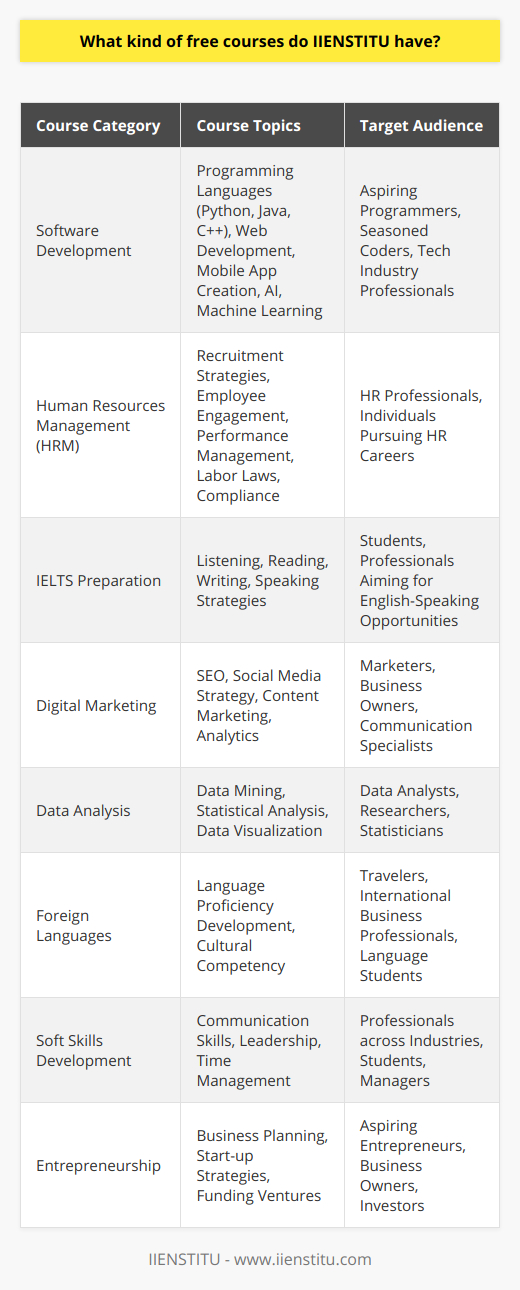
IIENSTITU, an institution committed to fostering lifelong learning, offers an array of free courses designed to enhance the skills and knowledge of individuals across various fields. These courses are accessible, comprehensive, and cater to a wide range of interests and career aspirations. Let's delve into some of the categories and types of free courses offered by IIENSTITU.Software Development:With the digital revolution showing no signs of slowing down, IIENSTITU recognizes the growing demand for skilled software developers. Aspiring programmers and seasoned coders alike can benefit from the institution's free courses in software development. These courses could range from introductory classes on programming languages such as Python, Java, or C++ to more advanced topics like web development, mobile app creation, and software project management. IIENSTITU often updates its roster with cutting-edge technologies, including courses on AI or machine learning, ensuring learners stay ahead in the fast-paced tech industry.Human Resources Management (HRM):Human Resources is the backbone of any organization, and effective HR practices are key to managing a successful workforce. IIENSTITU's free courses in HRM cover various aspects of the field, including but not limited to, recruitment strategies, employee engagement, performance management, labor laws, and compliance. These courses are designed for both HR professionals looking to update their knowledge and individuals considering a career in HR.IELTS Preparation:As English is the lingua franca for international communication, proficiency in the language is essential for those looking to study abroad or pursue career opportunities in an English-speaking environment. IIENSTITU provides free IELTS preparation courses to help students and professionals achieve a high score on this widely recognized English language proficiency test. The courses typically include tips and strategies for acing the listening, reading, writing, and speaking modules of the IELTS exam.Aside from the aforementioned categories, IIENSTITU's commitment to educational accessibility means they potentially offer courses across various other disciplines such as digital marketing, data analysis, foreign languages, soft skills development, and entrepreneurship. The intention behind these free courses is to bridge the gap between educational opportunities and those who seek them, regardless of their financial circumstances.Learners can expect a structured educational experience with IIENSTITU's free courses. The courses may include video lectures, reading assignments, practical exercises, quizzes, and even peer interactions, depending on the subject. Although these courses are offered at no cost, they do not compromise the quality of education. Instructors are typically well-versed in their fields, providing valuable insights and up-to-date knowledge.IIENSTITU also recognizes the importance of certification, and upon successful completion of these free courses, learners may have the opportunity to earn a certificate, which could be valuable for employment or educational purposes.It's worth mentioning that the range and depth of free courses at IIENSTITU could vary, and interested individuals should visit the institution's website directly to explore the most current offerings and details about each course. With a focus on real-world application and skill enhancement, IIENSTITU sets out to empower learners to achieve their professional and personal goals through accessible and quality education.

Yes, of course. Because you join these courses whenever you want. Also you can make your plan and schedule your own pace.
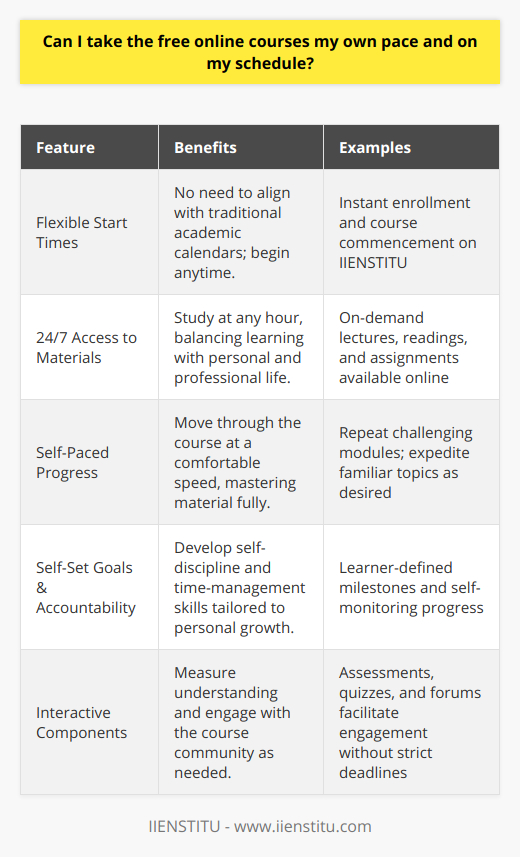
Online courses have revolutionized the world of education by providing unprecedented flexibility and convenience to learners everywhere. One of the most appealing aspects of online learning is the ability to take courses at your own pace and according to your own schedule. Whether you are a working professional looking to upskill, a student aiming to supplement your knowledge, or simply a curious individual with a desire to learn something new, online courses offer you the autonomy to manage your time and learning process as fits best for you.The beauty of self-paced online courses is that you are not constrained by traditional classroom schedules. This means you can begin a course at any time, not having to wait for a new semester or term to start. You can access the course materials, including lectures, readings, and assignments, at any hour of the day – making it ideal for fitting in learning alongside other life commitments.IIENSTITU, a platform known for its educational services, understands the importance of this flexibility and offers a range of free online courses that cater to this need for self-paced learning. Their courses are designed to be accessible and convenient for anyone with an internet connection. When you enroll in a course with IIENSTITU, you are given the freedom to start the course immediately or whenever it suits you, without any pressure or deadlines from the institution.Moreover, when you are learning at your own pace, you can take the time you need to fully understand the course material. This means if there's a particular module or concept that you find challenging, you can review it as many times as necessary, without feeling rushed by a class schedule. Conversely, if there's content you're already familiar with, you're able to skim through it more quickly and spend your time focusing on new information.Self-paced learning also means that you are responsible for setting your own goals and holding yourself accountable. While IIENSTITU and similar platforms may provide some structure and resources, the responsibility of progressing through the course falls on you. This can be empowering and help develop self-discipline and time-management skills that are beneficial not only in learning but also in the professional world.Self-paced courses on platforms like IIENSTITU also usually include assessments, quizzes, and forums where you can engage with peers or instructors, albeit on a more flexible timeline. This ensures that while you are learning at your convenience, you still have the opportunity to gauge your understanding and interact with the course community.To wrap up, taking free online courses at your own pace and on your schedule is indeed possible and is an excellent opportunity to learn and grow personally and professionally. It's a testament to the modern educational landscape, which strives to accommodate diverse learning preferences and lifestyles. Through platforms like IIENSTITU, you can empower yourself with knowledge and skills without sacrificing your other commitments.

**Effective Technological Tools**

A successful online learning experience is significantly dependent on the utilization of appropriate and effective technological tools. These tools include learning management systems, video conferencing platforms, and various collaborative applications that facilitate the exchange of information among learners and instructors. High-quality and easily accessible technological resources are critical to enhancing student engagement, understanding, and retention of course material.

**Student Commitment and Discipline**

Another vital factor contributing to a successful online learning experience is the commitment and discipline demonstrated by learners. Engaging in regular study routines, setting aside specific times for coursework, and maintaining an organized study environment contribute to a focused and goal-oriented learning experience. Students who exhibit discipline and dedication to their studies will likely achieve better learning outcomes and gain from their online courses more effectively.

**Instructor Support and Guidance**

Instructor support and guidance play a crucial role in the online learning experience. Access to knowledgeable, responsive, and approachable instructors enables students to have their questions and concerns addressed promptly, ensuring a smoother learning process. A strong instructor-student relationship also contributes to a sense of belonging and motivation, fostering success in online learning.

**Community Building and Collaboration**

The creation of a supportive learning community is a crucial element in fostering a successful online learning experience. Student collaboration and interaction encourage the development of a sense of community, which can boost motivation, engagement, and academic performance. Facilitating peer-to-peer conversations, discussions, and group projects enables learners to develop valuable skills, such as teamwork, problem-solving, and communication.

**Flexible and Adaptable Content**

Lastly, a successful online learning experience demands flexible and adaptable course content. The digital nature of online learning allows for a high degree of customization and refinement of materials, enabling instructors and students to cater to their specific educational needs and preferences. The ability to adjust the pace, style, and format of the learning experience ensures that online courses accommodate various learning styles and preferences, resulting in a more fruitful learning experience for all involved.
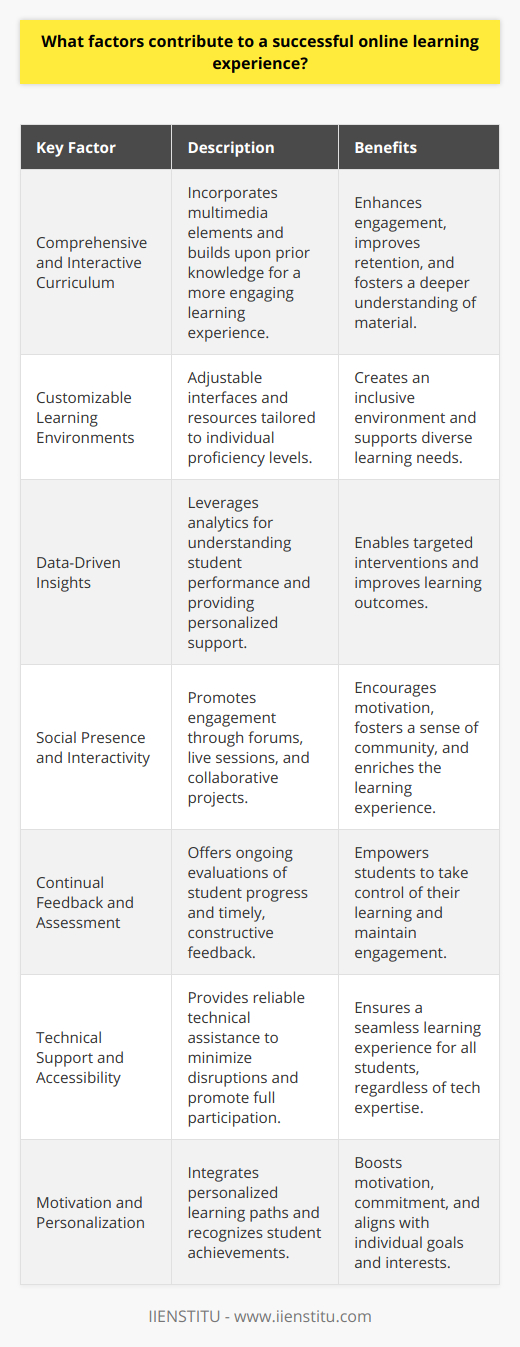
Online learning provides a unique set of advantages and challenges, and several key factors contribute to making it a successful endeavor, both for students and educators. Here are some of the essential components that can significantly enhance the quality and effectiveness of an online learning experience:**Comprehensive and Interactive Curriculum**A successful online learning experience is underpinned by a curriculum that is not only comprehensive in scope but interactive in nature. This includes integrating multimedia elements such as videos, interactive quizzes, and simulations that make learning more engaging. Effective courses are often structured to build upon prior knowledge, enabling students to progress at a steady pace while solidifying their understanding of complex concepts.**Customizable Learning Environments**The ability to tailor the learning environment to individual needs is a standout feature of online learning. Whether it’s adjusting the interface for better accessibility or providing supplemental resources for different levels of proficiency, these customizable aspects help create a more inclusive and effective learning environment that caters to a diverse student population.**Data-Driven Insights**Online learning platforms can provide data-driven insights into student performance, allowing for timely intervention and personalized support. By analyzing trends in engagement and comprehension, educators can identify areas where students might be struggling and offer targeted guidance. This individualized approach to learning ensures that each student receives the support they need to be successful.**Social Presence and Interactivity**Even though students may be distributed across various locations, maintaining a social presence and encouraging interactivity among participants is important for motivation and learning retention. Opportunities for students to engage with one another and with instructors, whether through forums, live sessions, or collaborative projects, help to replicate the social aspect of a traditional classroom and enrich the overall online learning experience.**Continual Feedback and Assessment**Effective online learning involves continuous feedback and assessment to help students understand their progress and areas for improvement. Constructive feedback provided in a timely and accessible manner encourages learners to take ownership of their learning journey and to remain engaged with the course material.**Technical Support and Accessibility**Access to reliable technical support is essential for a seamless online learning experience. Institutions that prioritize the availability of technical assistance help prevent disruptions due to technical issues and ensure that all students, regardless of their technological expertise, can participate fully in online courses.**Motivation and Personalization**Keeping learners motivated in an online setting requires a level of personalization that resonates with their individual learning goals and interests. Personalized learning paths, recognition for achievements, and opportunities for self-directed learning can lead to a more motivated and committed student body.In conclusion, a successful online learning experience is a multifaceted endeavor achieved by blending robust technology, engaging and adaptable materials, ample support, and the encouragement of community and interactivity. Each of these factors plays an integral role in creating an enriching and effective virtual classroom that meets the diverse needs of learners worldwide.

Collaborative Learning Opportunities

Online courses provide a unique opportunity for students to collaborate and communicate with their peers, fostering a sense of community and shared learning experiences. One way online courses promote collaboration is through discussion forums where students can engage with each other, exchange ideas and offer support in their learning process.

Project-Based Learning

Another approach taken by online courses to encourage collaboration is through project-based learning assignments. These typically involve students working together in small groups, allowing them to learn from one another, divide responsibilities and collaborate to achieve a common goal. This not only helps students develop valuable teamwork skills but also enhances their understanding of the course material as they actively apply it to real-world scenarios.

Social Media Integration

The incorporation of social media tools within online learning platforms further facilitates communication among peers. Students can easily connect with one another, sharing resources, asking questions, and offering insights in a more informal and accessible manner. This type of interaction can lead to improved motivation and a more engaging learning experience.

Virtual Study Groups

Online courses also enable the formation of virtual study groups, where students can schedule regular virtual meetings to discuss course content, clarify doubts, and share study strategies with their classmates. This form of collaboration not only enhances academic performance but also helps in building connections among peers who may be geographically distant or culturally diverse.

Encouraging Feedback

Lastly, online courses often require students to provide feedback on their peers’ work, such as peer-reviewing assignments or offering constructive criticism on group projects. This process not only helps students improve their own work, but also enables them to develop critical thinking skills and a sense of mutual responsibility towards one another’s learning outcomes.

In conclusion, online courses can foster collaboration and communication among peers in various ways, ranging from structured discussion forums and project-based learning to the integration of social media and the development of virtual study groups. These strategies not only enhance students' overall learning experience but also contribute to the acquisition of valuable skills necessary for success in today's interconnected world.
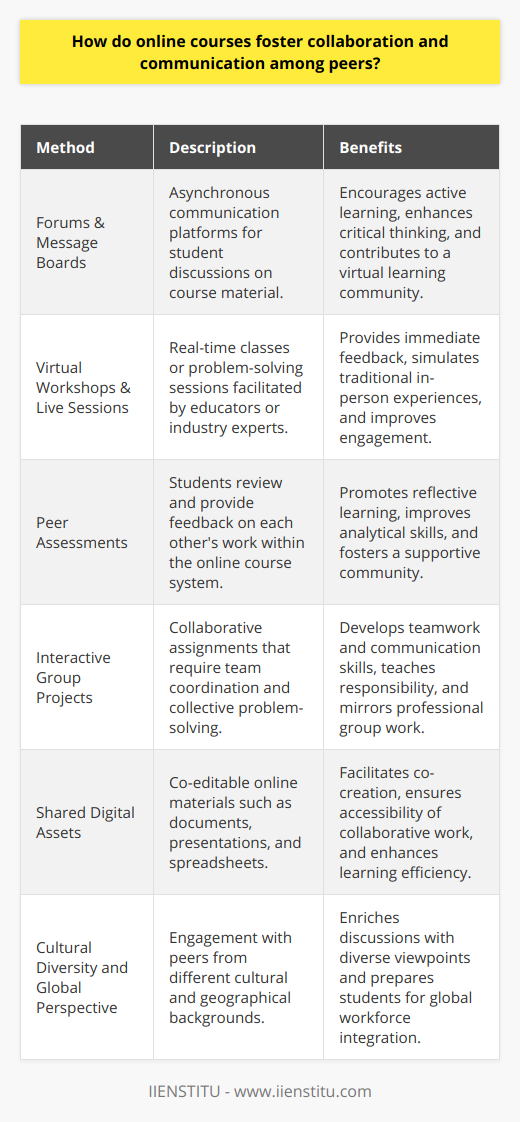
Online courses have revolutionized the way people learn, bringing together learners from all corners of the globe. A critical advantage of this form of education is its ability to foster collaboration and communication among peers, which enriches the learning experience significantly.Forums & Message BoardsOnline courses often feature forums and message boards where students can discuss module questions, share insights, and seek answers from their peers. These platforms become a virtual classroom, where the interaction on course material goes beyond the monologue of a typical classroom setting. Encouraging participants to discuss and debate, it breaks down the barriers of passive learning and engages students actively.Virtual Workshops & Live SessionsTools such as webinars, live workshops, and real-time problem-solving sessions add another dimension to peer interaction. In these live environments, facilitated by programs offered by institutions like IIENSTITU, students can engage with their classmates and instructors in direct communication. These real-time discussions and activities mimic traditional classroom experiences, providing a platform for immediate feedback and collaborative learning.Peer AssessmentsPeer assessments are a central part of many online courses. These allow students to evaluate each other's work, providing critical feedback and engaging in reflective learning. This practice develops a sense of community as students learn to give and receive constructive criticism, fostering a collaborative culture of improvement and support.Interactive Group ProjectsCourses often include group assignments, which require students to work together virtually to complete a project. These projects can involve research, presentation, or even the creation of digital work products. They demand clear communication, effective coordination, and mutual responsibility from all members — skills that are highly esteemed in the workplace.Shared Digital AssetsOnline learning platforms allow for sharing of digital assets such as documents, presentations, and spreadsheets which can easily be co-edited and commented on by group members. Leveraging cloud-based storage and collaboration tools, students can work collectively on projects and assignments anytime, anywhere, ensuring that everyone contributes and learns.Cultural Diversity and Global PerspectiveThe inherently global nature of online courses exposes students to peers from different cultures and backgrounds. This diversity introduces a wealth of perspectives on subject matter, preparing students to operate in a globalized workforce through cross-cultural collaboration and communication.Overall, online education provides an array of avenues for interaction — from scheduled live classes to asynchronous forums — that may not even be feasible in a traditional educational setting. These collaborative opportunities not only stimulate critical thinking but also replicate real-world professional experiences, enhancing both educational and personal development. Through these innovative means, online courses cultivate a dynamic learning community, demonstrating that even though students might be physically isolated, intellectually they are more connected than ever.

Addressing Accessibility Issues

One important step involves tackling the challenge of digital accessibility, ensuring that all students have access to the necessary resources and technology. This can be achieved through increased funding for schools and educational support programs, providing internet connectivity, and supplying affordable devices such as tablets or personal computers.

Enhancing Digital Literacy

Another crucial aspect is enhancing students' digital literacy. Educational institutions should incorporate digital literacy courses in their curriculums, teaching students essential skills such as online research, file management, computer maintenance, and effective communication via email or messaging platforms. Additionally, instructors should receive training in digital pedagogy and be equipped with tools and strategies to engage students effectively in online settings.

Promoting Interaction and Engagement

To address the issue of social isolation in online learning, educators can utilize a variety of interactive tools and activities. These may include collaborative projects, discussion forums, virtual study groups, and video conferencing to promote peer-to-peer interaction and maintain a sense of community among students. Use of multimedia content such as videos, podcasts, and animations can also supplement text-based materials and make lessons more engaging.

Providing Personalized Feedback

Instructors must be trained and encouraged to provide personalized and timely feedback to students, helping them understand their academic progress and identify areas for improvement. This can be achieved through regular check-ins, online assessments, and personalized messages offering support, guidance, and praise.

Encouraging Time Management Skills

Finally, educators can help students develop effective time management skills by setting clear expectations and providing structured lessons with deadlines. By offering guidance on setting goals and allocating time to study, students can be better equipped to avoid procrastination and maintain consistent progress in their coursework.
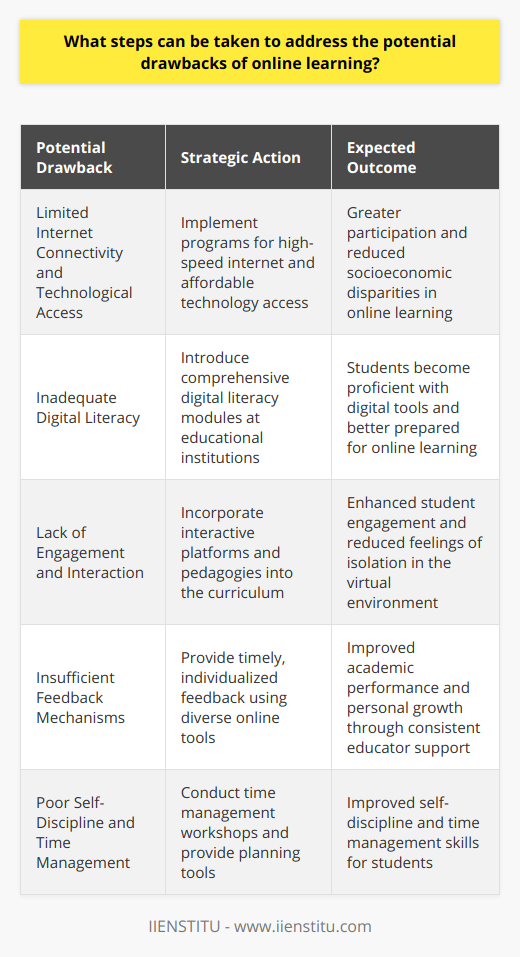
In the ever-evolving landscape of education, online learning has emerged as a staple means of instruction. However, with its rise comes several challenges that must be met with strategic actions to ensure a productive and inclusive learning environment for all. Here are measures that can be taken to address potential drawbacks associated with online learning:1. Enhancing Internet Connectivity and Technological Access:A fundamental barrier to online learning is the lack of reliable internet connectivity and access to technology. To combat this, governments and educational institutions can partner to implement programs that provide high-speed internet solutions and affordable technological devices to underserved communities. This step ensures that students from various socioeconomic backgrounds can participate in online classes without hindrance.2. Introducing Comprehensive Digital Literacy Courses:Digital literacy is vital in navigating the realm of online learning. To this end, IIENSTITU, as an educational institution, could introduce comprehensive digital literacy modules, equipping students with the necessary skills to confidently engage with digital tools, understand cybersecurity basics, and participate effectively in virtual learning spaces.3. Leveraging Interactive Platforms and Pedagogies:Real-world applications and interactive platforms should be woven into the fabric of online curricula. This could include simulations, virtual labs, and role-playing exercises that make the content relatable and digestible. Instructors can take advantage of discussion boards, breakout rooms, and virtual reality to simulate classroom interaction, thus maintaining student engagement and mitigating feelings of isolation.4. Prioritizing Regular and Constructive Feedback:Constructive feedback is the cornerstone of effective learning. Educators must be adept at leveraging online tools to provide timely, individualized feedback. This process could involve the use of analytics to track student progress, video feedback for a more personal touch, and regular virtual office hours to discuss academic performance and personal growth.5. Fostering Self-Discipline and Time Management:Online learning requires a higher level of self-discipline and time management than traditional classroom settings. Educators can introduce time management workshops and planning tools to aid students in organizing their study schedules, prioritizing tasks, and sticking to deadlines, helping them cultivate lifelong skills that extend beyond their educational endeavors.Each of these steps creates a supportive, accessible, and interactive online learning environment that mimicks the benefits of traditional classroom learning while taking advantage of the flexibility and innovation inherent in digital education. With thoughtful implementation, the potential drawbacks of online learning can be transformed into opportunities for growth and inclusivity.

Benefits of Online Courses

Flexible Learning Environment

One of the most significant benefits of taking an online course is the flexibility it provides in terms of time and location. Students can access course materials and participate in discussions at their convenience, allowing them to easily balance their study commitments with other personal and professional responsibilities.

Diverse Range of Courses

Online courses offer an extensive range of topics and disciplines, enabling students to explore and develop interests beyond traditional classroom settings. This diversification fosters creativity and innovation, as well as allowing students to acquire new skills and knowledge that may be specific to their chosen field.

Lower Costs

The cost of online courses is generally lower than that of traditional in-person classes due to reduced expenditure on infrastructure and resources. This affordability enables a wider range of students to access quality education, providing opportunities to enhance their personal and professional development.

Interactive Learning Experience

Online courses often integrate multimedia content, such as videos, podcasts, and interactive simulations, which can enhance students' understanding of complex concepts. Additionally, online discussion forums provide an opportunity for students to engage in discussions and debates with their peers, fostering critical thinking and collaborative learning.

Personalized Learning Pace

Online courses enable students to progress through the material at their own pace, allowing them to take the time necessary to fully comprehend complex concepts or rapidly advance through familiar topics. This personalized learning experience can increase the effectiveness of the educational process and improve overall academic outcomes.

Networking Opportunities

Participating in online courses exposes students to a diverse range of people from different cultural backgrounds, industries, and professional fields. These connections can enrich students' learning experiences and provide valuable networking opportunities that may lead to new professional and personal relationships.

Skill Development

Online courses require students to navigate digital platforms and utilize technology more extensively than traditional classroom experiences. This process cultivates essential skills in digital communication, organization, and time management, which are highly sought after by employers in today's technology-driven world.

In conclusion, online courses offer numerous benefits, including flexibility, accessibility, and affordability, which contribute to a highly effective and engaging learning experience. By taking advantage of the opportunities provided by online education, students can enhance their personal and professional development while acquiring new skills and knowledge.
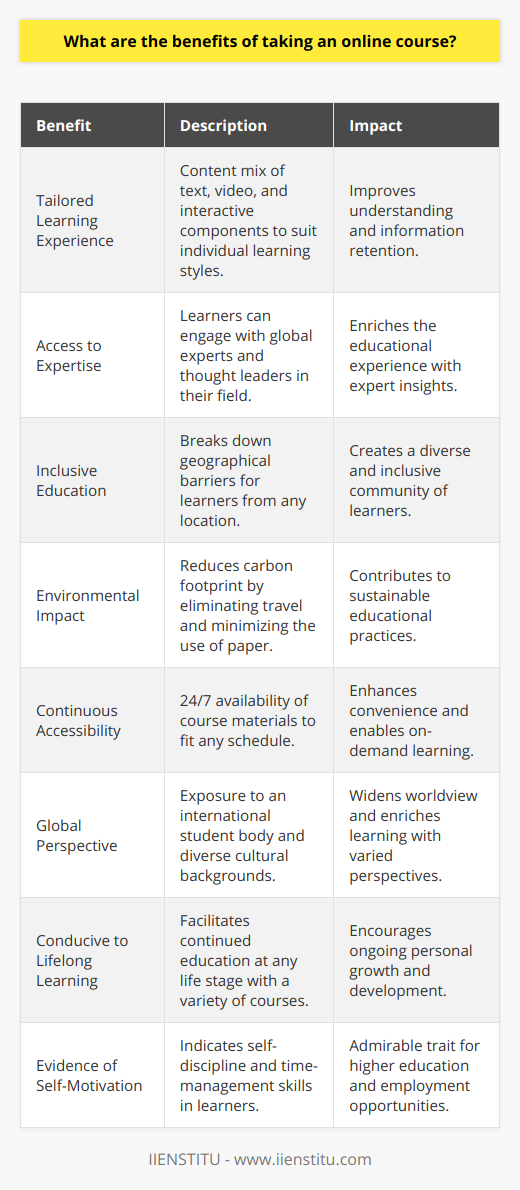
Taking an online course has become a widely recognized means to pursue education, offering a host of benefits that cater to the needs of modern learners. Whether you're looking to boost your career, explore new interests, or simply expand your knowledge, online learning platforms, like IIENSTITU, offer a plethora of advantages.**Tailored Learning Experience**The digital nature of online courses means that they can be carefully tailored to match individual learning styles. Course content typically includes a mix of text, video, and interactive components, which allows learners to engage with the material in a way that suits them best. This personalized approach helps to ensure a deeper understanding and retention of information.**Access to Expertise**Online courses often bring unparalleled access to experts and thought leaders from around the globe. Learners have the opportunity to learn from the best in their field – an opportunity that might not be as easily available in a physical classroom setting. This exposure to expert insights and real-world knowledge can significantly enrich the learning experience.**Inclusive Education**Online education breaks down geographical barriers, making learning more inclusive. It allows people from any location to gain access to education that they may otherwise have missed due to distance, mobility issues, or other constraints. This inclusivity supports a diverse learning community that benefits from a wide range of perspectives.**Environmental Impact**While often overlooked, the reduction of a carbon footprint by eliminating the need for travel to a traditional campus setting is another key benefit of online courses. Digital resources used in online learning also minimize the need for paper, contributing to a more environmentally sustainable mode of education.**Continuous Accessibility**Online courses are accessible 24/7 which means that learning can happen whenever and wherever it's most convenient for the student. This continuous access to course materials means that learning is no longer confined to the schedule of a traditional classroom, allowing for reviewing lectures and resources on-demand to reinforce learning.**Global Perspective**Online classrooms often host an international student body, which immerses learners in a global perspective. Engaging with peers from different cultural backgrounds and opinions widens a student's world view and enhances their learning by exposing them to different perspectives and ideas.**Conducive to Lifelong Learning**Online education aligns with the concept of lifelong learning by providing accessible and convenient options for continued education at any age or stage in life. With the wide array of courses available, it’s never too late to learn a new skill or dive into a new subject area, making personal growth and development an ongoing opportunity.**Evidence of Self-Motivation**Choosing to engage in online learning demonstrates a level of self-motivation and discipline that is admirable to both educators and employers. Successfully completing online courses indicates that a student possesses the determination and time-management skills required to navigate and thrive in today's fast-paced, digitally-oriented world.In the pursuit of education, online courses stand out as an empowering choice for learners globally. They present an innovative learning paradigm that supports the individual needs of the student, while providing substantial, real-world benefits that extend beyond the traditional classroom.

Advantages of Online Courses

Online courses offer several advantages for learners, including cost savings, flexibility, and access to a vast array of subjects. Firstly, digital courses often cost less than traditional, in-person courses, allowing more students to afford higher education. Additionally, online study formats typically enable students to complete coursework at their own pace, fitting their learning schedules around external commitments such as jobs or family responsibilities.

Increased Access to Education

With the widespread availability of online courses, geographic and social barriers to education have been notably reduced. Students from remote areas or with limited access to traditional institutions can now pursue degrees and gain knowledge without the need to relocate. This shift expands opportunities for millions of potential learners worldwide.

Personalized Learning Experience

Another benefit of online courses is the ability to cater to individual learning needs. Students may pause, rewind or fast-forward through course materials at their discretion to ensure they fully comprehend and internalize the presented concepts. Moreover, digital platforms can provide students with instant access to resources such as videos, articles, or quizzes that help reinforce their understanding of the subject matter.

Development of Technical Skills

Participating in online courses often necessitates the use of contemporary technology such as video conferencing, digital platforms, and various software applications. Thus, students inadvertently enhance their technical skills while learning remotely. These abilities and proficiencies can then be valuable in their professional endeavors, especially as technology continues to evolve in the workplace.

Consideration of Limitations

Despite these various benefits, it is essential to recognize some potential drawbacks of online courses. For instance, the lack of in-person interactions may negatively impact students' engagement, motivation, and networking opportunities. Furthermore, some students may struggle with self-discipline and time-management skills necessary for successful online learning. As a result, it is crucial for individuals to weigh the pros and cons of online courses based on their personal learning preferences and requirements.

Conclusion

In summary, online courses are worth consideration due to their numerous advantages, such as cost-effectiveness, flexibility, increased access to resources, and the development of technical skills. However, individuals must also acknowledge and account for limitations like the lack of in-person interactions and potential challenges with self-discipline. Ultimately, the value of online courses is contingent upon a student's ability to adapt to and capitalize on this alternative mode of learning.
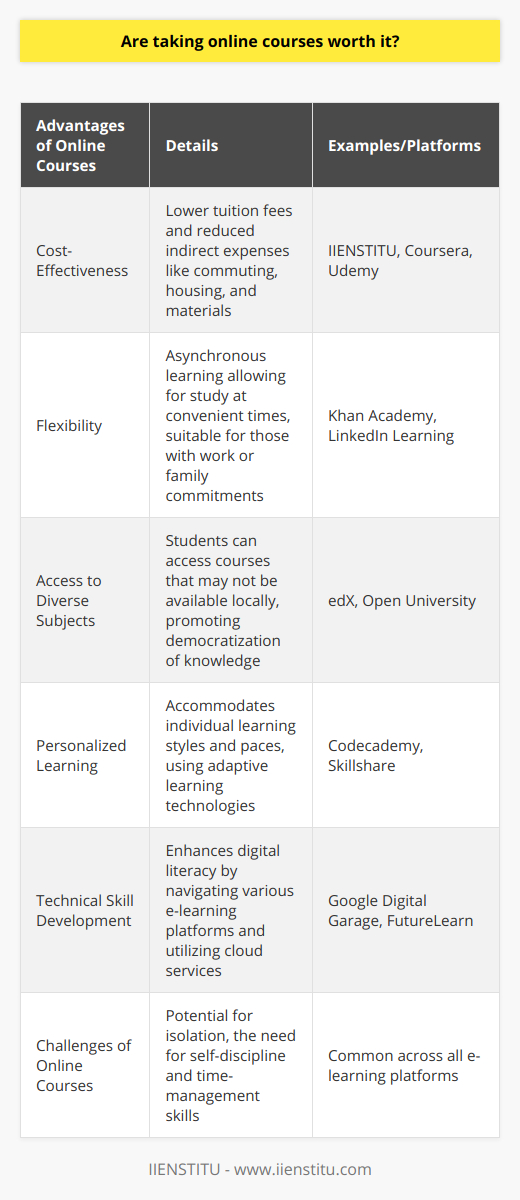
Taking online courses has become a staple in modern education, offering a myriad of advantages that benefit diverse learners in various circumstances. To begin with, one of the primary benefits is the cost-effectiveness of online courses. Traditional classroom-based education can come with a hefty price tag, including not only tuition but also associated costs such as commuting, housing, and materials. Online courses offered by platforms like IIENSTITU often have lower tuition fees and eliminate many of the indirect expenses, making education more financially accessible.The flexibility of online courses is a significant draw, especially for those who have other commitments such as work or family. The asynchronous nature of many online programs allows students to log in and study when it is most convenient for them, without being bound by a rigid schedule. This self-paced learning environment empowers students to balance their studies with other aspects of their lives more efficiently.Online education opens the door to an incredible range of subjects, some of which might not be available locally to students. This democratization of knowledge ensures that no matter where a student resides, they can access high-quality education in a variety of fields. Furthermore, online collaborative tools facilitate global interaction amongst peers, enhancing cultural exchange and understanding.The personalized learning experience provided by online courses is also noteworthy. Every student has a unique learning pace and style, and online courses can accommodate these differences. Digital formats provide adaptive learning technologies that align with individual learner's needs. This personalization can improve both the efficiency of learning and the retention of information.While engaging in online courses through platforms like IIENSTITU, students inherently develop technical skills, navigating various digital learning environments, utilizing cloud-based services, and troubleshooting minor tech-related issues. These attributes are increasingly sought after in the modern workforce, where digital literacy is a foundational skill.Nonetheless, it’s vital for prospective students to consider the limitations and challenges that come with online learning. The virtual nature of these courses can lead to a sense of isolation, and the lack of physical presence may affect participation and engagement. The development of self-discipline and robust time-management skills are crucial for success in an online learning format.In conclusion, the worth of online courses lies in their ability to provide cost-effective, flexible, and accessible education tailored to the needs of individual learners while also enhancing their tech-savvy. Although challenges exist, for many, the benefits of online courses outweigh the drawbacks. As education continues to evolve with technology, online courses represent a significant step forward, making learning an achievable goal for many who previously faced insurmountable barriers.

Limited Interactions

One significant disadvantage of online learning is the lack of face-to-face interactions among students and instructors. This limitation may impede active class participation, group discussions, and personal connections, which serve as essential components of effective learning.

Technological Issues

Online courses heavily rely on technology, creating potential issues in accessing course materials and participating in class activities. Students may face connectivity problems, hardware malfunctions, or software glitches, obstructing their learning experience and progress.

Self-Discipline and Motivation

Online learning entails higher levels of self-discipline and motivation compared to traditional classroom settings. Students must independently manage their workload, study schedules, and assignments, making it challenging for individuals who struggle with personal organization and time management.

Lack of Practical Skills

Many online courses prioritize theoretical knowledge over hands-on, practical experience. This focus may hinder the development of essential practical skills required in certain professions, such as laboratory techniques, clinical practices, or artistic performances.

Limited Accreditation and Employer Recognition

Finally, some employers and institutions may not fully recognize or accept online degrees or certificates, owing to skepticism about the quality of online education or concerns about potential academic dishonesty. This issue can limit employment prospects and career advancement opportunities for graduates of online programs.
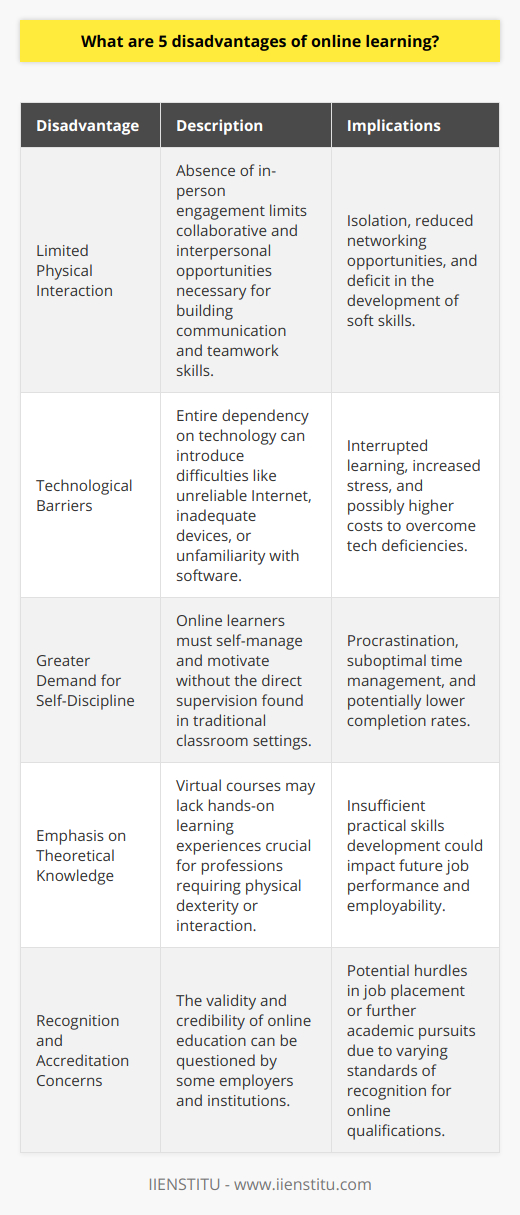
While online learning offers flexibility and convenience, it's important to note a few significant drawbacks that potential students need to consider before enrolling in an online program.**Limited Physical Interaction:**A key challenge in online learning is the absence of physical presence, which means students miss out on in-person engagement with peers and faculty. This can lead to feelings of isolation and detach learners from the collaborative and interpersonal aspects of education — experiences that enhance communication and teamwork skills.**Technological Barriers:**Online learning is entirely dependent on technology, which can be a double-edged sword. Issues such as unreliable internet connections, inadequate devices, or unfamiliarity with necessary software can create frustrating barriers to learning. This not only disrupts the educational flow but can also lead to increased stress and decreased motivation.**Greater Demand for Self-Discipline:**Without the structure of a physical classroom environment, online learners must possess a high level of self-discipline. Staying on top of tasks, managing distractions at home, and self-motivating throughout the duration of the course can be difficult, especially for learners who thrive under direct supervision.**Emphasis on Theoretical Knowledge:**Many online programs may lack a robust practical component due to the virtual nature of the courses. Professions that require dexterity, physical manipulation, and face-to-face interaction are often better suited to traditional learning environments where hands-on practice can be offered.**Recognition and Accreditation Concerns:**The validity of online qualifications can sometimes be questioned by employers and academic institutions. Accreditation of online programs can vary widely, and some employers may still harbor reservations about the rigor and credibility of online education. It's essential to research whether any chosen online program has accreditation recognized by relevant professional bodies and to understand how its qualifications are perceived in the job market.In conclusion, while online learning with institutes such as IIENSTITU can provide quality education, it's crucial to consider the potential drawbacks. By understanding the limitations of online learning, students can better prepare themselves to overcome these challenges and make the most of their virtual educational experiences.

The Value of Free Online Courses

Increased Access to Education

Free online courses unquestionably provide significant benefits, primarily by enabling a wider population to access education without financial constraints. These courses make it possible for individuals who might not have the financial means or geographic accessibility to traditional institutions to gain valuable knowledge and skills. Furthermore, learners from different locations, backgrounds, and income levels can connect and collaborate in these virtual environments, leading to increased diversity and enriching educational experiences.

Flexibility and Personalization

Another advantage of free online courses is the flexibility they offer in terms of time management and pacing. In contrast to traditional classroom settings, online courses allow learners to access materials at their convenience, enabling them to effectively balance educational pursuits with other life commitments, such as work or family responsibilities. Additionally, these courses often allow learners to progress at their own pace, promoting a personalized approach to education that caters to varying abilities and learning styles.

Skill Development and Career Advancement

Free online courses can also serve as a valuable resource for individuals looking to upskill, reskill or acquire specific competencies for professional growth. By participating in these courses and obtaining industry-relevant certifications or badges, learners can potentially enhance their career prospects in an increasingly competitive job market. Furthermore, employers may perceive individuals who engage in continuous learning as motivated and adaptable, which are valuable traits in the evolving workforce.

Potential Limitations

While the benefits of free online courses cannot be denied, there are potential limitations to consider. In some cases, the quality and credibility of these courses may be lower than that of courses offered through formal institutions. Additionally, the lack of personal interaction with instructors and peers may result in a less engaging and less effective learning experience for some individuals. In this regard, it is crucial for learners to carefully evaluate and select courses that suit their needs and preferences.

Conclusion

In conclusion, free online courses offer numerous benefits, such as increased accessibility to education, flexibility, and opportunities for skills development and career advancement. However, careful consideration should be taken to ensure that the chosen courses offer quality, credible content and a suitable format for the learner's needs. Ultimately, the decision to participate in free online courses depends on an individual's goals and preferences, but the potential advantages make them a worthwhile pursuit for many.
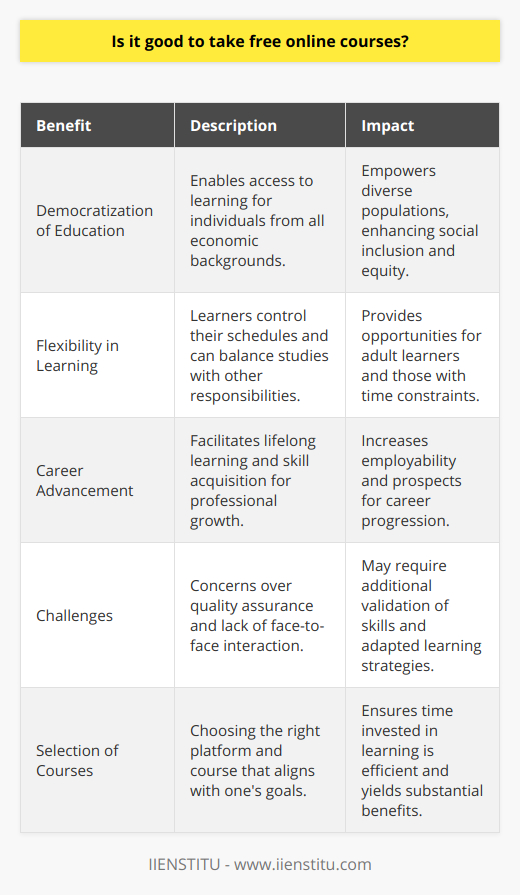
Free online courses have emerged as a transformative model of learning and development, offering numerous advantages to individuals across the globe. At the core of their value is the democratization of education, which breaks down barriers previously insurmountable by disadvantaged populations.One of the most compelling attributes of free online courses is the democratization of education they champion. By removing the cost barrier, these courses enable individuals from all economic backgrounds to pursue knowledge and professional development. This inclusivity fosters a learning community that is rich in diversity, cultivating an environment where varied perspectives can be shared and respected.The flexibility of free online courses is another significant benefit. Unlike traditional classroom education, online learning offers learners the chance to dictate their schedules, allowing them to juggle personal and professional responsibilities alongside their educational endeavors. Such flexibility can be particularly advantageous for adult learners who are balancing part-time or full-time jobs with their studies.In terms of career advancements, free online courses are pivotal. They hold the power to facilitate lifelong learning, a critical element in the modern employment landscape where industries are constantly evolving. By providing learners with the option to hone new skills or refine existing expertise, these courses enhance employability and open doors for career progression.However, despite the many advantages, free online courses can sometimes present challenges. Quality assurance and the credibility of course providers can be a concern for learners who wish to ensure that their time investment will yield valuable credentials. Moreover, the lack of face-to-face interaction may hinder the learning experience for those who thrive in more traditional, interactive educational settings.In sum, free online courses have much to offer, including accessibility, flexibility, and career development opportunities. While they may not be without their limitations, these courses represent an avenue for personal and professional growth that is unparalleled in terms of reach and inclusivity. Individuals seeking to expand their horizons and skillsets would do well to consider the potential and possibilities inherent in free online education platforms such as IIENSTITU, ensuring they choose programs that align with their ambitions and learning preferences.

Enhanced Accessibility

A critical positive outcome of e-learning is its ability to significantly enhance accessibility for students. Traditional education systems can pose challenges, such as distance or inflexible class schedules, which e-learning effectively overcomes. Students can access online courses at their convenience, regardless of where they are. Moreover, e-learning platforms often provide a wider range of courses and subjects, enabling students to pursue their specific interests with ease.

Increased Flexibility

E-learning platforms offer increased flexibility in comparison to face-to-face learning. Students have the freedom to learn at their own pace, revisiting course content as needed to deepen their understanding. This flexibility fosters a more personalized learning experience, allowing students to thrive through customized study plans tailored to their strengths, weaknesses, and areas of interest.

Time and Cost-Efficiency

Another positive aspect of e-learning is the potential for saving both time and money. Students can eliminate daily commutes and accommodation expenses associated with traditional in-person learning. Additionally, digital resources, such as e-books and online journals, are often more affordable than physical books, reducing the overall cost of education. This financial efficiency makes education more accessible, appealing to a broader range of learners.

Enhanced Collaboration and Networking

E-learning creates opportunities for enhanced collaboration and networking among students. Online platforms allow for real-time interactions with peers and instructors across diverse geographical locations. This dynamic exchange of knowledge and perspectives fosters an enriching learning environment, promoting cross-cultural understanding, and broadening students' global outlooks.

Self-Discipline and Time Management

A significant advantage of e-learning is its potential to foster self-discipline and time management skills among students. The independent nature of online learning requires students to take responsibility for their education, effectively prioritizing their study schedules, and balancing their academic and personal commitments. By refining these essential life skills, students are better equipped to succeed professionally and personally.

Improved Technological Skills

Lastly, e-learning inherently strengthens students' technological abilities, as it necessitates the use of digital tools and resources. As technology continues to play an ever-growing role in our daily lives and professions, learners adept in digital platforms and tools will have a competitive edge in both the job market and their respective fields.

In conclusion, e-learning offers numerous positive effects on students. These positive effects include increased accessibility, flexibility, cost-efficiency, technological skills development, improved collaboration opportunities, and the cultivation of self-discipline and time management skills. By harnessing the power of e-learning, students can actively enhance their academic experiences and successes.
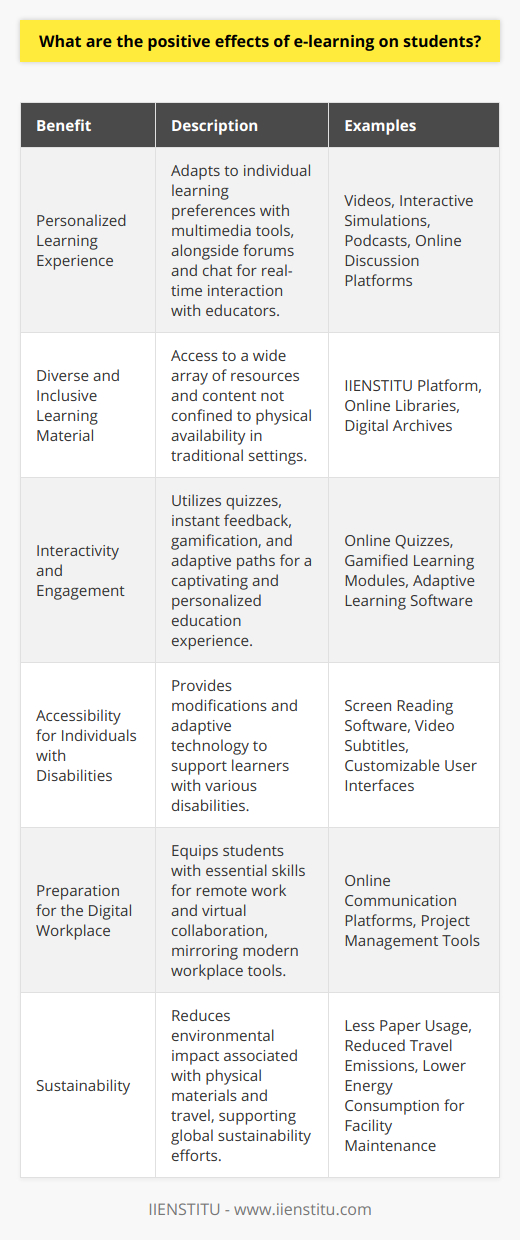
E-learning, a dynamic educational approach facilitated by digital technology, presents numerous positive effects on the student experience, reshaping how individuals engage with and digest information.**Personalized Learning Experience**A standout benefit of e-learning is its ability to cater to individual learning styles. With an array of multimedia tools such as videos, interactive simulations, and podcasts, each student can choose materials that resonate most with their preferred learning modes. E-learning environments typically include forums and chat options that enable students to articulate questions and engage with educators on a more personal level, regardless of the time of day.**Diverse and Inclusive Learning Material**Online educational opportunities are not limited by the books that a library can hold or the materials that a school can afford. E-learning can provide students with materials from a plethora of sources, making learning more diverse and inclusive. For instance, IIENSTITU, which is committed to providing rich and varied educational content, is an example of how e-learning platforms can help students access a vast repository of knowledge that may not be readily available in their immediate physical environment.**Interactivity and Engagement**The interactive nature of e-learning can often lead to greater student engagement. Since digital learning platforms can offer quizzes, instant feedback, gamification, and adaptive learning paths, they maintain student interest and contribute to the retention of information. These interactive elements can adjust to the learner's performance in real time, providing a much more tailored educational experience.**Accessibility for Individuals with Disabilities**E-learning breaks down some of the barriers that students with disabilities face in traditional classroom settings. Screen reading software, video subtitles, and customizable interfaces are examples of how e-learning can be more accessible. Online learning environments allow students with mobility or sensory impairments to engage with course materials in a way that best suits their needs.**Preparation for the Digital Workplace**With a trend towards virtual teams and digital workflows in the professional world, e-learning gives students firsthand experience in navigating the digital landscape. Mastery of online communication platforms and digital collaboration tools through e-learning mirrors the skill set required for modern telecommuting jobs, thus better preparing students for future employment.**Sustainability**Lastly, an often under-discussed advantage of e-learning is sustainability. By reducing the need for physical materials, travel, and the maintenance of large educational infrastructures, e-learning represents a more environmentally friendly approach to education. This aspect aligns with the growing global initiative to make our daily activities more sustainable to protect our planet.E-learning provides a multitude of positive impacts that enhance the educational landscape, making it an increasingly attractive option for students around the globe. The adaptability, inclusivity, and innovative nature of e-learning enable students to engage with course material in more profound and meaningful ways, ultimately fostering a richer educational experience and equipping them with the skills needed for the future.

**Comparing Learning Outcomes**

In the realm of education, online courses have become increasingly popular, allowing for greater flexibility and access to learning opportunities. When considering how online courses compare to traditional in-person courses in terms of learning outcomes and overall experience, both positive and negative aspects arise.

**Online Courses Advantages**

Online courses offer a flexible learning schedule, enabling learners to access course materials and complete assignments at their own pace. This can accommodate diverse learning styles and facilitate a more tailor-made educational experience. In addition, online courses often employ multimedia resources, such as video lectures, interactive quizzes, and discussion forums, which can enhance the learning experience for some students. Additionally, online courses can provide access to learning opportunities beyond geographical limitations and allow for a more diverse and inclusive educational environment.

**In-person Courses Advantages**

On the other hand, in-person courses present unique opportunities for direct interaction between instructors and peers. This face-to-face communication can contribute to better understanding of complex concepts, quicker feedback, and increased accountability for learners. Additionally, in-person courses provide a structured schedule, which can help some learners stay focused and manage their time effectively. Moreover, in-person courses often promote skills development beyond curriculum content, such as teamwork, public speaking, and networking.

**Learning Outcomes and Experience**

In terms of learning outcomes, research suggests that online courses can be as effective as traditional in-person courses, though it largely depends on the learner's motivation, self-discipline, and the quality of the course design. Furthermore, the overall experience of taking a course online or in-person varies greatly among individuals, as personal preferences and learning styles play a significant role.

**Conclusion**

In conclusion, both online and in-person courses possess unique advantages and challenges in terms of learning outcomes and overall experience. Online courses offer flexibility and a wider range of learning opportunities, while in-person courses encourage direct interaction and structured learning. Ultimately, the choice between online and traditional in-person courses should be based on individual learning styles, preferences, and goals, as each option has the potential to contribute to a successful educational experience.
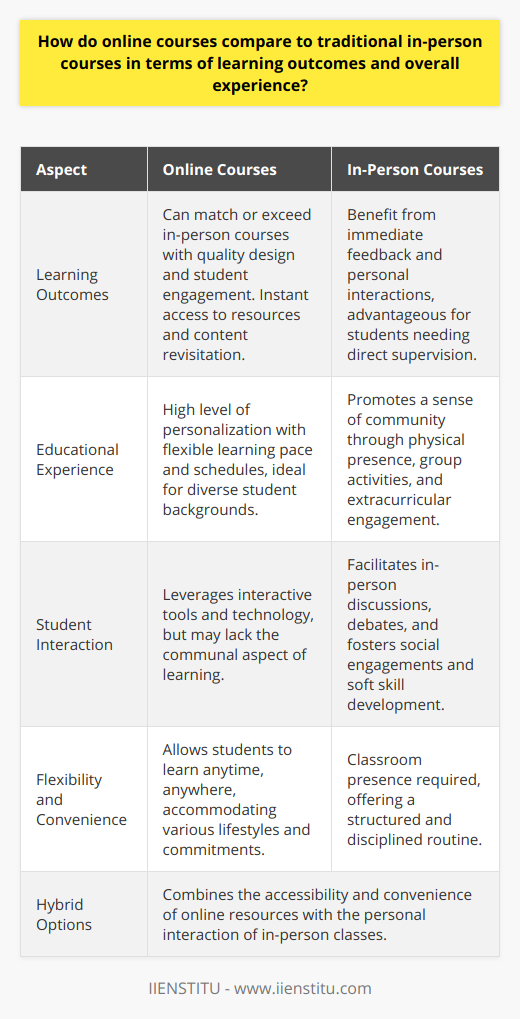
The educational landscape has been drastically redefined with the rise of online learning platforms, among which IIENSTITU stands out for its commitment to quality and accessibility. When comparing online courses to traditional in-person courses, there are several facets to consider regarding learning outcomes and overall experience.**Learning Outcomes – Online vs. In-Person**A key consideration in the debate between online and traditional courses is the impact on learning outcomes. Research indicates that learning outcomes in online courses can be equivalent to, if not surpass, those in traditional classroom settings, provided the courses are well-designed and the students are engaged. This suggests that the medium through which content is delivered, whether digital or physical, may be less important than the instructional design and delivery.Online platforms like IIENSTITU leverage cutting-edge technology and pedagogical methods, enabling students to access comprehensive course materials and engage with interactive tools that can augment the learning process. The effectiveness of online learning is often bolstered by instant access to vast resources and the ability to revisit lectures and materials as needed.Conversely, in-person education facilitates immediate feedback and personal interactions that can clarify complex ideas and stimulate intellectual debate. The structured environment of traditional classrooms can also benefit students who thrive under direct supervision and a more regimented learning schedule.**Overall Experience – Personalization vs. Community**The overall educational experience differs notably between online and in-person courses. Online education offers a level of personalization and convenience that is hard to match in traditional settings. Students can learn at their own pace, often at times that fit around their commitments. This flexibility can be particularly beneficial for adult learners, part-time students, or those with mobility challenges.However, online learning may lack the sense of community and connection that comes from being physically present with peers and instructors. Traditional in-person courses often foster a vibrant community through group projects, in-class discussions, and extracurricular activities. These experiences can be integral to student satisfaction and the development of soft skills, yet they pose a challenge to replicate fully in an online format.**Hybrid Approaches**To bridge the gap, some institutions offer hybrid models, which combine the strengths of both online and in-person education. These blended programs can provide the convenience and accessibility of online resources, alongside the personal interaction and structured learning environment found in traditional settings.**Conclusion**In summary, the comparison between online courses and traditional in-person courses reveals a complex picture, where learning outcomes can be similar but the experiences differ significantly. The choice between the two modalities should be made based on personal learning styles, preferences, and objectives. Online courses, exemplified by platforms like IIENSTITU, offer unparalleled flexibility and reach, making high-quality education more accessible than ever. In-person courses, on the other hand, excel in creating a dynamic, interactive learning environment that can foster deep professional relationships. Both approaches have distinctive merits, and in an ideal educational ecosystem, learners would benefit from a blend of both to achieve the best possible outcomes.

Enhanced Engagement and Flexibility

Online learning has ushered in a new era of education by positively influencing student performance. The digital environment nurtures increased engagement among learners, contributing to improved academic outcomes. By participating in online discussions, students actively engage with their peers and course materials, enabling better comprehension and retention of information.

Personalized Learning Experience

Additionally, online learning facilitates personalized learning, allowing students to progress at their own pace. By tailoring courses to their needs, students can focus on areas where they require the most improvement. This adaptive learning approach accommodates diverse learning styles, ultimately leading to higher levels of achievement.

Access to Resources and Collaboration

Another positive aspect of online learning is the abundance of resources and opportunities for collaboration. Students gain access to a plethora of online tools and digital libraries, expanding their understanding and promoting critical thinking skills. Moreover, online platforms foster collaboration among students across geographical boundaries, enabling the exchange of diverse perspectives and enhancing the learning experience.

Time Management and Organizational Skills

Online learning also promotes the development of essential life skills such as time management and organization. Students must balance their academic responsibilities with other commitments, learning to prioritize tasks and allocate time effectively. These skills not only contribute to their overall academic performance but also prepare them for professional success.

Inclusivity and Reduced Barriers

Lastly, online learning helps eliminate barriers often faced in traditional education settings, such as geographic location or financial constraints. By providing equal opportunities and fostering a sense of inclusivity, online learning motivates students to perform better academically. The increased accessibility to education empowers a more diverse range of learners, ultimately enriching the overall learning environment.

In conclusion, online learning positively impacts student performance in numerous ways. It fosters higher levels of engagement, provides personalized learning experiences, and encourages the development of crucial life skills. Furthermore, it expands access to resources, promotes collaboration, and breaks down barriers to education. Embracing online learning can lead to a brighter academic future for a greater number of students.
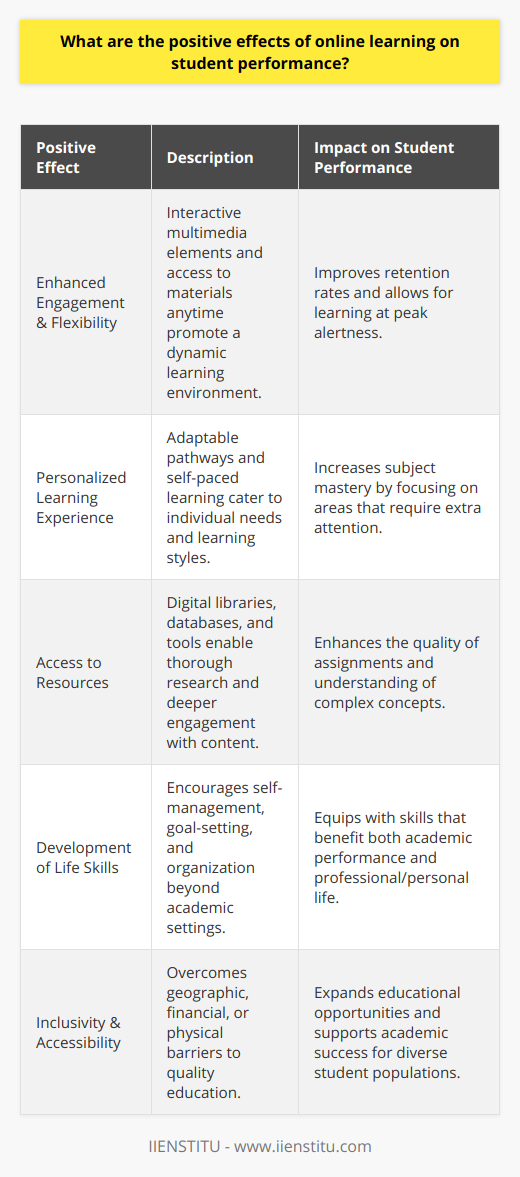
Online learning has revolutionized the approach to education, offering students a variety of benefits that can enhance their academic performance. One of the most significant advantages is the enhanced engagement and flexibility that these platforms provide. Unlike traditional classroom settings, online courses often feature interactive elements, such as forums, quizzes, and multimedia presentations, which foster a more dynamic learning experience. The flexibility of accessing course materials at any time also allows students to learn when they are most alert and ready to absorb information.The shift toward a personalized learning experience is another positive effect of online education environments. Adaptable learning pathways enable students to concentrate on specific subjects or topics where they might need extra help, proceeding through course materials at a pace that suits their learning styles. This level of customization ensures that students are not left behind or bored by a one-size-fits-all curriculum and can lead to increased mastery of the subject matter.Access to a vast array of resources is another key benefit. Digital libraries, specialized databases, and a plethora of online tools are just a click away, greatly enhancing a student's ability to conduct thorough research, review complex concepts, and engage deeply with course content. Additionally, the collaborative nature of many online learning platforms encourages students to work together on projects and discussions, exposing them to different viewpoints and fostering a more comprehensive understanding of the subject matter.Online education also serves to develop important life skills. Without the structure of a traditional classroom, students learn to manage their time effectively, set goals, and organize their study schedules. This self-directed approach not only boosts their performance academically but also instills skills that are invaluable in professional and personal settings.Finally, online learning is an inclusive alternative that overcomes many barriers associated with conventional education. Geographic constraints are no longer an issue, allowing students from remote or underserved areas to access quality education. Additionally, for those who might have faced financial barriers or physical challenges, the online format can be a more affordable and accessible option.In essence, the positive effects of online learning on student performance are multifaceted and widespread. By providing an engaging, flexible, and personalized educational experience that fosters inclusivity and the development of key skills, online learning has the potential to elevate a student's academic journey. As education continues to evolve in the digital age, the benefits of online learning will undoubtedly expand, leading to further enhancement of student performance across various fields.

Accommodating Diverse Learning Styles

Online learning provides a plethora of tools and resources that cater to various learning styles, enabling learners to engage with content in ways that best match their preferences. One key aspect of online learning is the use of multimedia content, such as videos, audio recordings, and interactive activities. These formats enable auditory, visual, and kinesthetic learners to access and process information more effectively.

Flexible Pacing and Scaffolding

Additionally, online learning allows for flexible pacing and scaffolding, accommodating learners who require extra time to understand concepts or advanced learners who wish to progress more rapidly. This flexibility empowers students to work through the content at their own pace, aligning with their individual needs and capabilities.

Interaction and Collaboration

Online learning platforms often incorporate discussion forums, chat rooms, and collaborative tools, fostering interaction and collaborative learning. These virtual spaces enable learners with different strengths and perspectives to contribute, facilitating a rich and diverse learning experience. Moreover, they address students' social needs and provide opportunities for real-life application of knowledge.

Personalization and Adaptation

Many online learning platforms incorporate adaptive learning technologies, enabling content to be tailored specifically to individual learners' strengths, weaknesses, and preferences. By continually monitoring progress and adjusting content to meet learners' needs, online learning platforms promote genuine understanding and mastery.

Supporting Learners with Special Needs

Finally, online learning platforms have the potential to support learners with special needs in ways that traditional classroom environments may struggle. For instance, screen readers, closed-captioning options, and adjustable font sizes accommodate those with visual or hearing impairments, while text-to-speech tools can assist students with reading difficulties.

In summary, online learning caters to diverse learning styles and needs by providing multimedia content, flexible pacing, opportunities for interaction and collaboration, personalized and adaptive learning experiences, and accommodations for learners with special needs. These features promote a more inclusive, accessible, and effective learning environment for all students.
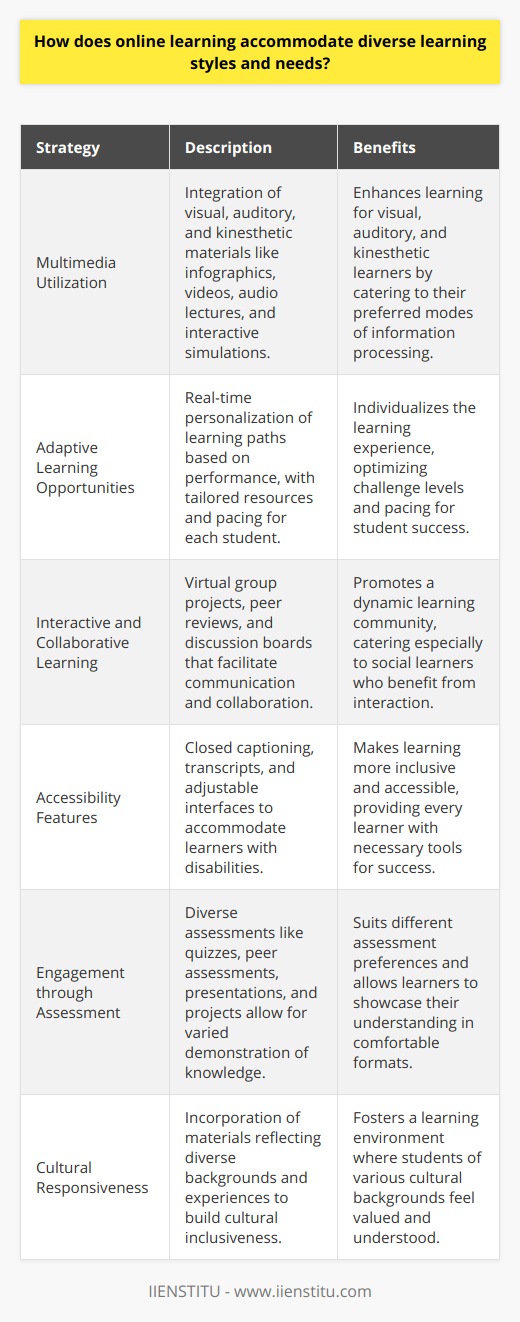
Online learning offers a rich landscape for addressing diverse learning styles and needs effectively. The key to successfully catering to a broad spectrum of learners is the thoughtful integration of a variety of teaching methods, resources, and technologies that recognize and respect individual differences. Let’s explore a few of these strategies within online environments, such as those offered by IIENSTITU.Multimedia UtilizationOnline courses are particularly well-suited for implementing multimedia learning components, which can vastly enhance the learning experience for different types of learners. For example, visual learners benefit significantly from infographics, charts, and videos that illustrate concepts. Auditory learners, meanwhile, may find audio lectures and discussions more conducive to their absorption of information. Kinesthetic learners can engage with the material through interactive simulations and assignments that require them to actively apply what they are learning.Adaptive Learning OpportunitiesOnline platforms leverage the power of adaptive learning technology to create personalized paths through course material. This means that a course can adapt in real time to the learner’s performance, offering additional resources for concepts they find challenging or allowing them to skip over material they have already mastered. This individualized approach ensures that each student can learn at a pace that is just right for them, keeping them neither bored nor overwhelmed.Interactive and Collaborative LearningCollaboration and communication are integral to educational growth, and online platforms do not fall short in this aspect. Virtual classrooms can facilitate group projects, peer reviews, and discussion boards that bring a range of perspectives together. This not only caters to social learners who thrive on interaction but also creates a dynamic learning community that enriches the experience for everyone involved.Accessibility FeaturesOnline learning inherently promises greater accessibility, which is a crucial consideration in accommodating diverse learning needs. Features such as closed captioning, transcripts for audio materials, and adjustable user interfaces make learning more inclusive for individuals with disabilities. Such accommodations ensure that all learners have the tools necessary to succeed.Engagement through AssessmentEngaging and varied assessment methods are another strength of online learning platforms. These could include quizzes, peer assessments, presentations, and practical projects that cater to different learning preferences. Flexible assessment options allow learners to demonstrate their knowledge and skills in the format that best suits them.Cultural ResponsivenessLastly, online learning offers a broad scope for cultural inclusiveness. Courses can include materials that reflect a variety of backgrounds and experiences, thereby respecting diverse cultural perspectives. This helps create a learning environment where all students feel valued and understood.In conclusion, online learning, epitomized by offerings from platforms like IIENSTITU, effectively meets the challenge of accommodating diverse learning styles and needs. With multimedia resources, adaptive technologies, collaborative tools, accessibility options, varied assessments, and culturally responsive content, online learning stands out as a flexible and inclusive alternative to traditional education methods.

Subheading: Online Learning and Time Management

Online learning undoubtedly contributes to the development of vital skills, such as time management. Students engaging in online courses often need to balance various responsibilities, such as work, family, and extracurricular activities. As a result, these individuals must develop effective strategies to allocate their limited time efficiently. Online learning platforms facilitate this process by providing flexible scheduling options, empowering students to complete coursework at their own pace. Furthermore, online course formats often require students to adhere to self-imposed deadlines, fostering an environment in which they can practice and hone their time management skills.

Subheading: Enhancing Self-Motivation through Online Learning

In addition to fostering time management abilities, online learning can also play a pivotal role in promoting self-motivation. By its very nature, distance learning demands a significant degree of autonomy and self-direction. Students must navigate online resources, participate in virtual discussions, and coordinate group projects without the constant presence and guidance of a traditional instructor. This degree of autonomy requires students to highly self-motivated to succeed in their studies. Online learning environments thereby provide an ideal setting for individuals to cultivate their capacity for self-motivation.

Subheading: Maximizing Online Learning Benefits

To ensure that online learners fully benefit from the development of time management and self-motivation skills, support systems and resources must be in place. Institutions offering online courses should provide students with access to academic support services, such as online tutoring and digital study materials. Furthermore, instructors must encourage engagement and accountability by actively communicating with students and providing timely feedback on assignments. By prioritizing these support structures, institutions can maximize the potential for online learning to foster essential skills like time management and self-motivation.
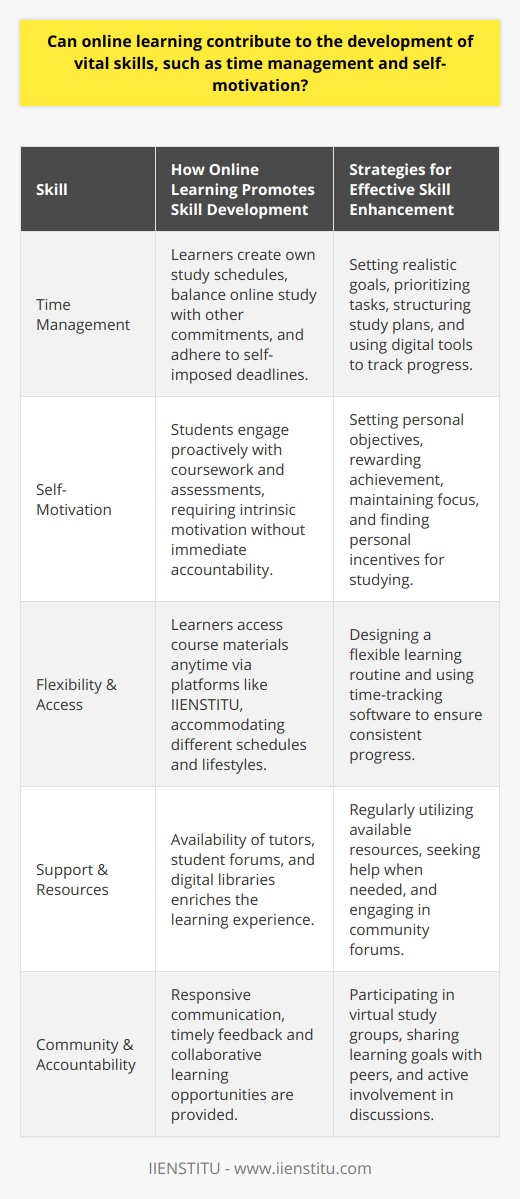
Online learning has revolutionized the education landscape, offering unprecedented flexibility and access to learning resources. This convenience, however, comes with the need for learners to acquire and master various skills for successful outcomes. Among these are time management and self-motivation, which are critical life skills in both personal and professional spheres.**Online Learning and Time Management**One significant advantage of online learning is its capacity to facilitate the development of time management skills. In the absence of a traditional classroom structure and set periods, learners are oftentimes required to create their own study schedules. Platforms such as IIENSTITU offer learners the ability to access course materials at any time, which, while convenient, also demands a disciplined approach to study.Learners must learn to prioritize tasks, set realistic goals, and adhere to self-imposed deadlines. This can involve balancing online study with other commitments and creating a structured plan that efficiently allocates time among various activities. Thus, online learning environments not only necessitate the practice of time management skills but also provide a conducive backdrop against which these skills can be refined and perfected.**Enhancing Self-Motivation through Online Learning**Self-motivation is another critical skill that is often enhanced through online learning. The self-paced nature of many online programs means that students must be proactive in engaging with the coursework, participating in discussions and, completing assessments. Without the immediate accountability of an in-person class, learners must find intrinsic motivation to drive their academic pursuits.The distance learning model encourages students to set personal objectives and rewards self-starters who take initiative in their education. Success in this environment is closely linked to a learner's ability to maintain focus and persistence, even when faced with the distractions and challenges of studying remotely. As such, online learning not only relies on one's self-motivational prowess but also serves as a proving ground for the continuous enhancement of this vital skill.**Maximizing Online Learning Benefits**While online learning inherently promotes time management and self-motivation, capitalizing on these benefits requires thoughtful design and implementation of online programs. An essential aspect of this is the provision of comprehensive support and resources to learners. For example, IIENSTITU offers a variety of support mechanisms, including access to tutors, forums for student interaction, and resources like digital libraries to enrich the learning experience. Additionally, instructors need to take active measures to foster a sense of community and engender accountability amongst learners. Responsive communication, timely feedback, and opportunities for collaborative learning can contribute significantly to student motivation and time management skills. In conclusion, online learning is not merely a medium for content delivery but a rich context for developing skills that transcend academic environments. As online education continues to evolve, it will likely foster even greater enhancements in time management and self-motivation, preparing learners for the demands of the modern world.

Subheading: Greater Accessibility of Education

One crucial advantage of free classes lies in their enhanced accessibility, as they remove geographical and financial barriers that some individuals might face. By offering courses online, educational institutions can reach a broader audience, including those who may not have access to traditional forms of learning. Additionally, the absence of fees makes education more easily available to those from low-income backgrounds.

Subheading: Flexibility in Learning

Free courses often provide increased learning flexibility in comparison to traditional, fee-based counterparts. Online platforms allow individuals the convenience of accessing materials and participating in discussions at their pace. They can balance work, family, and other commitments while pursuing their education, fostering greater engagement among a diverse group of learners.

Subheading: Reducing Financial Burden

The absence of financial pressure in free classes encourages more individuals to pursue education without the fear of accumulating debt. Tuition fees and additional costs associated with traditional education can deter many from furthering their studies. By offering free courses, institutions can help minimize this financial burden significantly and enable learners to focus on their studies without the stress of financial constraints.

Subheading: Enhancing Skills and Employability

Access to free classes can directly enhance learners' skills and employability in various industries. Empowered by the opportunity of learning without financial limitations, individuals can acquire new proficiencies and qualifications for better career prospects. This skill acquisition aids in employment and overall professional growth, benefiting both the learners and the wider economy.

Subheading: Fostering a Culture of Lifelong Learning

Free classes contribute to the development of a culture of lifelong learning that empowers individuals to keep acquiring and updating their skills throughout their lives. By making education more accessible and affordable, people are more likely to remain engaged and invested in their personal and professional growth, ultimately leading to a more knowledgeable and skilled society.

In conclusion, free classes offer a plethora of benefits to learners in terms of accessibility, reducing financial burden, increasing flexibility, enhancing employability, and fostering a culture of lifelong learning. By democratizing education, these classes have the potential to contribute to a more equitable, skilled, and knowledgeable society, benefiting all those who wish to pursue a lifetime of learning.
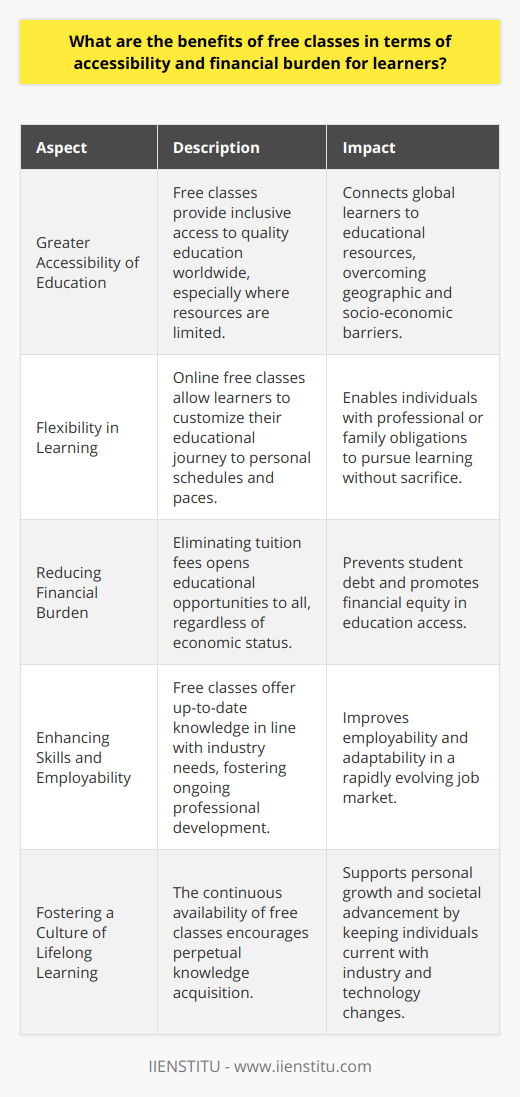
The transformative power of free classes on learners' lives can be observed through the lens of accessibility and financial burden. By extending the reach of educational resources to a diverse and global audience, educational initiatives including IIENSTITU, a prominent platform offering a variety of free classes, have become a catalyst for change in the contemporary educational landscape.Greater Accessibility of EducationFree classes embody the principles of inclusivity and democratization of knowledge. They serve as a bridge, connecting learners from disparate corners of the world to quality education they might otherwise be unable to access. This heightened accessibility is particularly powerful for regions where educational resources are scarce, or where the socio-economic circumstances restrict individuals from engaging in learning experiences. With online offerings such as those from IIENSTITU, anyone with internet access can benefit from high-quality educational resources, regardless of their geographical location.Flexibility in LearningThe structure of free classes inherently promotes a personalized learning experience. Unlike rigid, time-bound classroom settings, free online courses offer learners the liberty to curate their educational journey to fit their individual schedule and learning pace. This flexibility can be especially advantageous for those who are already juggling professional responsibilities or familial obligations, as it allows them to integrate learning seamlessly into their daily lives without having to sacrifice other commitments.Reducing Financial BurdenFinancial aspects often dictate an individual's ability to pursue education. Free classes symbolize an educational emancipation that lifts the financial gates to knowledge acquisition. By eradicating the tuition fee barrier, learners from all socio-economic backgrounds gain equal footing in their educational pursuits. The value of this cannot be overstated, as it not only lightens the immediate monetary load but also shields learners from the long-term financial encumbrance of student debts that frequently afflict those in fee-based education systems.Enhancing Skills and EmployabilityThe professional realm is in a constant state of evolution, with new skills and competencies becoming valuable currency in the job market. Free classes play a pivotal role in enabling continuous professional development. They serve as a perpetual repository of knowledge that learners can tap into to enhance their skills, ensuring that their employability evolves in tandem with the demands of the workforce. Platforms like IIENSTITU illuminate the path for career advancement by offering courses that are contemporaneous with industry needs, thereby supporting both personal growth and economic advancement.Fostering a Culture of Lifelong LearningThe model of free classes perpetuates a paradigm shift towards a lifelong learning mentality. In stark contrast to the conventional, terminal view of education that culminates at a certain age or stage, the availability of free classes inspires an ongoing pursuit of knowledge. This is crucial in an age where industries and technologies are dynamically progressing, necessitating that individuals remain learners for life to stay adept.The ramifications of free classes are profound. They not only empower individuals in their personal and professional spheres but also hold the potential to engineer a more enlightened and equitable society. As entities like IIENSTITU champion this mode of education, they serve as the vanguards of change, propelling us towards a future where knowledge is a shared and unbounded resource.

Online Education Advantages

One of the key advantages of online education is its flexibility, which allows students to learn at their own pace and schedule. This is particularly beneficial for those who may be balancing work, family, or other commitments alongside their education. Online education also offers convenience, as students can participate from any location with an internet connection. This can lead to cost savings in terms of commuting, accommodation, and other associated expenses.

Potential Disadvantages of Online Education

Despite the aforementioned benefits, online education also has potential downsides. One of these is the lack of face-to-face interaction, which can hinder the development of critical communication and social skills in students. Collaborative learning can be more difficult to achieve in an online setting, given the absence of physical presence and non-verbal cues, which are essential in group discussions or teamwork. Moreover, networking opportunities might be limited, as students may have fewer chances to interact with their peers and teachers.

Technical Difficulties in Online Learning

Another potential disadvantage of online education is the presence of technical difficulties, which can significantly impact the overall learning experience. Students and teachers alike may face issues related to reliable internet connectivity, software compatibility, or platform navigation. Moreover, the reliance on technology can create a barrier for students who may not have access to appropriate devices or those with limited technical proficiency. These challenges, if not addressed, could result in a compromised learning experience, inadequate performance assessment, and ultimately, diminished educational outcomes.

Conclusion

In conclusion, while online education offers flexibility and convenience, the potential downsides, such as the lack of face-to-face interaction and technical difficulties, must be considered and addressed. Educational institutions should strive to create a balance between leveraging the advantages of online education and mitigating its potential disadvantages to enhance the overall learning quality and ensure students achieve their educational goals successfully.
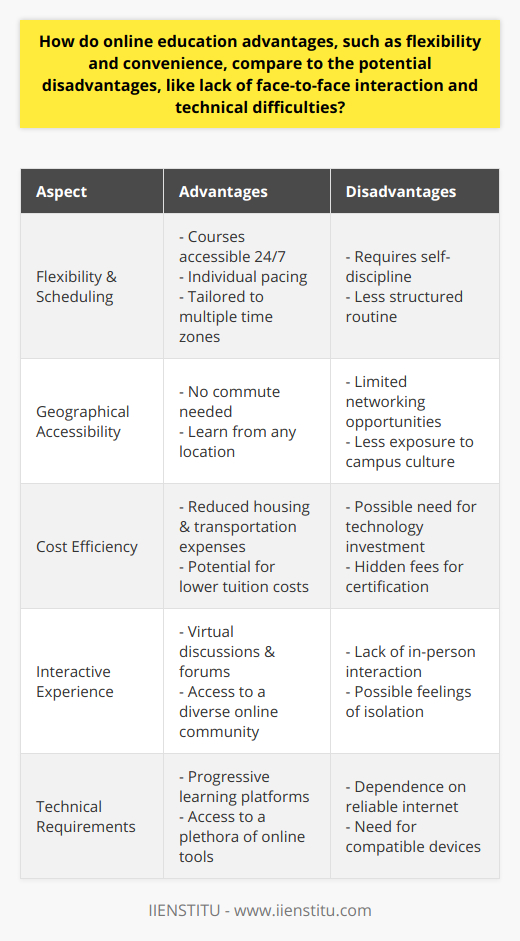
Online education has transformed the traditional landscape of learning, providing students with unprecedented access to educational resources. One integral player in this space is IIENSTITU, known for offering a wide variety of online programs that embody the flexibility and convenience associated with digital learning. However, this form of education is not without its challenges. Let us explore these aspects in greater detail, balancing both sides of the online education spectrum.Flexibility and Convenience: The Core AdvantagesThe most highlighted advantage of online education is its ability to mold around a student's personal and professional life. Gone are the days of rigid class schedules. IIENSTITU and similar institutions allow learners to access course materials at any hour, accommodating different time zones and personal obligations. This asynchrony relieves the pressure of immediate responsiveness and allows for thoughtful engagement with content.Another facet of this convenience is the removal of geographical barriers. Students can avoid housing costs and long commutes, as they can simply log in from their homes or even while traveling. This broadens the reach of education, especially for those who live in remote areas or have mobility constraints.The Silent Setbacks: Lack of In-Person Engagement and Technical HurdlesYet, with no physical classrooms, the absence of direct, face-to-face interaction is palpable. This can lead to feelings of isolation and may impact the development of interpersonal skills which are paramount in collaborative settings. Online learning platforms strive to emulate classroom discussion via forums and live video sessions, but the organic nature of in-person conversations can be lost.Technical difficulties present another obstacle; they are the weather conditions of the virtual learning environment. From glitchy video conferences to compatibility issues with learning management systems, these disruptions can lead to frustration and hinder the seamless flow of learning. The assumption that all students will have uninterrupted internet access and modern devices is also a significant concern, potentially creating a digital divide.Finding the EquilibriumThe essence of maximizing the potential of online education lies in striking the right balance. Institutions should focus on enhancing virtual communication, perhaps by incorporating more synchronous elements and providing clear channels for interaction. Building a robust technical support system also serves to ameliorate the disruptive nature of technical issues. Addressing the digital divide by offering resources or support to access necessary technology is another step towards inclusivity.In integrating these strategies, it’s crucial to ensure that the educational experience is enriched rather than diminished by the virtual format. By proactively addressing these pain points, institutions such as IIENSTITU can pivot the narrative, not as a compromise but as an evolved form of learning suited for the complexities and diversities of the contemporary world.In essence, online education is not just a matter of adapting to technology, but rather leveraging it to create a dynamic and inclusive educational ecosystem that equips learners with the knowledge and skills necessary for the future. With this mindful approach, the potential disadvantages can gradually be transformed into opportunities for innovation in education.

Expanding Global Perspectives

Online courses offer unprecedented opportunities for learners to interact with peers from diverse backgrounds, facilitating the development of global perspectives and cultural awareness. Through various means of online communication, such as discussion forums and video conferences, learners discuss ideas, exchange experiences, and share personal stories, transcending geographical barriers.

Building Cultural Awareness

Cultural awareness is an essential skill in today's interconnected world. Online courses help learners develop this trait by allowing them to work directly with individuals from different cultural backgrounds. Collaborative projects and group assignments enable learners to foster mutual understanding, empathy, and respect. Through these interactions, learners identify shared values, misconceptions, or stereotypes about different cultures, thus enriching their cultural competence.

Promoting Intercultural Communication

Effective intercultural communication is a critical skill for individuals wishing to thrive in a global society. Online courses provide opportunities for learners to practice their communication skills with individuals from different backgrounds, particularly as they collaborate on projects and group work. By engaging in these interactions, learners familiarize themselves with linguistic nuances and seek to overcome linguistic barriers.

Encouraging Open-Mindedness and Critical Thinking

By exposing learners to diverse perspectives, online courses encourage open-mindedness and critical thinking. As learners encounter different viewpoints and engage in respectful debates, they become more open to new ideas and better equipped to evaluate them critically. No longer confined to the perspectives of their immediate surroundings, learners develop an appreciation for other cultures and ways of thinking.

The interconnectedness of our world has made it vital for individuals to develop global perspectives and cultural awareness. Online courses provide a platform for learners to interact with peers from diverse backgrounds, promoting cultural understanding and effective intercultural communication. This ultimately helps foster open-mindedness and critical thinking skills, allowing individuals to succeed in our rapidly globalizing world.
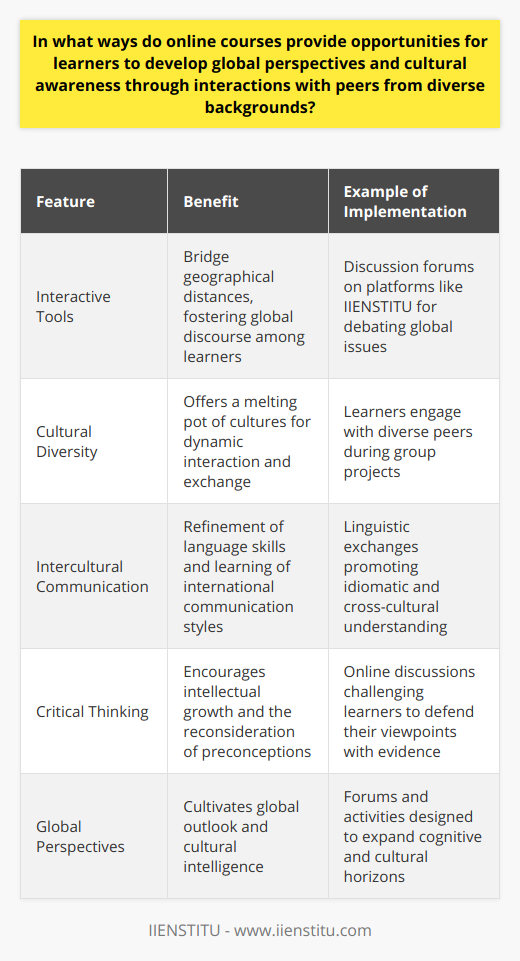
In the digital age, online education has become an indispensable mode of learning, offering access to a wealth of knowledge and connections that span the globe. One of the most significant advantages these courses offer is the ability to cultivate global perspectives and enrich cultural awareness among learners. Institutions like IIENSTITU harness the power of internet-based learning to bring people together from around the world, optimizing the virtual classroom experience to nurture intercultural understanding and connection.Global Perspectives through Diverse InteractionsOnline courses are equipped with interactive tools that bridge the physical distances between learners, converting miles into mere clicks and keystrokes. Through participation in discussion forums, learners from various corners of the world can deliberate over global issues, trade experiences, and challenge each other's viewpoints. This discourse helps to construct a shared understanding of different life experiences and worldviews, encouraging learners to think beyond their local and national boundaries.Diversity in the Virtual ClassroomThe virtual classroom is a melting pot of cultures, providing a space for dynamic interaction and cultural exchange. Learners can engage with peers from different ethnicities, religions, and socio-economic backgrounds, learning to navigate the nuances of cross-cultural communication. Group projects often become exercises in global cooperation, teaching participants the importance of cultural sensitivity and adaptability – skills highly prized in today's multicultural work environments.Enhancing Intercultural Communication SkillsIn the world of remote work and international collaborations, the ability to communicate across cultural divides is paramount. Online learning platforms allow learners from diverse linguistic backgrounds to converge, promoting an exchange of idiomatic expressions and communication styles. As a result, participants refine their language skills, learning how to convey ideas respectfully and effectively to a broad audience.Fostering Critical Thinking and OpennessEngagement with a variety of perspectives is a driver for critical thinking and intellectual growth. Online discussions often require learners to consider alternative viewpoints and defend their positions with sound reasoning and evidence. This process not only deepens subject matter understanding but also encourages learners to remain open to revising their preconceptions and expanding their cognitive horizons.As we march further into the 21st century, the need for individuals who possess a global outlook and cultural intelligence only grows evermore. Online courses are powerful platforms that can forge inclusive communities of learners, fostering an ambiance where cultural insight and global awareness can flourish. It is through such educational experiences that learners become adept at navigating the complexities of an interconnected world, equipped with the awareness and skills necessary for success on the international stage.

Convenience and Flexibility

Online courses offer immense convenience. People can access their course content from anywhere, at any time. They are not tied to a location or specific class hours, offering great flexibility.

Self-Paced Learning

Online courses also allow learners to progress at their own pace. This is particularly beneficial for individuals with varying learning styles and speeds. They can revisit course materials as needed, ensuring comprehensive understanding.

Cost-Effectiveness

Generally, online courses tend to be more cost-effective than traditional classroom courses. They eliminate commuting costs, textbook expenses, and other out-of-pocket expenses typically associated with traditional classes.

Accessible Learning Materials

In many cases, online courses provide readily accessible learning materials. Electronic resources like e-books, videos, or discussion forums are often included. This eliminates the need for costly textbooks or additional materials.

Technological Skills Enhancement

Undertaking online courses can help participants improve their technological skills. Utilizing different online tools, like video conferencing, virtual collaborations, and cloud-based software, can enhance enrollees' digital literacy.

Diverse Course Selection

Online platforms offer a vast selection of courses that may not be available in local institutions. They allow people to explore diverse subjects and acquire new knowledge or skills in an area of personal or professional interest.

Personal Comfort

Learning online allows individuals to create a comfortable learning environment. They avoid crowded classrooms and have the freedom to work in a space where they feel most productive and at ease.

Inclusivity and Diversity

Online education creates an inclusive learning environment, allowing people from different cultures, life experiences, and geographical locations to learn together. This encourages a diversity of thought and perspective, enriching the learning experience.

In conclusion, it's evident that online courses offer a range of benefits over traditional classroom settings. These pertain not just to convenience, cost, and flexibility, but also to the quality of learning, skills enhancement, and broader worldviews provided. Consequently, the preference for online courses comes as no surprise.
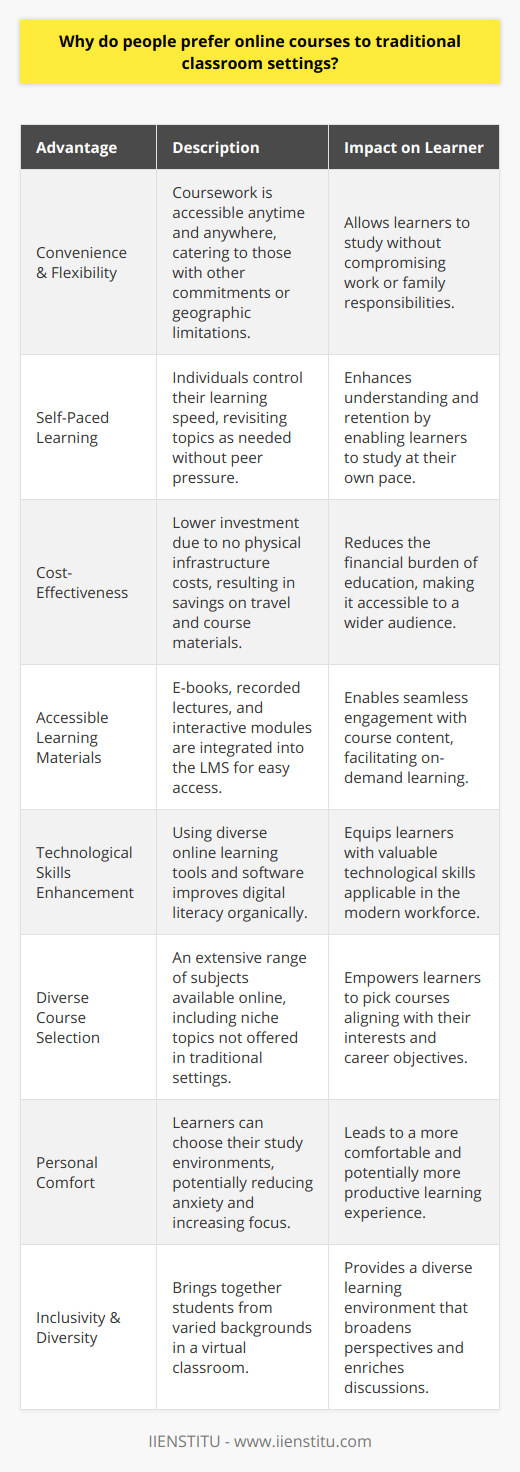
Online education has revolutionized the way we acquire knowledge, breaking down the geographical, time, and financial barriers that often accompany traditional classroom settings. The ever-increasing preference for online courses stems from several key factors that cater to the modern learner’s needs.**Convenience and Flexibility**One of the primary reasons for this shift is the unparalleled convenience and flexibility that online learning offers. With the ability to access coursework from anywhere with an internet connection, learners are no longer bound to the four walls of a classroom or rigid timetables. This flexibility is particularly appealing for adults with jobs, parents with childcare commitments, and those for whom attending a campus is logistically challenging.**Self-Paced Learning**Self-paced learning stands out as a distinct advantage of online courses. In a traditional setting, the class progresses at the pace set by the instructor, which may not align with every student's learning speed. Conversely, online learning allows individuals to traverse course material at a rhythm that suits their learning style and comprehension level, revisiting complex topics without the pressure of falling behind their peers.**Cost-Effectiveness**When it comes to cost-effectiveness, online courses often have the upper hand. They typically require a lower financial investment due partly to the absence of physical infrastructure and the related expenses for the provider. For learners, this translates into savings on commuting, parking, and accommodation for those out-of-city campuses, not to mention the often-reduced or eliminated need for physical textbooks in favor of digital materials.**Accessible Learning Materials**The digital nature of online courses ensures that learning materials are just a click away, often integrated into the learning management system (LMS) via e-books, recorded lectures, and interactive modules. This instant access enables learners to engage with course content whenever necessary, which complements different learning preferences and reinforces retention.**Technological Skills Enhancement**Navigating online courses inadvertently enhances an individual's technological skill set. Engaging with diverse online tools, platforms, and learning software form part of the online learning process. This organic learning curve in digital literacy is a valuable transferable skill in the contemporary workforce.**Diverse Course Selection**The diversity of courses available online often surpasses that of traditional institutions. This plethora reflects and satisfies a global curiosity and the pursuit of niche skills and knowledge not always represented in localized education systems. It empowers people to tailor their education to specific interests and career goals.**Personal Comfort**Online learning offers the comfort of engaging with content from an environment chosen by the learner. Be it a quiet cafe, the comfort of one's bedroom, or a local library, this flexibility eradicates the anxiety some associate with physical classroom settings, leading to a potentially more focused and effective study session.**Inclusivity and Diversity**Virtual classrooms are inherently more diverse, uniting people from different backgrounds, cultures, and life experiences. This melting pot of perspectives fosters a unique and rich learning landscape where students can gain a multi-faceted understanding of topics through peer interaction and discussion.Given these compelling benefits, it's clear why many prefer online courses to traditional educational routes. This preference is likely to continue growing as technological advancements and innovative educational techniques further enhance the online learning experience.

Tuition Reductions and Resource Savings

Online learning often leads to significant savings in tuition fees. Many online institutions offer cheaper per-credit rates than traditional brick-and-mortar institutions. For instance, Coursera charges low certification costs for most of its courses. Online students also don't need to worry about traditional education costs like transportation, accommodation or textbooks, providing further tuition reductions.

Convenient Learning Styles

The flexibility online learning provides promotes a cost-effective learning environment. Learners can access course materials anytime, anywhere, reducing the need for physical classrooms. This learning style not only saves on commuting costs but also lowers the expenses tied to maintaining physical infrastructures.

Technology and Tools

Using advanced technology and tools, online learning provides information at the fingertips of students. Merging technology with education allows for study materials in a digital format. Students can eliminate printing costs associated with traditional learning.

Elimination of Geographical Constraints

By offering courses online, institutions reach out to more students without incurring the cost of expanding physical infrastructure. This grants students worldwide the opportunity to study without the financial burden of relocation or travel.

While the benefits of online learning certainly don't make traditional methods obsolete, they do present cost-effective opportunities for many students. As online platforms and technology continue to evolve, it's likely that the cost-effectiveness of online learning will continue to increase.
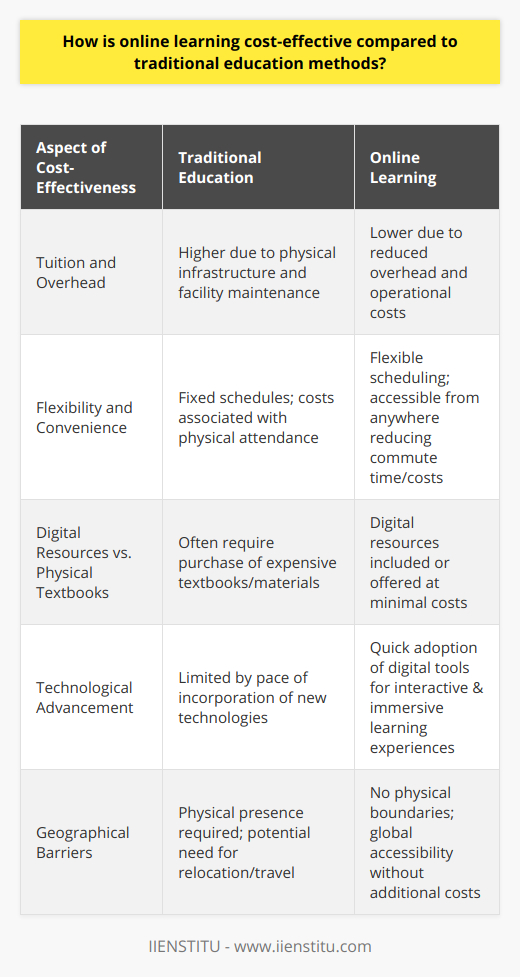
Online learning represents a paradigm shift in how we approach education, providing a cost-effective alternative to traditional classroom-based instruction. One key aspect of this cost efficiency lies in the reduction of tuition fees. Online education platforms often have the advantage of reduced overhead costs, which enables them to offer courses at a lower rate compared to their traditional counterparts. For example, IIENSTITU, an esteemed online learning institution, leverages this model by offering a range of educational programs at competitive prices, without sacrificing the quality of instruction.The nature of online learning allows for a more convenient approach to education, which can be tailored to individual lifestyles and commitments. This flexibility is inherently budget-friendly as it negates the necessity for a physical presence in a classroom setting. Students save on various expenses typically associated with attending classes in person, such as transportation costs, parking fees, and the time spent commuting. Furthermore, the absence of a need for physical textbooks and materials – which can often be costly – adds to these savings, as many online courses provide digital resources which are included in the tuition fee or available at a minimal cost.Technological advancements play a crucial role in the cost-effectiveness of online education. Digital tools and learning management systems offer immersive and interactive experiences that can frequently surpass traditional teaching methods, all while significantly reducing the need for paper-based materials. The streamlined communication channels in online platforms facilitate timely and efficient student-teacher interaction, which can often lead to a more personalized and thus more cost-effective learning experience.One of the most significant ways online learning is cost-effective is by eliminating geographical barriers. Traditional education often requires significant investments in maintaining and expanding physical infrastructure to accommodate more students or offer additional programs. This is not the case for online institutions, which can effortlessly scale their offerings to a global student base without corresponding increases in physical space or resources. Students from every corner of the world can enroll in courses without the financial burden and logistical challenges of relocation or long-distance travel.Finally, it is essential to acknowledge that while online learning is increasingly accessible and affordable, it doesn't render traditional education methods obsolete. In-person instruction still has its unique advantages and remains preferable for certain fields of study. Nevertheless, for many students, particularly those who require flexibility or who are cost-conscious, online education is an advantageous alternative that offers a wealth of opportunities.As digital technologies evolve and become more embedded in the educational landscape, the gap between traditional and online education costs will likely widen further, making online learning an even more attractive proposition for students seeking quality education at an affordable price. With institutions like IIENSTITU leading the charge in quality online education, the future for learners seeking cost-effective opportunities looks promising.

Enhancing Global Diversity in Learning

Online courses play a vital role in fostering a diverse learning community. They break down geographical borders by offering access to quality education irrespective of an individual's location. In fact, this feature allows learners from different parts of the world to interact, share ideas and experiences, thereby enhancing the richness of the learning environment.

Creating an Inclusive Learning Space

Online courses don't just provide global access, they also accommodate diverse learning styles. They offer an array of multimedia like videos, texts, quizzes, which cater to different learning preferences, thereby ensuring inclusivity. Moreover, online forums and chatrooms offer platforms where learners can interact, solving problems collectively.

Cultivating an Intercultural Understanding

Being part of a global learning community, students get exposed to varied cultural perspectives that broaden their worldview. This intercultural exposure can foster a deeper understanding of global issues and enhance their ability to work in multicultural settings in the future.

Promoting Equal Opportunities

Lastly, online courses level the playing field by offering everyone the same quality of education, irrespective of their socio-economic status. In many cases, online courses are less expensive than traditional classroom-based courses, thus promoting accessibility. By offering certificates and degrees online, education becomes more democratized, offering a chance for learners from all walks of life to improve their skills and knowledge.

In conclusion, online courses are instrumental in building a diverse, global learning community. They offer valuable opportunities for learners to interact with each other across geographical borders, understand different cultures, cater to different learning styles and provide equal educational opportunities to everyone.
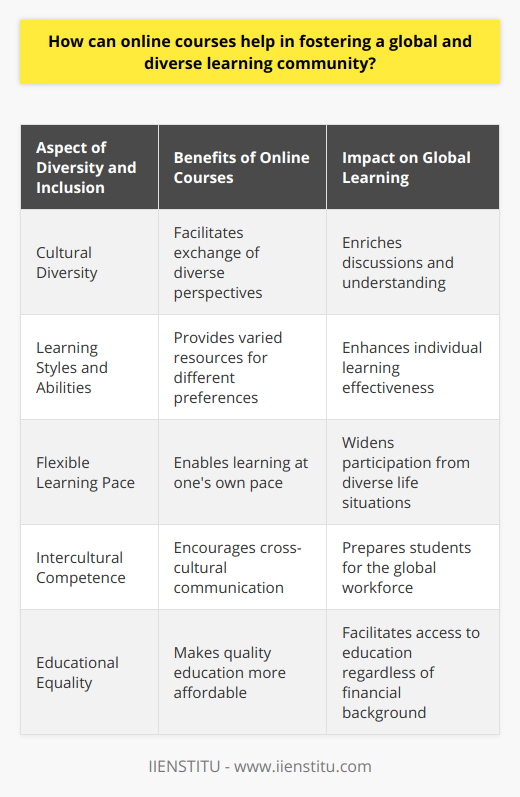
Online courses have emerged as a transformative force in the world of education, fostering an unprecedented level of diversity and inclusion in the learning process. They have blurred the lines between countries and continents, making it possible for anyone with internet access to join a global learning community.One of the most salient benefits of online courses is their capacity to connect individuals from various backgrounds, cultures, and experiences. This global congregation of students enriches discussions with an array of perspectives that would be impossible in a traditional classroom setting, leading to a more comprehensive understanding of course materials. When students from different countries tackle the same subject matter, they bring unique insights shaped by their cultural contexts, fostering a melting pot of ideas and viewpoints.In addition to bridging geographical divides, online courses promote diversity in learning styles and abilities. People with varied learning preferences—be it visual, auditory, or kinesthetic—can find resources that resonate most with their individual learning process. Online courses typically provide materials in various formats, allowing students to engage with content in the way they find most effective, from interactive simulations to in-depth reading material.Moreover, the asynchronous nature of many online courses means that students can learn at their own pace, a feature that makes these courses especially inclusive for individuals with responsibilities outside of education, such as working professionals or caregivers. This flexibility invites participation from a broader demographic, fostering a learning community that is rich in life experiences and practical applications of course concepts.Beyond accommodating diverse learning styles, online courses play a critical role in promoting intercultural understanding and competence. In a world that's increasingly interconnected, cultivating this global sensibility is essential. Students who participate in online forums and collaborative projects get firsthand experience with cross-cultural communication and teamwork, preparing them for the global workforce.Equality in education is another significant pillar of the global and diverse learning community promoted by online courses. By providing quality education at a lower cost compared to traditional classroom settings, online learning opens doors for individuals who otherwise might not afford tertiary education. Moreover, institutions like IIENSTITU and others offer certificates and degrees online, validating online education as a genuine pathway to career advancement and personal growth.To summarize, online courses are essential in creating an inclusive educational environment where diversity is not just accepted but valued. They empower individuals from every corner of the world to engage with one another, share and value different cultural viewpoints, and enjoy equal access to education regardless of their financial background. Online learning is not just a convenience; it is a powerful catalyst for creating a more inclusive, educated, and interconnected world.

Pros of Online Learning

One advantage of online learning is that it offers flexibility. Students can engage in learning at their own pace and time. This autonomy can motivate students who thrive in independent learning environments. Technology in online learning also provides diverse learning materials, stimulating student engagement. The use of multimedia, interactive tasks, forums, and virtual classrooms cater to different learning styles, potentially increasing student motivation. Additionally, the ease of access to resources improves knowledge retention as students can repeatedly review material.

Cons of Online Learning

Despite these benefits, online learning also presents challenges in terms of student engagement, motivation, and retention. Students may feel isolated, lacking the social dimension of traditional classroom learning. This lack of community can negatively affect motivation. Furthermore, the autonomous nature of online learning requires self-discipline. Procrastination or distraction can thus lead to reduced engagement. Finally, while having resources readily available can aid retention, the sheer volume of online content might become overwhelming, diluting the learning impact.

In conclusion, online learning offers both opportunities and challenges for engagement, motivation, and retention. The medium's effectiveness varies among students, necessitating the need for tailored approaches in online teaching and learning practices.
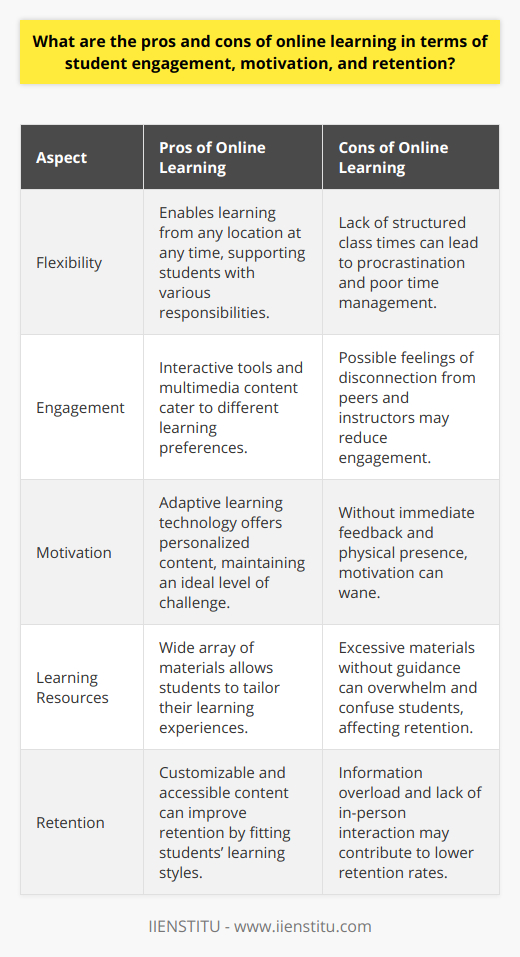
Online learning represents a significant shift from traditional classroom education, bringing with it a mix of advantages and challenges that affect student engagement, motivation, and retention in diverse ways.The Pros:One of the notable pros of online learning is the unprecedented flexibility it provides. This aspect is particularly beneficial for learners who may be balancing education with other responsibilities such as work or family. The ability to log in to classes and complete coursework from any location and at any time means that education becomes more accessible to a larger demographic, potentially engaging a broader audience who might not have otherwise participated in traditional learning environments.Moreover, the technological platform of online learning can make education highly engaging. Interactive tools such as gamification elements, video conferencing, and multimedia presentations can cater to different learning preferences, potentially increasing motivation. The availability of varied materials — from ebooks to educational videos — permits students to choose the resources that best fit their learning style, which can enhance the learning experience and aid in retention.Another potential advantage is the personalized learning environment online platforms can offer. Adaptive learning technologies are sometimes integrated into online courses, allowing content to adjust to the learner’s level, pace, and preferences, which can keep students motivated by consistently offering the right level of challenge.The Cons:On the flip side, online learning can create obstacles in building the collaborative and interactive atmosphere found in traditional classrooms. A sense of community is often cited as a key component in maintaining student motivation and engagement, and online learners might feel disconnected from their peers and instructors, which can lead to a drop in engagement. The absence of physical presence can reduce the immediacy and impact of feedback, potentially leaving students feeling unsupported.Self-discipline becomes crucial in the context of online learning. Without the structure imposed by a physical classroom and scheduled class times, students may procrastinate, struggle with time management, or get distracted by their environment. This need for strong self-regulation skills means that not all students thrive in an online learning environment.Finally, the vast array of resources available online can sometimes be a double-edged sword. While providing extensive material for learning is beneficial, it can also overwhelm students, leading to cognitive overload. Having too much information to sift through without adequate guidance can dilute the effectiveness of learning and may result in lower retention rates among learners.In Conclusion:Online learning, while highly beneficial in terms of flexibility and the breadth of resources, faces challenges in maintaining student engagement, motivation, and retention due to potential feelings of isolation, the need for self-regulation, and information overload. Tailoring online learning environments to support a sense of community, providing structure, and curating content to prevent cognitive overload are crucial steps in maximizing the positive impacts of online education. It is important for educational platforms, such as IIENSTITU, to consider these factors in the design and implementation of their courses to ensure they are meeting the diverse needs of online learners.

Implications of Flexibility in Online Learning

The primary advantage of online education lies in its inherent flexibility, which benefits students immensely in balancing academics and other commitments. This mode of learning allows students to attend classes and complete assignments on their own schedules.

Improved Time Management

Students can leverage this flexibility to organize their time according to their commitments and work patterns. They may dedicate time to their studies during non-traditional hours, such as late nights or early mornings. This flexibility greatly aids in efficient time management.

Better Stress Management

Additionally, the autonomy granted by online learning can lead to better stress management. This is because students can plan their workload according to their functioning rhythm, accommodating for personal and professional obligations.

Increased Responsibility and Independence

Critically, this flexibility also cultivates a sense of responsibility and independence among online learners. They must take charge of their time and learning, which bolsters their organizational skills and self-discipline. Furthermore, it ensures that learning becomes a prioritized aspect of their lives, intertwined with other commitments.

Adaptability to Personal Circumstances

Lastly, online learning's flexibility is especially beneficial for individuals with constraints such as jobs, family obligations, or geographical limitations. They can tailor their learning experience to suit their lifestyle or personal circumstances, preventing traditional barriers to education.

In conclusion, the flexibility in online learning has significant impacts on a student's ability to balance coursework with other responsibilities. It expedites effective time and stress management, fosters responsibility and independence, and facilitates adaptability to individual circumstances.
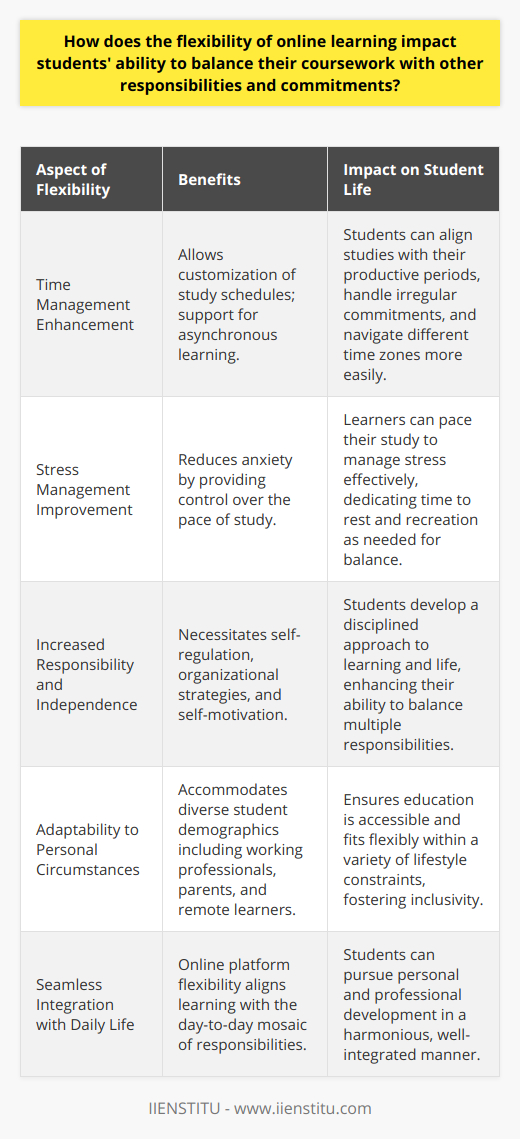
Implications of Flexibility in Online LearningThe evolution of online education has redefined the academic landscape, offering unparalleled flexibility that aligns with the contemporary pace of life. The cornerstone of online learning platforms like IIENSTITU is the ability to provide an adaptable education framework. This flexibility has profound implications on a student’s capacity to juggle coursework alongside personal and professional pursuits. Improved Time ManagementThe malleable nature of online courses allows students to customize their study schedules, embracing the concept of asynchronous learning where participation isn’t confined to a set time. This feature is invaluable for those who must navigate irregular work shifts, family care responsibilities, or even different time zones. The ability to access coursework and lectures at one's convenience breaks the temporal constraints of traditional classroom settings, thus enhancing time management skills. This autonomy empowers students to delineate study periods that resonate with their peak productive hours, whether that's during the still of the night or in the early morning tranquility.Better Stress ManagementFlexibility in online learning environments can mitigate stress and anxiety that often accompanies rigid educational structures. The freedom to spread out their studies or accelerate them based on personal comfort permits learners to approach education without the pressure of a conventional academic timetable. When students aren't racing against a uniform clock, they can allocate adequate intervals for rest and recreation, which are just as vital for a well-rounded student life.Increased Responsibility and IndependenceOnline education demands a heightened sense of self-regulation and independence. The convenience of flexible scheduling comes with the responsibility of self-monitoring progress and deadlines. Consequently, students develop robust organizational strategies and self-motivation capabilities, which are transferable to various realms of life. As learners configure their educational journey, they inadvertently cultivate a disciplined approach to both learning and balancing multiple aspects of their daily existence.Adaptability to Personal CircumstancesThe demographic of online learners is diverse, stretching beyond traditional students to include working professionals, parents, and those in remote locations. Flexibility in this context becomes a cornerstone for inclusivity, offering a lifeline to those who would otherwise be excluded from advancing their education due to logistical constraints. The choice to engage with materials at a personalized cadence ensures that regardless of one's situation, be it a geographical impediment or a tight career schedule, education remains accessible and aligns seamlessly with individual life circumstances.In the broad spectrum of modern education, online learning platforms epitomized by institutes like IIENSTITU reign supreme in offering flexibility that is rare and precious. Such adaptability not only empowers students to master their academic pursuits but also seamlessly integrate their learning within the mosaic of daily responsibilities. Consequently, the impact of flexibility in online learning is the creation of a more harmonious, balanced, and achievable pathway to personal and professional development.

Enhanced Access and Flexibility

Technology's advancement has significantly enriched the quality of online courses. It has improved access and flexibility. Through various digital platforms, learners can access a wealth of knowledge anytime, anywhere. Educational opportunities are now unlimited and not confined to geographic location.

Advanced Teaching Methodologies

Technology's progression has also introduced advanced teaching methodologies. Innovations like virtual reality, artificial intelligence, and gamification have made learning more interactive and engaging. It contributes to enhanced understanding and retention of knowledge. The use of multimedia, such as webinars and podcasts, adds a dynamic dimension to the educational content.

Improved Assessment and Feedback

The use of digital tools for assessment and feedback has increased the effectiveness of online courses. Technology provides instantaneous feedback, which helps in the immediate rectification of mistakes, encouraging the constant progress of learners. Furthermore, online platforms offer the ability to track learners' progress effectively, enabling personalized learning.

Collaboration and Communication

The advancement of technology has fostered collaboration and communication. Online discussion forums and virtual classrooms promote collaborative learning. They offer opportunities for learners to interact with peers and educators worldwide. This interaction promotes a deeper understanding of the subject matter and helps learners develop critical thinking and problem-solving skills.

Resource Efficiency

Technology has also streamlined the resource efficiency of online learning. The shift from physical textbooks to digital resources leads to significant cost and time savings. Furthermore, digital resources are easily updatable, ensuring learners always have access to the most recent information.

In conclusion, technology's advancement has greatly improved the overall quality and efficacy of online courses. It has brought a paradigm shift in the way education is delivered and has paved the way for a more accessible, engaging, and effective learning process. While technology cannot replace traditional classrooms completely, it can complement them effectively, creating a blended learning environment suitable for the 21st-century learner.
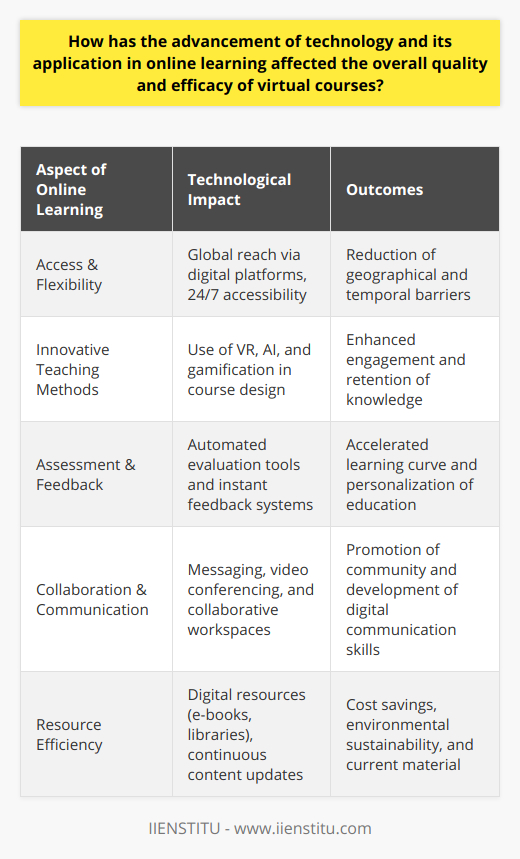
The advent and continuous improvement of technology have revolutionized the world in various sectors, and education is no exception. The application of technology to online learning has significantly enhanced both the quality and efficacy of virtual courses in several ways.One of the most profound impacts is the way technology has expanded access and flexibility in education. With the advent of online courses, learners from all over the world can access educational material regardless of their location or time zone, breaking down the traditional barriers of the education system. The digital platforms provided by institutions such as IIENSTITU facilitate a seamless learning experience that allows students to customize their education to fit around personal and work commitments.In terms of teaching methodologies, the progression of technology has brought about innovation through methods such as virtual reality, artificial intelligence, and gamification. These technologies have been incorporated into online courses to create immersive and interactive experiences that aid in the retention of knowledge. For example, virtual simulations offer a safe environment for learners to practice and hone skills that would otherwise require real-world experience, making the learning process more efficient and safe.Assessment and feedback mechanisms have also been improved thanks to technology. Digital tools can evaluate student work and provide instant feedback, enabling a faster learning curve and aiding in knowledge retention. Accurate tracking of a learner's progress over the course of their online study helps in tailoring the educational experience to individual needs, a feature particularly valuable for those with specific learning styles.Collaboration and communication have been significantly enhanced through technological advancements. Online learning platforms now include integrated tools for instant messaging, video conferencing, and collaborative project spaces. These tools help foster a community of learners and educators, leading not only to richer academic discussions but also to the development of digital communication skills essential in today's globalized workforce.Finally, technology has optimized resource efficiency in online learning. Digital resources such as e-books, digital libraries, and open-source materials provide substantial cost savings and are more environmentally sustainable than traditional textbooks. These resources can be updated continuously, which helps keep the course content current and relevant.In summary, the integration of technological advancements into online learning has transformed educational practices profoundly. It has not only made education more accessible but also more tailored, engaging, and interactive. Through improved teaching methods, assessment, collaboration, communication, and resource efficiency, virtual courses have seen a notable increase in their overall quality and efficacy. While online learning may not replace traditional classroom settings altogether, it certainly offers a robust alternative that is aligning well with the needs of a diverse global learner base in the digital age.

Course Content and Structure

The quality and credibility of an online course hinge significantly on its content and structure. A thorough scrutiny of the course's syllabus and learning outcomes can provide clues about its comprehensiveness and quality.

Instructional Design

The manner in which an online course presents its content, known as instructional design, is equally crucial. The best courses adopt instructional methods compatible with a digital learning environment, incorporating multimedia presentations, interactive exercises, and discussion forums.

Qualification and Expertise of the Instructor

The qualifications and expertise of the instructor are fundamental when evaluating an online course. The instructor should have sufficient educational qualification and professional experience. Good instructors have the ability to make complex subjects clear and engaging.

Credibility

The affiliated institution's reputation can indicate the credibility of an online course. Courses offered by well-recognized, prestigious institutions usually offer higher credibility. Equally, check whether the course provides a verified certificate upon completion as it would be useful for career enhancement.

Feedback and Reviews

Looking at the feedback and reviews from past students can give a good indication of a course's quality. They provide firsthand experiences of the course, which often include insight into the instructional methods, course content, and the competency of the instructor.

Course Delivery and Technical Support

Reliable delivery of course materials and strong technical support are equally important in an online learning environment. Courses should ensure consistent material access while also providing responsive support for technical issues.

In conclusion, paramount consideration should be given to course content and structure, instructional design, instructor qualifications, course credibility, feedback and reviews, as well as course delivery and technical support when evaluating the quality and credibility of an online course.
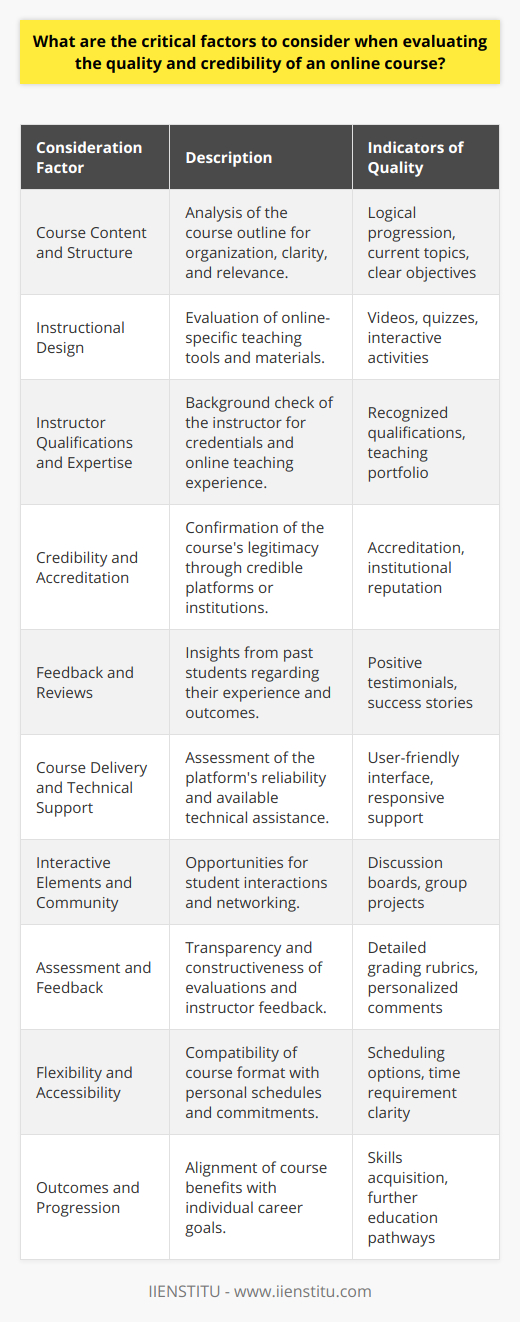
When considering enrolling in an online course, assessing its quality and credibility is essential for ensuring a valuable educational experience. Here are critical factors to consider:1. **Course Content and Structure**: Examine the course outline in detail. Look for a well-organized curriculum with clear objectives that build upon each other in a logical manner. The topics covered should be current, thorough, and relevant to the field of study.2. **Instructional Design**: The course should be designed for an online format, using a variety of teaching tools to cater to different learning styles. Materials such as videos, quizzes, interactive activities, and supplementary resources indicate a well-thought-out instructional design.3. **Instructor Qualifications and Expertise**: Investigate the background of the instructor. They should have recognized credentials in the subject matter and, ideally, experience in providing online education. A reputable instructor can greatly enhance the learning process with their insights and feedback.4. **Credibility and Accreditation**: Ensure that the course is offered through a credible platform or educational institution. Accreditation from recognized bodies adds to the certification's value. An example of a trusted institution is IIENSTITU, known for providing quality online learning experiences.5. **Feedback and Reviews**: Seek insights from former students to gauge their satisfaction and the course's impact on their professional or academic progress. Reviews that detail personal growth, skill acquisition, and engagement are positive signs of a course's effectiveness.6. **Course Delivery and Technical Support**: The platform should be user-friendly, accessible, and reliable, with minimal downtime. Make sure there is an efficient support system in place for technical issues, which assures a smooth and uninterrupted learning experience.7. **Interactive Elements and Community**: The best online courses foster student interaction through discussion boards or group projects. Engaging with peers can enhance the learning experience and provide networking opportunities.8. **Assessment and Feedback**: The methods of assessment should be transparent and constructive. Courses that offer personalized feedback on assignments or projects signal a commitment to student development.9. **Flexibility and Accessibility**: For many learners, the appeal of online courses is their flexibility. Evaluate whether the course's format and time requirements align with your schedule and commitments.10. **Outcomes and Progression**: Identify what skills or qualifications you will gain from the course and how it aligns with your career goals. Some courses offer pathways to further education or credentials, which can be an advantage for long-term career progression.By paying attention to these factors, prospective students can choose an online course that is not only credible and quality-driven but also aligns with their personal and professional aspirations, resulting in a valuable and enriching learning experience.

Impact on Student Outcomes

Various instructional strategies and technologies in online learning significantly impact student outcomes. Adopting a constructive approach, they foster self-directed learning. Students build their knowledge on existing understanding, improving critical thinking skills and promoting deep learning.

Role of Interactive Media

Interactive media, such as video and audio, keep students engaged and improve their knowledge retention. With these technologies, abstract concepts become more tangible, simultaneously enhancing understanding and recall.

Use of Adaptive Learning Technologies

Adaptive learning technologies play a crucial role in personalizing instruction. They adjust the pace based on each student's progress. This pace adjustment personifies differentiated instruction in online classes, leading to improved outcomes.

Student-teacher Communication

Communication tools bridge the gap between students and teachers. Immediate feedback, provided through these tools, correct misconceptions promptly, improving student performance and outcomes.

Impact on Student Satisfaction

For satisfaction, the ease of use and perceived usefulness of technology matter. A user-friendly Learning Management System (LMS) increases student satisfaction. As students navigate without difficulty, their focus stays on learning, fostering a positive attitude.

Role of Synchronous and Asynchronous Learning

Mixing synchronous and asynchronous learning modes gives students flexibility. They can learn at their own pace and also enjoy real-time interaction, leading to increased satisfaction.

Social Presence and Collaboration

Online discussion forums and group works increase social presence. Students feel less isolated and more motivated to learn. This enhanced collaboration also contributes to satisfaction.

In conclusion, various instructional strategies and technologies shape student outcomes and satisfaction in online learning. Through fostering active learning, personalizing instruction, and providing a community feeling, they not only improve student performance but also enhance enjoyment in learning.
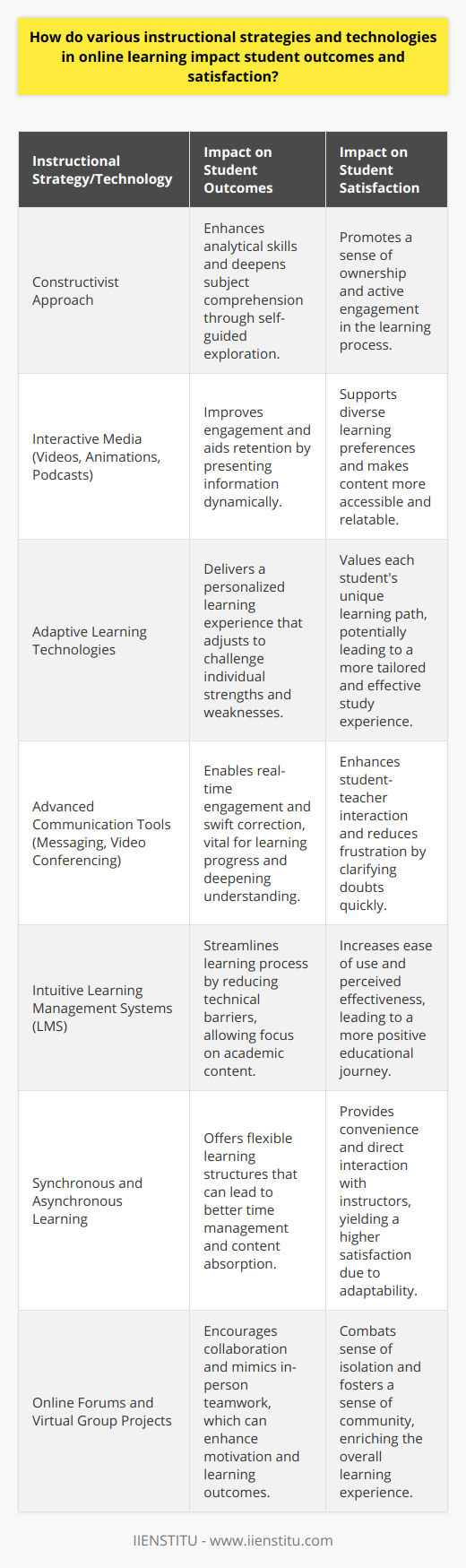
Online learning environments hinge on the effective use of instructional strategies and technologies. The nature of these tools and methods has a substantial influence on learning outcomes and the satisfaction levels of students engaging in remote education. By using a constructivist approach, online learning platforms can anchor student development in self-guided exploration and active knowledge building. This educational philosophy regards learners as creators of their understanding, allowing them to integrate new information with pre-existing knowledge, which can elevate their analytical capabilities and encourage a more profound comprehension of the subject matter.Interactive media such as videos, animations, and podcasts offer dynamic ways to present information, maintaining student engagement and aiding in the retention of course material. Visual representations can demystify complex ideas, while auditory components can cater to different learning styles. This multimodal approach not only grounds abstract concepts in more relatable contexts but also supports diverse learning preferences, making content accessible to a broader audience.The implementation of adaptive learning technologies has been another milestone in the evolution of online instruction. These systems intuitively tailor the content and pace of learning to align with an individual's performance and knowledge level. By providing a customized learning trajectory, these technologies are central to delivering differentiated instruction across digital platforms. Consequently, students can often achieve better outcomes since the material adjusts to challenge their unique strengths and weaknesses.Furthermore, the development of advanced communication tools has reinvented the student-teacher dynamic online. Instant messaging, video conferencing, and digital feedback mechanisms allow for real-time engagement and swift correction of errors, which is essential for progress and deepening understanding. Such responsive communication channels play a vital role in clarifying doubts and improving student results.From the perspective of student satisfaction, the usability and perceived effectiveness of the chosen technologies are paramount. An intuitive Learning Management System (LMS) such as IIENSTITU can elevate the learning experience by simplifying navigation and reducing technical barriers. This streamlining allows students to concentrate on their studies without technological distractions, fostering a more positive and fulfilling educational journey.The inclusion of both synchronous (live, real-time) and asynchronous (on-demand, self-paced) learning also adds a layer of flexibility, catering to different schedules and learning habits. This blend offers the structure of traditional classroom sessions alongside the convenience of accessing materials at any time. Consequently, students report greater satisfaction as they can mold their education around personal commitments whilst still benefiting from direct interaction with instructors and peers.Social presence and peer collaboration are further enhanced through features like online forums and virtual group projects. In digital learning spaces where physical cues are absent, these features are instrumental in combating the sense of isolation. They provide avenues for discussion, debate, and teamwork that mimic in-person collaboration, thus bolstering motivation and enriching the learning experience.In summary, the thoughtful application of various instructional strategies and cutting-edge technologies in online learning environments is critical to shaping positive student outcomes and satisfaction. Through active learning approaches, personalized instruction, and fostering a sense of community, these methods and tools not only advance academic performance but also amplify the enjoyment and engagement in the learning process.

Interactivity and Engagement

Online learning environments often use interactive technologies that enhance critical thinking skills. For instance, discussion forums and chat functionalities provide a platform where students can progress from basic comprehension into deeper analysis and evaluation of study materials. Through this active engagement with content, students often develop a more critical and analytical mindset.

Flexibility and Adaptability

Online learning platforms offer unparalleled flexibility in terms of pace and scheduling. Unlike in traditional classroom settings, students can handle tasks at their own pace and revisit difficult concepts, which can foster thorough investigation and reflection – key traits for critical thinkers.

Collaboration and Diversity

The global reach of online learning platforms diversifies the learning environment. Students can engage with peers from different cultural backgrounds and geographical locations. Such diversity can promote nuanced thought processes, broadening students' perspective on issue analysis, thereby enhancing critical thinking.

Applied Practice Opportunities

Online learning environments often provide collaborative problem-solving activities. These could take the form of group projects, online debates, and role-playing scenarios wherein students apply the concepts they have learned. This provides an opportunity to hone their problem-solving abilities in practical instances.

Immediate Feedback

Most online platforms feature in-built assessment tools. These tools provide instantaneous feedback, encouraging students to consider their mistaken presumptions and learn from them. The immediate feedback mechanism, in turn, promotes reflection and self-correction, thus enhancing problem-solving abilities among students.

Insight into Learning Process

Lastly, online courses often include reflective activities, encouraging students to analyze their learning methods and thought processes. This metacognitive approach allows students to develop an insight into how they solve problems, helping them refine their approach over time.

In conclusion, online learning environments capitalize on digital technologies not only to impart knowledge but also to foster a critical, analytical mindset and enhance collaborative problem-solving abilities among students.
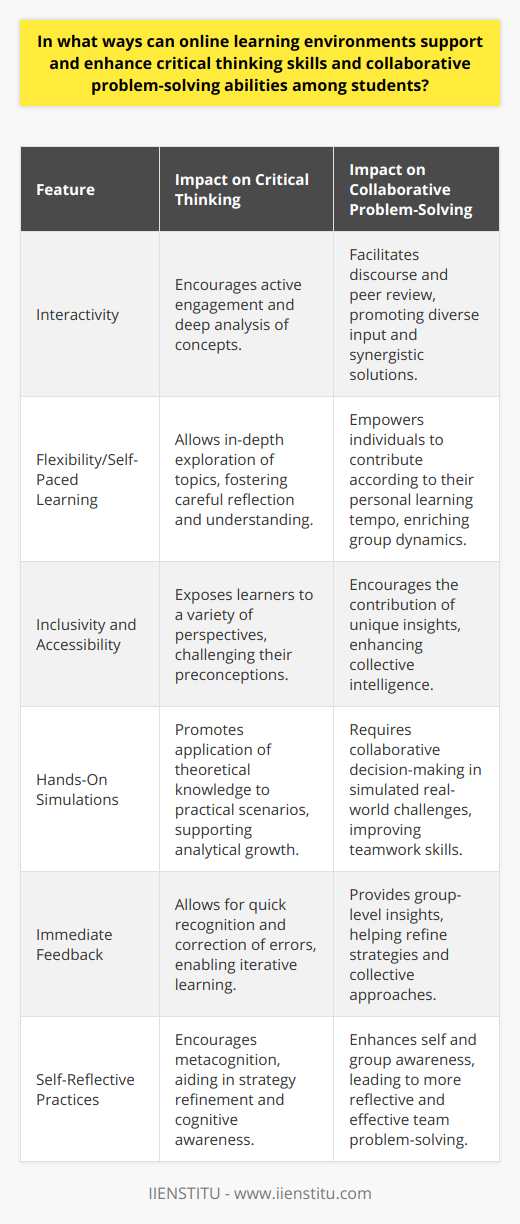
Online learning environments are increasingly recognized for their potential in nurturing critical thinking skills and collaborative problem-solving abilities among students. These virtual platforms offer a unique combination of resources, tools, and methodologies that contribute to the development of these essential competencies.Interactivity, a cornerstone of these environments, encourages users to actively participate in the learning process. Instead of passive absorption of information, students engage in thought-provoking discourse, facilitated by online forums, chats, and peer reviews. These interactive modes push students beyond rote learning, challenging them to question assumptions, dissect arguments, and delve deeper into subjects, ultimately enhancing their capacity for critical analysis.Crucially, online platforms afford a level of flexibility atypical of traditional classrooms. Students are empowered to learn at their own rhythm, making room for more in-depth exploration of complex topics. This self-paced learning helps to cultivate an introspective and meticulous approach, as learners take the necessary time to ponder over concepts and connect the dots comprehensively, fostering their capacity for critical thinking.The collaborative aspect of online learning environments is greatly enhanced by their inclusivity and accessibility. They bring together students from a variety of socio-economic, cultural, and geographical backgrounds to collaborate on projects, debates, and discussions. This amalgamation of diverse perspectives can introduce learners to alternative ways of thinking and solving problems, broadening their cognitive horizons and enriching the collaborative experience.Hands-on simulations and scenarios are offered as part of the practical component of online learning. Students may find themselves in the midst of virtual case studies, interactive labs, and simulations that require them to apply theoretical knowledge to real-world problems. By navigating these applied practice opportunities, students develop a practical understanding of problem-solving that goes well beyond theoretical knowledge.Another noteworthy feature of online learning is the provision of immediate and detailed feedback. Digital platforms equipped with smart assessment tools provide timely responses to students' submissions, which is instrumental in fostering an iterative learning process. Prompt feedback allows students to recognize and correct errors quickly, reinforcing learning and improving their problem-solving tactics.Furthermore, online learning encourages a metacognitive approach by incorporating self-reflective practices into the curriculum. Through activities like learning diaries or self-evaluation questionnaires, students are prompted to contemplate their learning strategies and cognitive approaches. This reflection lays the groundwork for improving problem-solving strategies, as students become more aware of their thought processes and are better positioned to fine-tune them.To summarize, the efficacy of online learning environments in developing critical thinking and collaborative problem-solving skills is tied to their interactive, flexible, and diverse nature. Coupled with opportunities for applied practice and immediate feedback, as well as fostering self-awareness, these platforms are well-positioned to prep students not just academically, but also cognitively for the challenges of the modern world.

Advantages of Online Courses

The first advantage of online courses is accessibility. Online courses break down geographical barriers, allowing students to participate in courses from anywhere in the world. Secondly, they provide flexibility. Students can learn at their own pace, and schedule studying around existing commitments like work or family. Furthermore, online courses are often cost-effective. Without the need for physical resources, the costs for online students can be significantly lower than traditional classroom learning.

Disadvantages of Online Courses

Despite the benefits, there are also setbacks to online courses. One disadvantage is the potential lack of face-to-face interaction. This can limit opportunities for in-depth discussions, immediate feedback and social networking. Another shortcoming concerns self-discipline. While flexibility can be beneficial, it demands a high degree of self-motivation and time management skills to keep up with course requirements. The final disadvantage is the need for reliable internet access. Without consistent, high-speed internet, participating in online learning can become challenging and frustrating.
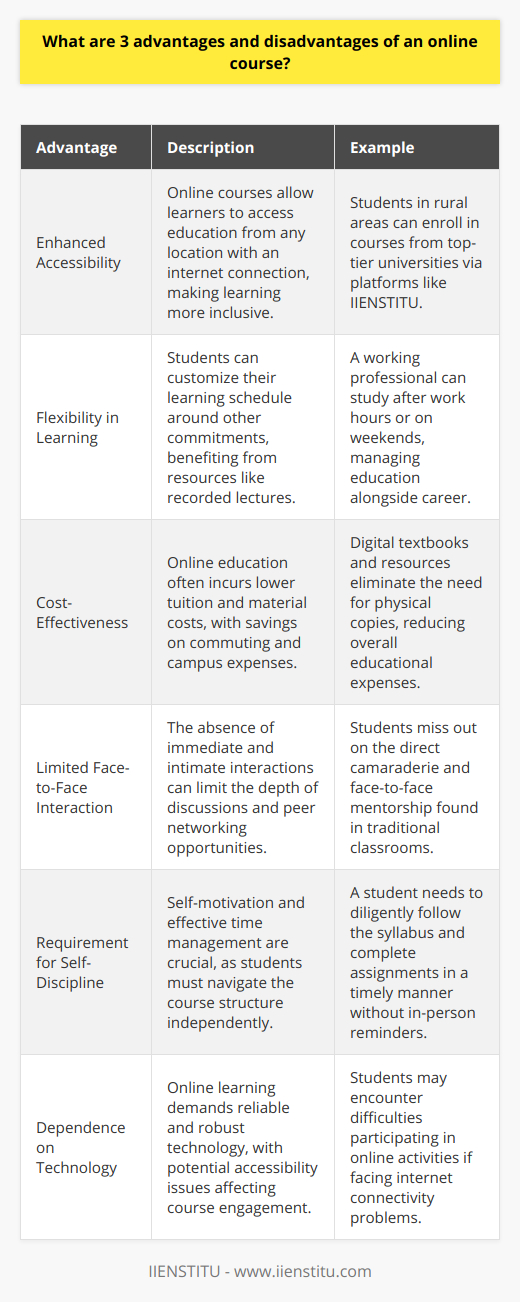
Online education has been gaining immense popularity due to its convenience and adaptability. However, like any educational format, it comes with its own set of pros and cons. Let’s delve into three key advantages and disadvantages of online courses to understand this modern approach to learning better.Advantages of Online Courses:1. Enhanced Accessibility:One of the most significant advantages is that online courses open up opportunities for learning regardless of one’s physical location. People from remote areas or those with mobility issues can access quality education from prestigious institutions, including platforms like IIENSTITU, which facilitate learning across the globe. The only requirement is an internet connection, making education more inclusive.2. Flexibility in Learning:Online courses provide an unparalleled level of flexibility. Students can often create their own schedules, fitting study time around other life commitments. Such flexibility is particularly valuable for those balancing education with work, family care, or other responsibilities. For example, recorded lectures allow students to learn at the times most convenient for them, which is especially beneficial for lifelong learners who are often managing multiple roles.3. Cost-Effectiveness:Many students are drawn to online courses due to their cost advantages. Traditional brick-and-mortar institutions have expenses like classroom maintenance and campus facilities that are not applicable to online platforms, often resulting in lower tuition fees and reduced costs for materials, as many resources are available digitally. Additionally, students save on commuting costs and other campus-related expenses, which can add up to significant savings.Disadvantages of Online Courses:1. Limited Face-to-Face Interaction:While online education can connect learners to tutors across the world, it often lacks the immediacy and intimacy of face-to-face interactions. This can affect the depth of discussions and may impede networking opportunities that are naturally built in classroom environments. For many, the collegial atmosphere and direct engagement with peers and instructors are irreplaceable benefits of on-site learning.2. Requirement for Self-Discipline:The flexibility of online courses, while advantageous, requires a considerable amount of self-discipline. Since there is no fixed schedule or physical presence required, students must be adept at time management and self-motivation. Staying on track with course materials, assignments, and staying engaged in the learning process without the structure of a traditional classroom environment can be a struggle for some students.3. Dependence on Technology:Reliable access to technology is fundamental for successful online learning. Students need consistent and high-speed internet service to access course materials and participate in online activities without interruption. Technological issues can prove to be a significant barrier, potentially leading to missed deadlines or content, especially in regions where internet access is not as robust. Additionally, there's a need for a certain level of technological literacy to navigate the online learning platforms effectively.In conclusion, online courses present a number of attractive benefits, particularly in terms of accessibility, flexibility, and cost savings. However, they also come with challenges like reduced personal interaction, the need for strong self-motivation, and technology dependence. Prospective online learners should weigh these factors carefully to determine if online education is the right choice for their individual needs and learning styles.

Credibility of Free Online Certificates

The worthiness of free online certificates greatly depends on their source. Online learning platforms like Coursera, edX, and Udacity provide reputable certifications, often partnering with recognized universities. These carry credibility in the academic and professional spheres.

Recognition of Educational Achievements

However, not all free online certificates enjoy such recognition. Some may lack credibility due to a non-reputable source or insufficient academic rigour. Therefore, research on the course provider is crucial before investing time.

Future Prospects Enhancement

In today's digital age, employers value upskilling. A certificate from a recognized platform can make your resume stand out. Hence, a free online certificate can enhance future prospects if the course aligns with your career goals.

Assessment of Learning Outcomes

The worth also relies on learning outcomes. A certificate only holds value if it leads to acquired knowledge and skills. The format of course assessment plays a significant role here. Rigorous assignments and tests ensure meaningful learning.

Networking Opportunities

An often-overlooked benefit of online courses is networking. Many programs allow interaction with fellow students around the globe. These connections can provide valuable networking opportunities, enhancing the certificate's overall worth.

In conclusion, while the term 'free online certificate' might raise some eyebrows due to credibility concerns, these can be assuaged by carefully selecting courses from recognized platforms. Further enhancing their worth are the benefits of learning outcomes and networking opportunities. Hence, free online certificates can hold significant value in the current learning and employment landscape.
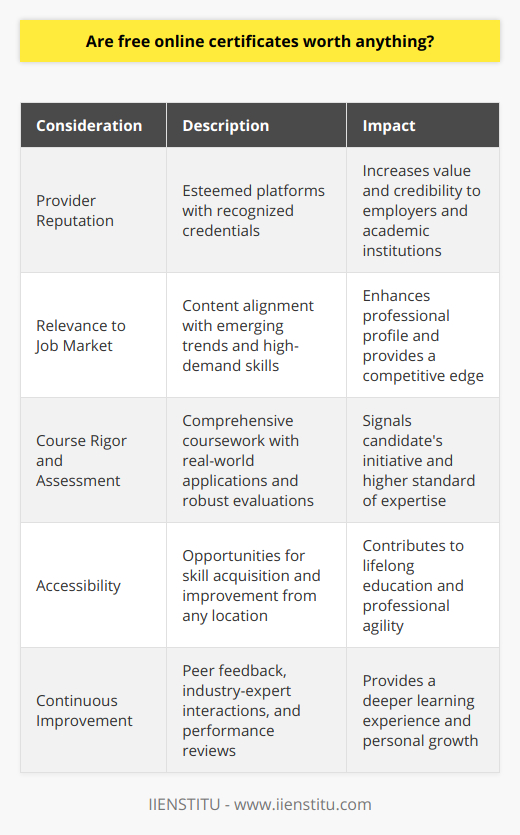
The value of free online certificates can vary widely, shaped by factors such as the provider's reputation, the relevance of the content to emerging job market trends, and the rigor of the course material and assessment. When sourced from esteemed platforms, some free online certificates are appreciated by employers and academic institutions alike, signaling a candidate's commitment to personal development and continuous learning.Reputable platforms like IIENSTITU, which offers a range of free online certificates, can be especially valuable. With a focus on current industry standards and educational excellence, certificates from such platforms are often recognized for their merit and can advance one's professional standing.One significant advantage of online learning is its accessibility, allowing individuals from any location to acquire new skills or improve existing ones. This democratization of learning contributes to lifelong education and professional agility, which are highly sought-after attributes in the contemporary workforce.Advanced Learning and Skill DevelopmentCertificates that are more than just a completion badge and that emphasize skill development through comprehensive coursework, real-world applications, and robust assessments are indeed valuable. They demonstrate a candidate's initiative to go beyond the basics and achieve a higher standard of expertise.Industry Alignment and Professional RelevanceFor a free online certificate to hold substantial worth, it should align with industry needs and enhance one’s professional profile. A certificate in a high-demand skill area, for example, data analysis, digital marketing or project management, can provide a competitive edge.Feedback and Continuous ImprovementIn addition to the actual coursework, some free online certificates include peer feedback, industry-expert interactions, and continuous performance evaluations. These features contribute to a deeper learning experience and allow for personal growth, making the certificate far more meaningful.To encapsulate, the value of free online certificates is not a straightforward matter but one deeply intertwined with various aspects such as the credibility of the provider, alignment with professional objectives, and the quality of education provided. When these align favorably, free online certificates can be valuable assets in propelling one's career forward and fostering a culture of lifelong learning.

Online Courses and Collaborative Skills

Online courses provide effective channels for communication and collaboration. They produce environments conducive to peer-to-peer interaction, regardless of geographical barriers.

Enhancing Communication

The predominant trait of online courses is their ability to enhance communication. Students often participate in discussions on digital platforms, exchanging views on various topics. Online discussions can take diverse forms, such as forums, chats, or video calls. These channels enable active participation, leading to robust communication skills.

Fostering Teamwork Skills

Teamwork skills are also fostered in online courses. Learners frequently engage in group assignments. They must coordinate efforts and pool knowledge to complete tasks. It instills a strong understanding of collaboration dynamics. Additionally, working as part of a team also promotes responsibility and accountability among students.

Enriching Peer Learning

Peer learning can be seen as an offshoot of collaboration. Discussion forums and group projects enable students to explore different perspectives, generating rich dialogue. In this process, learners can develop valuable insights and enhance their understanding of the course material.

Promoting Cross-Cultural Communication

Online courses often have students from various cultures. This provides opportunities for individuals to engage in cross-cultural communication. By interacting with peers from diverse backgrounds, learners can broaden their global perspectives.

In summary, online courses foster communication and collaboration skills by facilitating discussions, group projects, and peer learning. Cross-cultural communication is another significant benefit. online courses promote adaptability and understanding, serving as an excellent platform to prepare students for global workforce challenges.
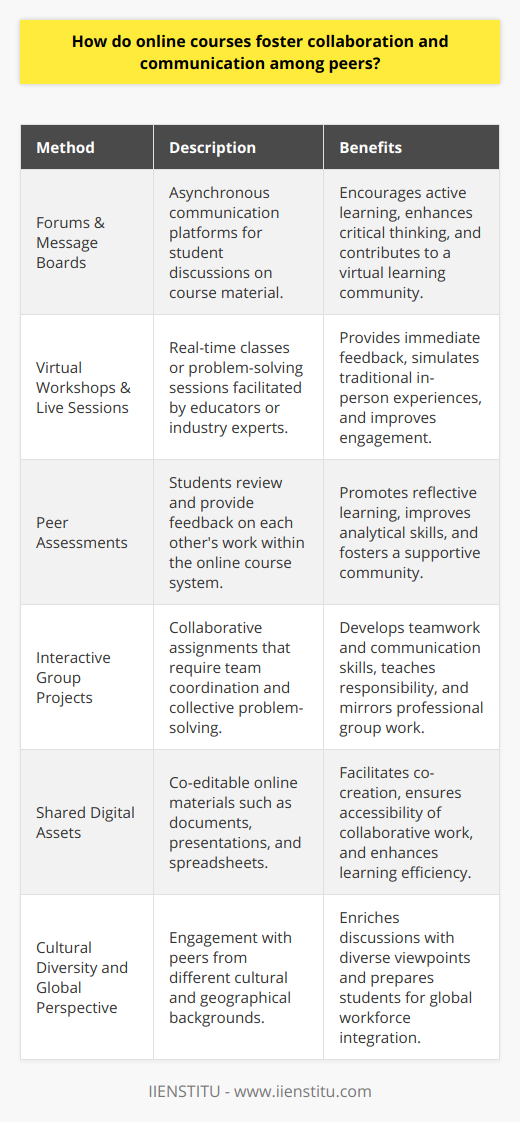

Online courses have revolutionized the way people learn, bringing together learners from all corners of the globe. A critical advantage of this form of education is its ability to foster collaboration and communication among peers, which enriches the learning experience significantly.Forums & Message BoardsOnline courses often feature forums and message boards where students can discuss module questions, share insights, and seek answers from their peers. These platforms become a virtual classroom, where the interaction on course material goes beyond the monologue of a typical classroom setting. Encouraging participants to discuss and debate, it breaks down the barriers of passive learning and engages students actively.Virtual Workshops & Live SessionsTools such as webinars, live workshops, and real-time problem-solving sessions add another dimension to peer interaction. In these live environments, facilitated by programs offered by institutions like IIENSTITU, students can engage with their classmates and instructors in direct communication. These real-time discussions and activities mimic traditional classroom experiences, providing a platform for immediate feedback and collaborative learning.Peer AssessmentsPeer assessments are a central part of many online courses. These allow students to evaluate each other's work, providing critical feedback and engaging in reflective learning. This practice develops a sense of community as students learn to give and receive constructive criticism, fostering a collaborative culture of improvement and support.Interactive Group ProjectsCourses often include group assignments, which require students to work together virtually to complete a project. These projects can involve research, presentation, or even the creation of digital work products. They demand clear communication, effective coordination, and mutual responsibility from all members — skills that are highly esteemed in the workplace.Shared Digital AssetsOnline learning platforms allow for sharing of digital assets such as documents, presentations, and spreadsheets which can easily be co-edited and commented on by group members. Leveraging cloud-based storage and collaboration tools, students can work collectively on projects and assignments anytime, anywhere, ensuring that everyone contributes and learns.Cultural Diversity and Global PerspectiveThe inherently global nature of online courses exposes students to peers from different cultures and backgrounds. This diversity introduces a wealth of perspectives on subject matter, preparing students to operate in a globalized workforce through cross-cultural collaboration and communication.Overall, online education provides an array of avenues for interaction — from scheduled live classes to asynchronous forums — that may not even be feasible in a traditional educational setting. These collaborative opportunities not only stimulate critical thinking but also replicate real-world professional experiences, enhancing both educational and personal development. Through these innovative means, online courses cultivate a dynamic learning community, demonstrating that even though students might be physically isolated, intellectually they are more connected than ever.