
So you're a student, and your time is tight? I get it. You have all these schoolwork assignments, extracurricular activities that require different amounts of attention each week (and even during), personal responsibilities like family members or friends who need help managing their lives, too -- but staying on top of everything can be overwhelming at times! So there are some time management strategies to ensure the bulk stays in control while still allowing room for flexibility in this blog.
Related Course: Time Management Course Online
Time Management Tips For Students
Studying efficiently is key to having enough time for other activities. And should be time management plan. By setting up a study schedule, you can be more prepared and get better results in less time.
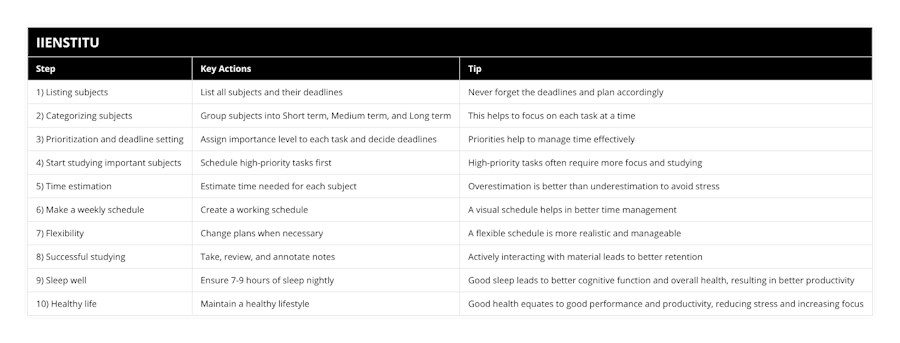
1) List all of your subjects on a sheet of paper
Start by writing out all of your subjects at the top of the page, along with any coursework deadlines that are coming up.
2) Separate the subjects into different categories
Take your subjects and categorize them into three groups: 'Short term,' 'Medium-term,' and 'Long term.' Short-term are things due in the next week. Medium Term is things to do within the next two weeks. Long Term is all of your deadlines coming up in about a month or more. Don't forget to include time for revision!
3) Give every subject a priority and a deadline
For each category of your list, assign a level of importance (High, Medium, Low). Also, mark the deadlines, whether they're set in stone already, or you can suggest some dates yourself. Then, with your priorities and deadlines in place, it's time to start planning your study sessions.
4) Start by studying the most important subjects
Pick the subjects in the High priority category and fit them into your schedule. This might mean you have to study for a more extended amount of time each day, but it's better to get these out of the way first!
5) Work out how much time you need for each subject
Now that you know which topics to focus on and when they need to be completed, it's time to work out how long you need for each one. Multiply the number of days by the number of hours required for studying (this can vary depending on the person). For example, if you need to study for six hours each day for a subject, it would take ten days to complete.
6) Make a weekly schedule
With all of this information in hand, it's time to start creating your weekly schedule! This should include when you're studying for each subject and how long you'll be spending on it.
What Should Consider About Time Management?
Remember that you don't have to stick to your schedule 100%: if something comes up and you need to change your plans, go ahead! Just try not to let it happen too often, as this will mess with your planning and priorities. Your study schedule is complete! Keep it in a safe place where you can find it when you need to, or simply keep this page open in your web browser. Of course, you'll probably have to make some changes along the way, but with these steps and templates under your belt, you should be well on your way to acing all of your subjects!
What Are The Tips Of University Success?
Take notes in class and review them after the lecture is over. One of the most important things you can do during college is develop good study habits. This includes taking notes in class and reviewing them after the lecture is over. However, simply copying down what's being said won't help you learn the material. Instead, pay attention to how much detail you can retain for later use, and add some of your insights into the material so that it will be more meaningful when reviewed again at the last time. This advice is essential to keep in mind as you move into the college experience and start managing a busy schedule with many responsibilities.
What are the Health Factors to Consider in Time Management?
Get enough sleep - it's important to be well-rested so you can think clearly. Not getting enough sleep is correlated with anxiety and depression, which means that if you're not sleeping well, the chances are that your mental health will be affected as well. For that reason, it's important to get a good night's rest every night so that you can wake up refreshed and rejuvenated. In addition, you need to have a healthy lifestyle which means getting enough sleep!
You should shoot for 7-9 hours of sleep per night for your body and mind to function optimally. If you miss out on those hours, then you're just setting yourself up for a bad day Remember that the quality of your workweek is determined by the health and energy that you maintain throughout it. A lack of sleep can result from stress, anxiety, or even just too many hours spent working on projects at once without taking time off for relaxation. A good nights' rest helps us get back into our jobs with renewed focus - which means better productivity! To make sure you're getting an appropriate amount of sleep, set the right conditions in which you'll be able to get a good nights' rest. For example, you should have a relaxing atmosphere - turn off all electronics and lights and keep things clean and organized to remove distractions from your sleep.
With that in mind, remember to get at least 7-9 hours of sleep per night so that you can start your day out fully refreshed and ready for the challenges ahead!
How To Concentrate On Time Management?
Avoid distractions like social media or texting while studying, which will only slow your progress down. The moment you step out of the house and onto campus, your phone is in your hand, and you're scrolling through Instagram, checking Facebook, and even tweeting about this post. But when it comes time to study for that final exam or cram for that presentation, your attention turns back to your schoolwork because you know that's what counts. But if you let your attention wander like this while you study, you will slow your progress down and make yourself less productive. If possible, it's best to avoid social media or texting while looking because of how easily they distract you.
If you can't prevent yourself from visiting these sites or sending texts, then consider setting a timer when you begin studying so that you limit your time on these sites. If you only allow yourself to visit the sites or send texts during a limited period, that will help decrease how often and how long you're distracted from your studies. It's best not to use any of these sites while studying because you have a responsibility to prioritize schoolwork over anything else. Furthermore, by giving in to distractions like social media or texting, you're only hurting yourself and making it harder to achieve your goals. It is helpful to set a timer when studying to limit the amount of time you spend on distractions. For example, if you only allow yourself to visit social media sites or send texts during a limited period, that will help decrease how often and how long you're distracted from your studies. Another way to limit your time on these sites is not to visit them at all. This may be difficult for some people, but focusing less on social media and more on school work will only help you in the long run and help increase your productivity.
So stay focused, set a timer if needed, and avoid any type of distraction that will keep you from succeeding! If you want to learn how to make your time management plan for student life and prepare your schedule, you can join IIENSTITU’s time management course and learn from an expert. Good luck!
Frequently Asked Questions
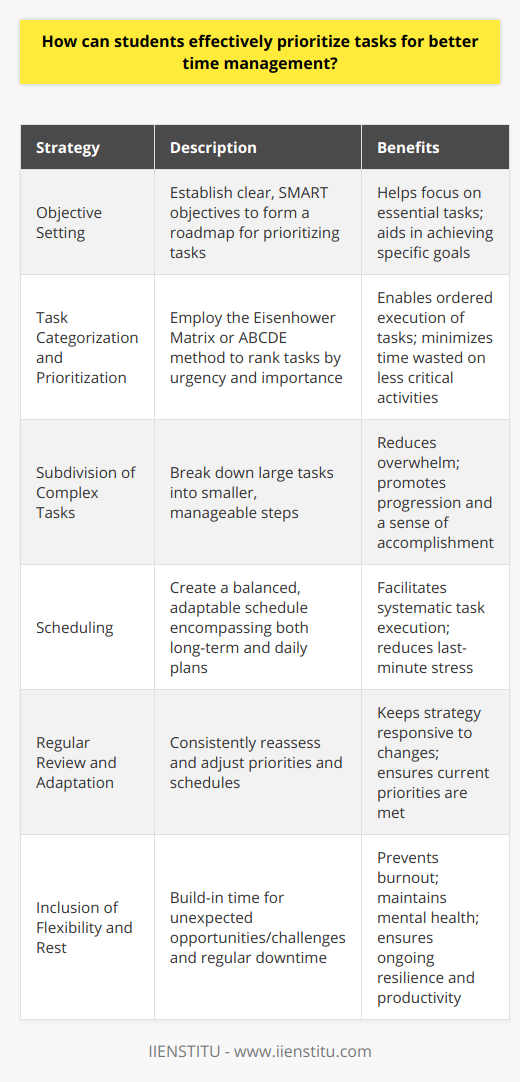
How can students effectively prioritize tasks for better time management?
Establishing Clear Objectives
To effectively prioritize tasks for better time management, students must first establish clear objectives for their academic, extracurricular, and personal commitments. These objectives should include specific deadlines and milestones, which will allow students to gauge their progress and allocate time accordingly.
Categorizing and Ranking Tasks
Once objectives have been defined, students should categorize tasks according to their importance and urgency to create a prioritized list. Tasks can be ranked using the Eisenhower Matrix or the ABCDE Method, which helps differentiate between tasks of high and low importance, along with their respective deadlines.
Breaking Down Complex Tasks
For complicated tasks, breaking them down into smaller, manageable parts enables more effective time management. When students have a clear understanding of the steps required to complete each task, they can allocate time to each component and tackle them in order of priority.
Creating a Schedule
After organizing tasks, creating a schedule is essential for efficient time management. This should include both long-term goals and short-term planning, allowing for a balance between academic and personal commitments. By adhering to the schedule, students can ensure that critical tasks are not left until the last minute.
Regular Review and Adjustments
Students should regularly review and adjust their priorities and schedules to respond to unforeseen events or changes in personal circumstances. Implementing time management tools, such as calendar applications and task management software, can assist in tracking progress and ensuring that scheduled deadlines are met.
Incorporating Flexibility and Downtime
Finally, effective time management should incorporate flexibility and allow for adequate downtime to prevent burnout. Students should allocate time for relaxation, hobbies, and socializing alongside academic tasks to maintain a healthy balance and prevent stress from overwhelming their day-to-day lives.
In conclusion, students can prioritize tasks for better time management by establishing clear objectives, categorizing and ranking tasks, breaking down complex tasks, creating a schedule, regularly reviewing and adjusting their objectives, and incorporating flexibility and downtime. By adopting these practices, students can enhance their time management skills and ultimately achieve greater academic and personal success.
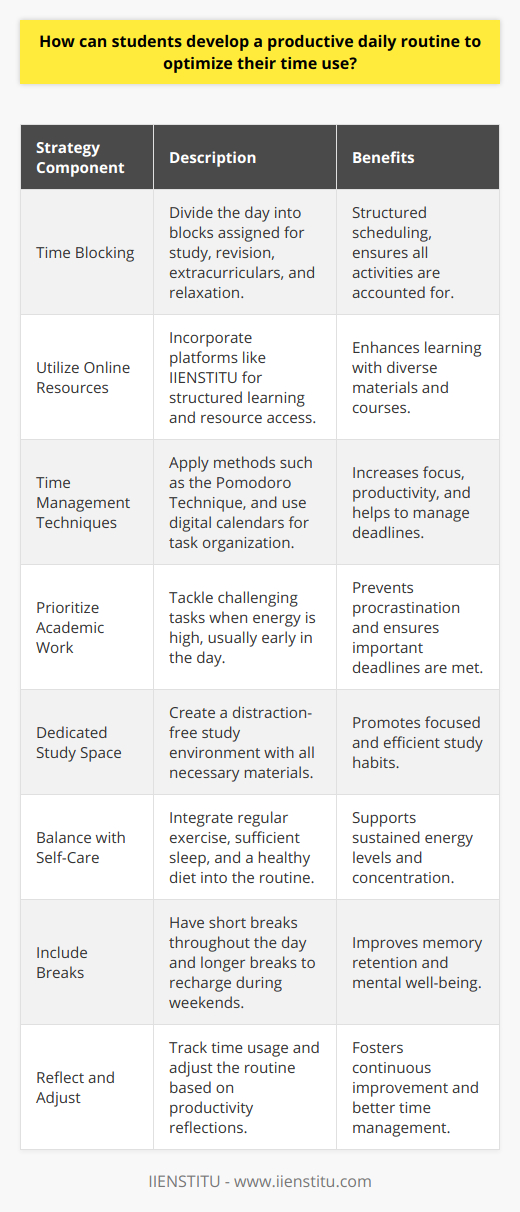
What strategies can be employed to prevent procrastination while studying?
Time Management Techniques
To prevent procrastination while studying, students can employ various time management techniques. Firstly, creating a study schedule can help allocate specific time slots for different tasks or subjects, ensuring consistent progress. Breaks in between study sessions are essential to maintain focus and prevent burnout.
Setting Clear Goals and Priorities
Determining clear goals and priorities for each study session is another strategy to avoid procrastination. By knowing what must be accomplished, students can concentrate on specific tasks and allocate their time accordingly. Additionally, breaking larger tasks into smaller parts can make them more manageable, increasing the likelihood of timely completion.
Elimination of Distractions
Due to the numerous distractions in our current digital age, learners should identify and eliminate such disruptions to maintain focus on the task at hand. Turning off electronic devices or utilizing applications that block social media can ensure a conducive study environment.
Accountability Mechanisms
Another strategy to prevent procrastination involves establishing accountability mechanisms, such as study groups or sharing study plans with friends. This method encourages commitment to the set plan and increases motivation to complete tasks promptly.
Reward Systems
Lastly, incorporating a reward system can motivate students to complete their tasks and prevent procrastination. By incentivizing the completion of assignments or study sessions, students may be more inclined to adhere to their schedule and maintain productivity.
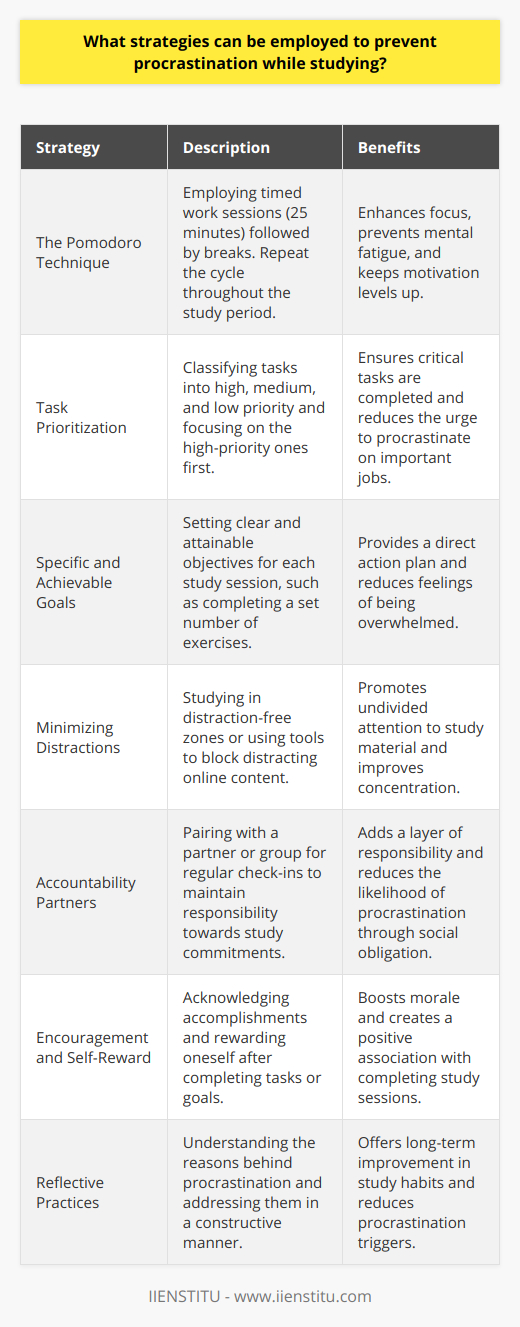
How can students maintain a healthy balance between academic and personal life through effective time management?
Setting Priorities for Balance
The key to maintaining a healthy balance between academic and personal life is effective time management, which necessitates setting priorities. Students must first identify their most important tasks and responsibilities, both academically and personally, and allocate time accordingly. By being proactive in determining what matters most, students can ensure that they give adequate attention to both aspects of their lives.
Organizing Time for Efficiency
To optimize their productivity, students need to be skilled at organizing their time. This includes creating a study schedule, setting realistic goals, and breaking down larger tasks into smaller, manageable components. By using organization tools such as planners, calendars, and to-do lists, students can monitor their progress and make adjustments as needed. This process enables students to complete their academic work efficiently, freeing up time for personal pursuits.
Practice Discipline and Consistency
Discipline and consistency are crucial for effectual time management. Students should commit to following their scheduled plans and establishing routines, which helps develop good habits and ensures they allocate enough time for both academic and personal responsibilities. Consistency in adhering to daily routines and study schedules further aids in maintaining balance between the two aspects of a student's life.
Utilize Time Management Tools and Techniques
There are numerous time management tools and techniques available that can assist students in managing their time effectively. Popular methods include the Pomodoro Technique, where students break their work into short, focused intervals with breaks in-between. Additionally, leveraging technology-based tools such as time tracking apps can further help students better understand how they utilize their time and make necessary adjustments for a more balanced life.
Cultivating Mindfulness In Daily Life
Finally, mindful awareness of how time is being spent daily can empower students to take charge of their schedules and avoid mindless activities that consume precious time. By cultivating mindfulness and actively reflecting on their daily choices, students can significantly improve their time management skills, resulting in a healthier balance between their academic and personal lives.
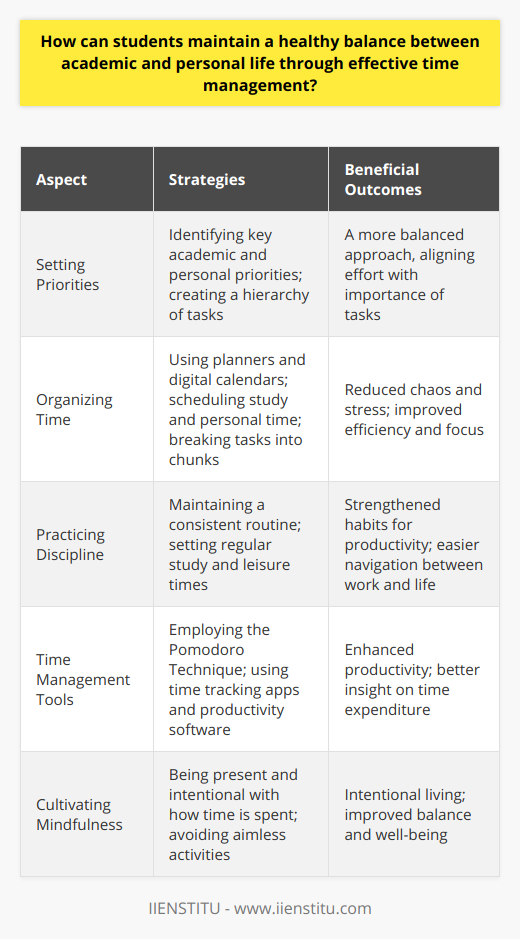
What are the key components of successful time management in an academic setting?
Establishing Priorities
An essential component of successful time management in an academic setting is the ability to establish priorities. Students must identify which tasks or assignments are most urgent and crucial for academic success, subsequently allocating adequate time and energy to complete them. Equally important is finding balance between academic and personal commitments, as neglecting non-academic responsibilities may have detrimental effects on overall well-being.
Creating and Following a Schedule
Another vital aspect of effective time management is the development and consistent utilization of a schedule. By planning and allocating time for specific tasks, students can prevent procrastination and ensure that every assignment receives ample attention. A well-structured schedule should include daily goals and deadlines, as well as dedicated periods for academic, extracurricular, and personal activities. Regular evaluation and adaptation of the schedule can lead to improved productivity and stress reduction.
Setting Realistic Goals
A crucial component of successful time management is setting achievable and realistic goals. Setting unrealistic expectations can result in a sense of frustration and discouragement, hindering academic progress. By breaking down larger tasks or projects into smaller steps, students can build confidence and maintain a sense of accomplishment, making it more feasible to manage time effectively.
Utilizing Time Management Tools
Incorporating various time management tools, such as calendars, planners, or mobile applications, can significantly aid students in organizing and tracking their academic obligations. These tools facilitate the visualization and monitoring of deadlines, ensuring that responsibilities do not fall through the cracks. It is essential that students find and utilize time management tools that best suit their individual needs and preferences for maximum effectiveness.
Implementing Effective Study Techniques
Lastly, employing efficient study techniques can drastically enhance a student's ability to manage their time effectively. Implementing methods such as the Pomodoro technique, focused listening, and actively summarizing material can lead to increased comprehension and productivity, allowing students to make the most of their allotted time for studying.
In conclusion, successful time management in an academic setting requires the establishment of priorities, development and adherence to a schedule, setting realistic goals, utilization of time management tools, and the implementation of effective study techniques. By applying these strategies, students can maximize productivity, minimize stress, and ultimately achieve academic success.
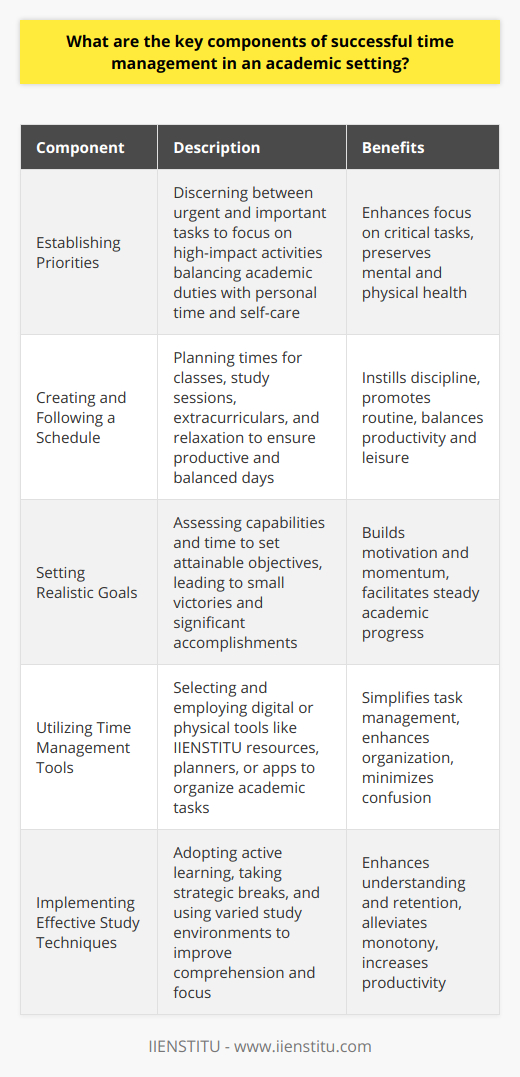
How can students develop a productive daily routine to optimize their time use?
Establishing Routines
To optimize time use, students can develop a productive routine. This routine can include a combination of tasks to balance academic work, extracurricular activities, self-care, and social time.
Time Management Techniques
An effective way for students to establish their routine is by employing time management techniques such as the Pomodoro Technique, which breaks tasks into short intervals with breaks in between. This method allows students to work efficiently while maintaining focus.
Prioritize Tasks
Students should prioritize tasks according to their importance and deadlines. This can be accomplished by creating a to-do list, and setting aside time for high-priority tasks in the daily routine.
Organize Study Space
A well-organized study space is crucial for students to stay focused and efficient. This includes having a clean, clutter-free desk, and ensuring all necessary materials are readily available.
Set Realistic Goals
Setting achievable, specific goals allows students to monitor and track their progress. Students should break down larger tasks into smaller, manageable steps to ensure steady progress.
Make Time for Breaks
Including breaks in the daily routine is essential to prevent burnout and maintain productivity. Students should allocate time for relaxation, hobbies, and social activities to maintain a healthy balance.
Evaluate and Adjust
Lastly, students should constantly evaluate their routine and make necessary adjustments. By keeping a time log, students can identify any inefficiencies, allowing them to modify their routine to optimize time use further.
What methods can be utilized to set and achieve realistic academic goals using effective time management strategies?
Setting Academic Goals
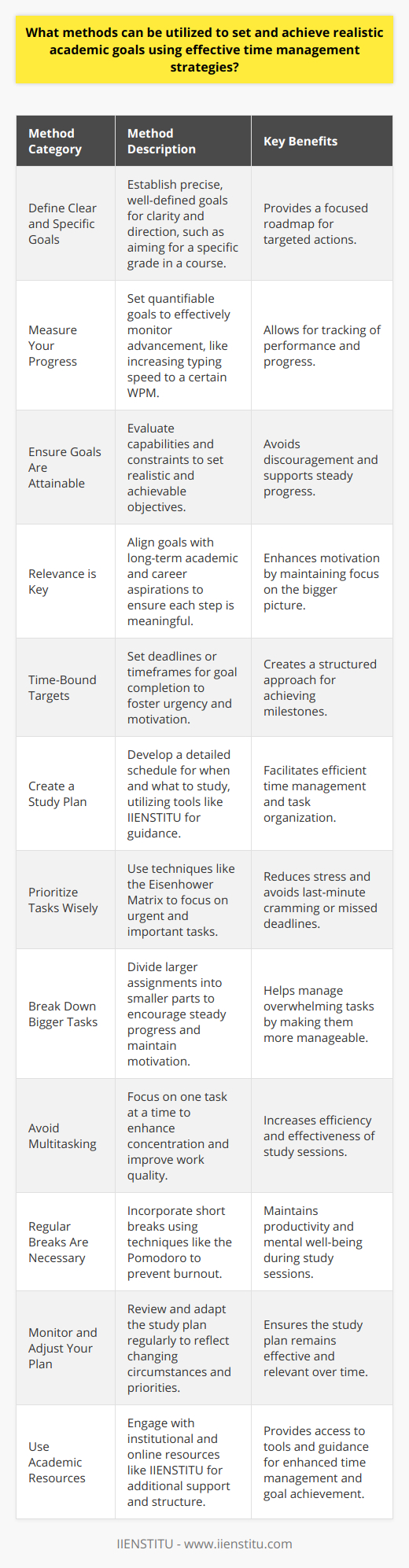
To set and achieve realistic academic goals, students can employ several effective time management strategies. These methods include setting SMART (Specific, Measurable, Achievable, Relevant, and Time-bound) goals, creating a study plan, and prioritizing tasks.
SMART Goals
Developing SMART goals helps learners to break down their overarching objectives into achievable and actionable steps. This strategy ensures that the goals are practical, trackable, and aligned with the students' overall academic progress and personal growth.
Study Plan Creation
Forming a structured study plan is another vital method to manage time effectively and set attainable academic goals. The plan should include daily, weekly, and monthly tasks along with a schedule that accommodates study sessions, self-assessment, breaks, and extracurricular activities. Periodically reviewing and adjusting the plan in response to progress and changes in priorities will further enhance the effectiveness of this approach.
Task Prioritization
Prioritizing tasks enables students to focus their efforts on the most critical and urgent activities, thereby making efficient use of their time. Employing methods such as the Eisenhower Matrix, where tasks are categorized based on their importance and urgency, assists learners in distinguishing between crucial and less significant tasks. By dedicating more time to high-priority tasks, students can stay on track with their academic goals while avoiding distractions and procrastination.
Monitoring Progress
Regularly monitoring progress and evaluating the effectiveness of the adopted time management strategies is crucial for continuous improvement and attaining academic goals. Using self-assessment techniques, reflecting on completed tasks, and seeking feedback from peers and instructors can provide insights into areas that require adjustments or further development.
In conclusion, students can achieve realistic academic goals by employing effective time management strategies, such as setting SMART goals, creating a study plan, prioritizing tasks, and monitoring progress. These approaches facilitate a structured and focused learning experience, guiding learners towards academic success and personal growth.
What techniques can foster increased focus and concentration during study sessions for better time management?
Techniques for Enhanced Focus and Concentration
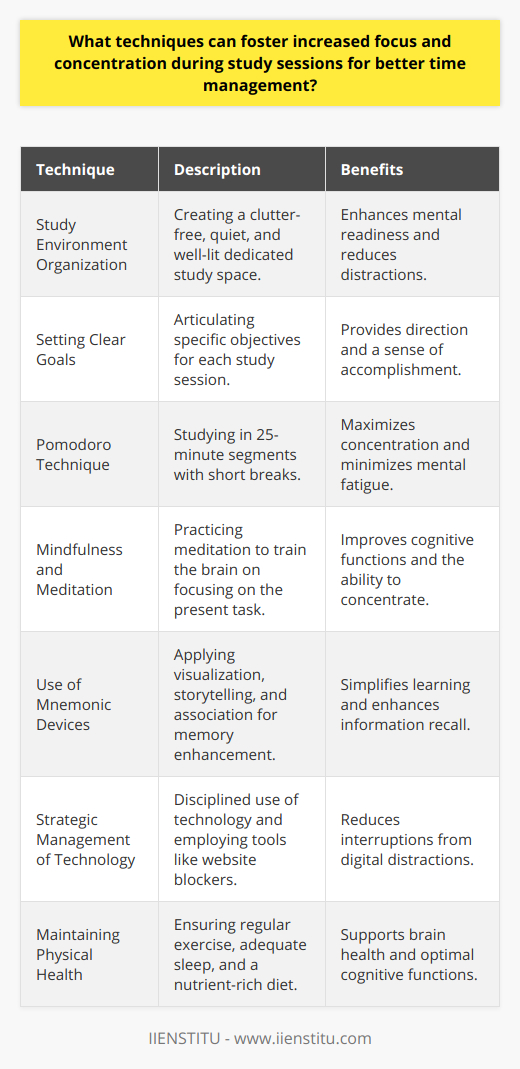
To achieve optimal focus and concentration during study sessions, one can employ various methods that aid in better time management. Firstly, creating a conducive study environment is crucial. This entails eliminating distractions, such as clutter and noise, and establishing a comfortable and well-lit workspace dedicated solely to studying.
Setting Clear Goals
It is essential to set clear, achievable goals for each study session. By setting specific objectives, students can maintain motivation and better monitor their progress. Breaking larger tasks into smaller, manageable chunks also helps in systematically accomplishing goals with less overwhelm.
Pomodoro Technique
Employing the Pomodoro Technique allows students to work in short, focused bursts with scheduled breaks. This method involves working for 25-minute intervals, called Pomodoros, followed by a five-minute break. After completing four Pomodoros, students can then take a longer break of approximately 15 to 30 minutes. This technique promotes productivity and concentration by preventing burnout and mental fatigue.
Mindfulness Practices
Practicing mindfulness can significantly improve focus and concentration during study sessions. One such practice, meditation, helps create mental clarity and calmness, enabling students to concentrate more effectively on their tasks. Deep breathing exercises, such as diaphragmatic breathing, can also increase focus by reducing stress and anxiety.
Mnemonic Devices
Utilizing mnemonic devices, such as acronyms, imagery, and chunking, can enhance information retention and understanding. These memory aids enable students to encode and retrieve complex information more efficiently, thus improving overall study effectiveness.
Technology Management
In today's digital age, the abundant presence of technology can lead to distractions and decreased focus. To counteract this, students should limit their use of smartphones and social media during study sessions. Techniques, such as website blockers and turning off push notifications, can further encourage sustained concentration.
Balanced Lifestyle
Lastly, maintaining a balanced lifestyle plays a significant role in boosting focus and concentration. Ensuring adequate sleep, regular exercise, and a healthy diet not only improves overall well-being but also enhances cognitive functioning and mental clarity, leading to more productive study sessions and efficient time management.
How can students effectively delegate tasks and collaborate with peers to optimize time management in group projects?
Establishing Clear Objectives
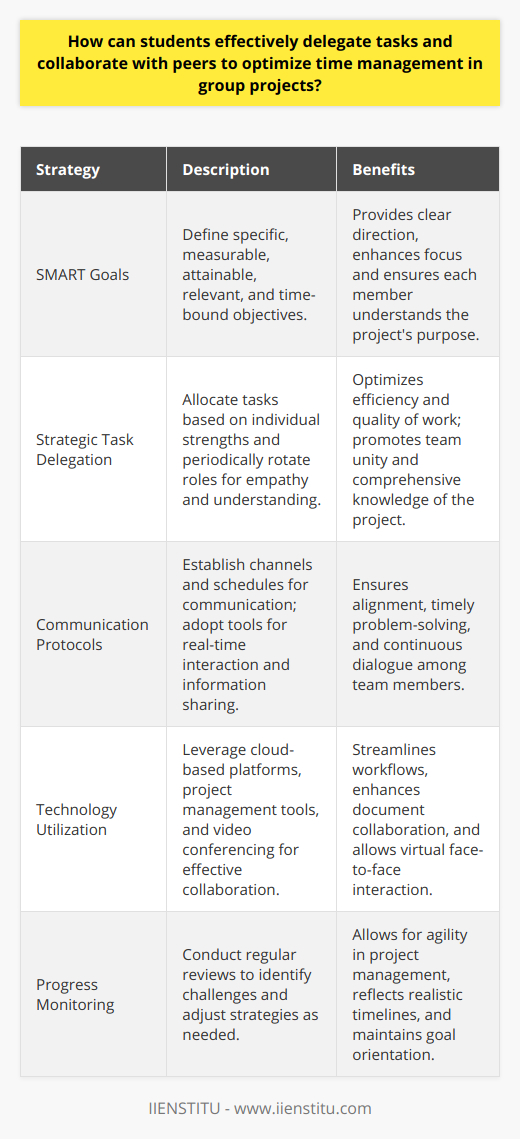
To optimize time management in group projects, students should start by establishing clear objectives for each task. This involves identifying the specific requirements and goals of the project, as well as setting individual deadlines for various stages of the work. Clearly defined objectives will ensure that every group member is aware of their responsibilities, which will streamline the workflow and ensure timely completion of tasks.
Selecting Appropriate Delegation Methods
After establishing clear objectives, students should use appropriate delegation methods for assigning tasks to group members. They can use various techniques such as assigning based on strengths, rotating roles, or using a democratic decision-making process. By finding the most suitable method for their group's dynamic, students will ensure that each member contributes effectively and efficiently to the project.
Implementing Communication Strategies
Effective communication is essential to successful collaboration and time management in group projects. Students should implement strategies such as regular meetings, the use of communication platforms like Slack or Microsoft Teams, and creating dedicated folders or documents for information-sharing. By regularly discussing progress, monitoring deadlines, and providing feedback, group members can address any obstacles that arise promptly and maintain focus on the project's goals.
Utilizing Technology for Collaboration
Students can further optimize their time management by utilizing technology to collaborate on group projects. Online tools like Google Docs, Trello, and Zoom can simplify and streamline the process of working together. These platforms enable group members to simultaneously work on documents, efficiently track progress, and discuss ideas with their peers, ensuring efficient time and resource management.
Evaluating Progress and Adjusting Plans
Finally, it is important for students to periodically evaluate their progress and adjust their plans accordingly. Monitoring progress and reassessing deadlines will help identify potential delays and challenges, allowing group members to allocate resources more effectively and adjust their strategies as needed. By being proactive and adaptable, students can ensure that their group projects are completed on time and to a high standard.
In conclusion, students can optimize time management in group projects by establishing clear objectives, selecting appropriate delegation methods, implementing effective communication strategies, utilizing technology for collaboration, and evaluating progress regularly. By adopting these practices, students will increase their chances of successfully completing group projects and improving their overall academic performance.
What role do mindfulness and stress management practices play in improving overall time management in an academic environment?
Role of Mindfulness and Stress Management
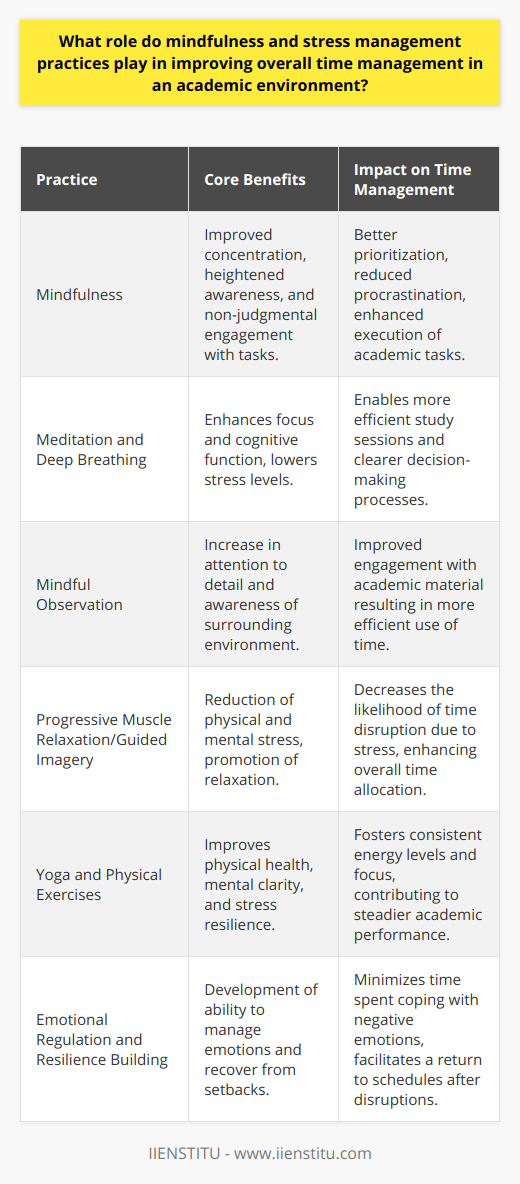
In the pursuit of academic excellence, effective time management emerges as a crucial skill for students to cultivate. Mindfulness and stress management practices play a vital role in improving overall time management within an academic environment. These practices help students focus on the present moment, enabling them to prioritize tasks and make better decisions on how to allocate their time.
Enhancing Focus and Concentration
Mindfulness practices, such as meditation and deep breathing, help students enhance their focus and concentration. By honing these skills, students can execute tasks more efficiently, leading to better overall time management. Improved focus also allows students to filter out distractions and complete assignments in a timely manner, resulting in increased productivity.
Reducing Stress and Anxiety
Stress and anxiety can hamper a student's capacity to manage time effectively. Implementing stress management techniques, such as progressive muscle relaxation, guided imagery, and cognitive restructuring, aids in mitigating stress levels. As stress levels decrease, students experience heightened mental clarity, which in turn promotes optimal time management by enabling them to tackle tasks logically and systematically.
Promoting Emotional Well-Being
Embracing mindfulness and stress management practices supports emotional well-being, too. Emotional turmoil can impact essential time management skills, such as planning, organization, and task completion. A boosted emotional state, achieved through these practices, ensures that students remain motivated and maintain a balanced mindset to optimize their productivity and time management efforts.
Encouraging Self-Awareness
Self-awareness is a significant component of successful time management. The practice of mindfulness encourages students to recognize their thought patterns, emotions, and habits that may contribute to poor time management. By acknowledging these aspects, students can devise effective strategies to modify their behaviors and enhance their ability to manage their time more competently.
In conclusion, mindfulness and stress management practices play a crucial role in fostering effective time management within an academic environment. By enhancing focus, reducing stress, promoting emotional well-being, and encouraging self-awareness, students can optimize their productivity and ultimately achieve academic success.
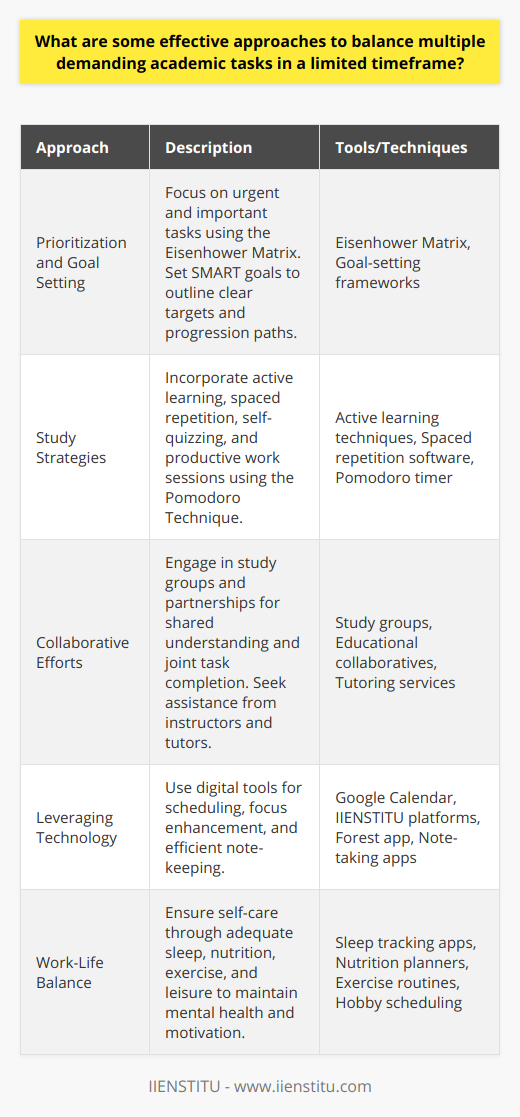
What are some effective approaches to balance multiple demanding academic tasks in a limited timeframe?
Time Management Techniques
One effective approach to balancing multiple demanding academic tasks in a limited timeframe is applying time management techniques. Time management allows students to organize their workload effectively, ensuring that tasks are completed within the allocated time. By prioritizing tasks, setting realistic goals, and breaking large tasks into smaller, manageable tasks, students can avoid procrastination and make steady progress towards their academic goals.
Utilization of Study Strategies
Another approach to effectively managing multiple academic tasks is the utilization of study strategies. These strategies help students optimize their learning and work more efficiently, thereby saving time and improving academic performance. Some popular and effective study strategies include active learning, spaced repetition, self-quizzing, and the Pomodoro Technique. Employing a combination of these methods can help students manage their assignments and adequately prepare for exams despite a tight timeframe.
Seeking Support and Collaboration
Seeking support and collaboration can also benefit students in managing multiple demanding academic tasks. Working in a study group, seeking help from peers or tutors, and discussing assignments with course instructors can significantly improve understanding and engagement with the material. Moreover, collaborative efforts can help in distributing workloads, increasing productivity, and gaining valuable insights and feedback from peers and mentors.
Technology and Tools for Productivity
Utilizing technology and productivity tools can streamline the process of managing multiple academic tasks. Students can employ tools like study timers, productivity apps, and note-taking software to keep track of assignments, projects, and deadlines. Digital calendars, learning management systems, and time management apps can also help students plan their studies, allowing them to work more efficiently and effectively on multiple tasks.
Maintaining a Balance between Academics and Personal Life
Lastly, it is crucial for students to maintain a balance between their academic and personal lives when managing multiple demanding tasks. Proper self-care, including sleep, regular exercise, and a healthy diet, contributes to better mental health and cognitive performance. Additionally, allocating time for hobbies, relaxation, and socializing is vital to prevent burnout and sustain motivation, ultimately improving the overall quality of academic work.
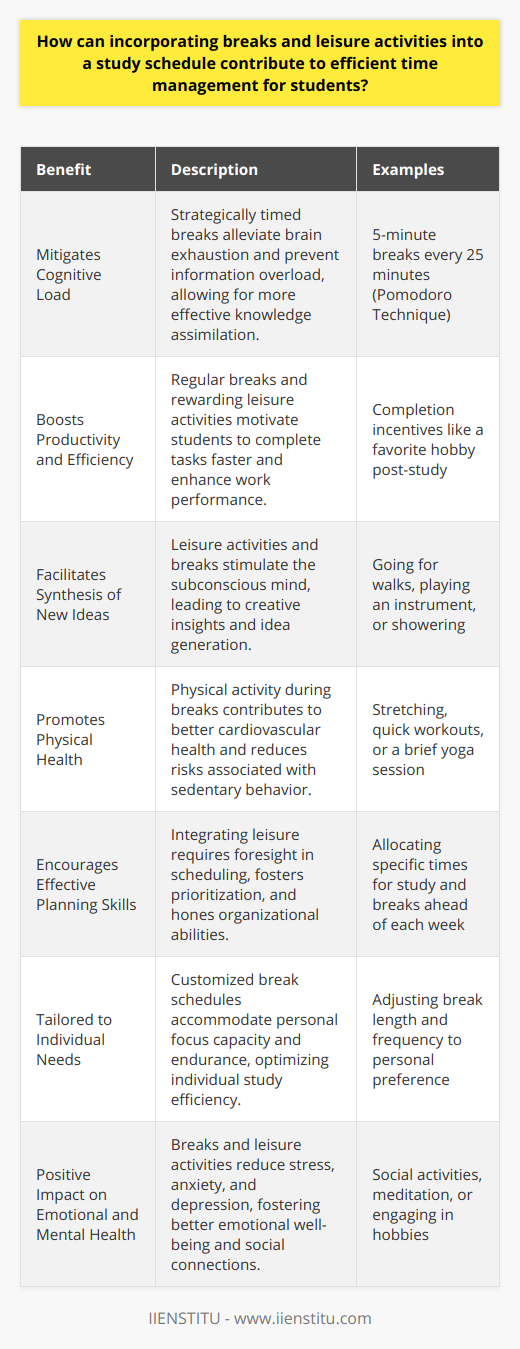
How can incorporating breaks and leisure activities into a study schedule contribute to efficient time management for students?
**Benefits of Scheduled Breaks**
Incorporating breaks and leisure activities into a study schedule can significantly contribute to efficient time management for students. Breaks provide opportunities for relaxation and rejuvenation, enabling students to maintain higher levels of focus and attention throughout the day. Scheduling breaks ensures that students dedicate adequate time to both academic and non-academic activities, thus striking a balanced lifestyle.
**Improved Focus and Retention**
Regular breaks during study sessions afford students the chance to briefly step away from their academic tasks, allowing their minds to rest and refresh. Research indicates that taking short breaks can enhance concentration, leading to better retention of information when students return to their studies. Furthermore, leisure activities offer a change of pace and promote mental stimulation, fostering creativity and critical thinking skills that can positively impact academic performance.
**Prevention of Burnout**
The incorporation of breaks and leisure activities in a study schedule helps to prevent burnout or academic exhaustion. By incorporating fun and relaxation into their schedules, students can reduce stress levels and maintain a positive outlook on their studies. Moreover, engaging in enjoyable activities can strengthen students' motivation to continue learning, equipping them with the drive to persist through challenging academic tasks.
**Enhanced Time Management**
Implementing breaks and leisure activities within a study schedule also encourages students to utilize their time more effectively. By designating specific periods for relaxation, students become more attentive to their use of time and are prompted to create a structured timetable for their academic and personal pursuits. This allocation of time fosters a clear division between work and leisure, promoting a disciplined approach to both studies and personal interests and ultimately contributing to efficient time management for students.
**Conclusion**
In summary, incorporating breaks and leisure activities into a study schedule can benefit students by preventing burnout, boosting motivation, and improving academic performance. Scheduled breaks and leisure pursuits encourage a balanced lifestyle, enhance focus and retention, and foster efficient time management practices. Consequently, students should be encouraged to cultivate study schedules that involve periodic breaks and leisure activities as a means of ensuring academic success and personal well-being.
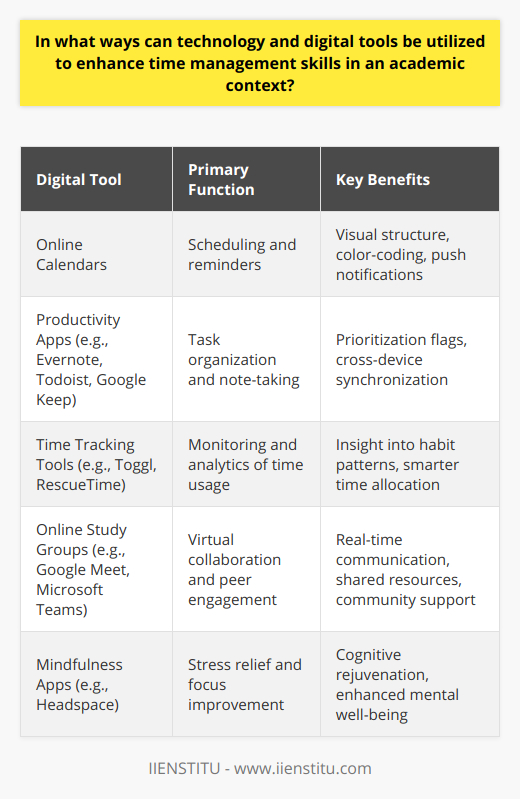
In what ways can technology and digital tools be utilized to enhance time management skills in an academic context?
Subheading: Time Management through Digital Tools
Digital tools play a crucial role in improving time management skills in an academic context. By using these tools, students can efficiently allocate their time, monitor their progress, and achieve academic success.
One way that technology can be employed in time management is through the use of online calendars. With a calendar application, students can schedule study sessions, deadlines, and priority tasks, and set reminders for upcoming due dates. Time can be allocated more effectively and students can identify potential conflicts in their schedules.
Subheading: Use of Productivity Apps
Another way to enhance time management skills is by using productivity apps specifically designed to improve focus and organization. Tools such as Evernote, Todoist, and Google Keep enable students to create task lists, set priorities, and track their progress. These apps help students to break down large tasks into smaller, manageable components while avoiding procrastination.
Subheading: Time Tracking Tools
Time tracking tools are important for managing one's time effectively. Students can use platforms such as Toggl and RescueTime to determine how they are spending their time by analyzing their past actions. This empowers them to identify areas where they can make improvements, prioritize important tasks, and eliminate time-wasting activities.
Subheading: Online Study Groups
Technology also allows students to easily collaborate with their peers in virtual study groups. These groups can schedule study sessions, share resources, and hold each other accountable for their progress. Platforms such as Google Meet and Microsoft Teams provide a means for effective communication and collaboration.
Subheading: Incorporating Breaks and Mindfulness
The incorporation of regular breaks and mindfulness exercises into digital study tools is another way to enhance time management skills. Applications such as the Pomodoro Technique and Headspace provide balance by promoting focused work intervals and mental rejuvenation, ultimately leading to increased productivity.
In conclusion, technology and digital tools offer a variety of methods to enhance time management skills in an academic context. By incorporating these tools into daily routines, students can better manage their time, leading to improved academic performance.