To be successful in the business world, it is essential to have strong communication skills. Communication skills are what allow you to share your ideas with others, and they are also what help you to understand the opinions of others. With strong communication skills, it can be easier for a person to advance in their career.
Communication skills are important for a variety of reasons.
Communication skills are essential in the business world and beyond, as they allow people to effectively express their ideas and understand what others are saying. Communication skills can be divided into two main categories: verbal communication and non-verbal communication. Verbal communication is what we typically think of when discussing communication; it involves conversations, presentations, negotiations, etc.
Non-verbal communication is what we use to supplement what we say—facial expressions, gestures, body language—and can be just as important as what we actually say.
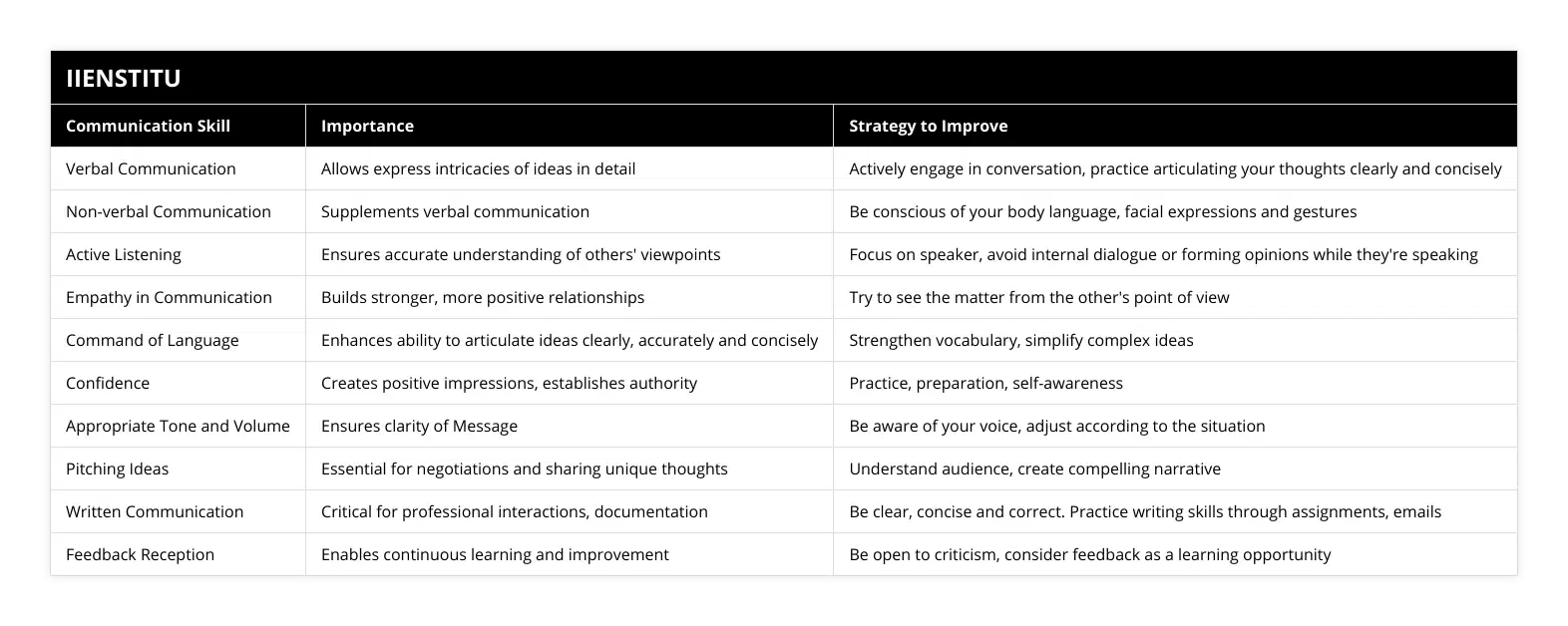
When it comes to improving one's communication skills, there are numerous strategies that one can employ. For starters, active listening can prove beneficial in order to ensure that you understand what other people are saying correctly.
This involves focusing on what the other person is saying rather than planning what you'll respond with or formulating an opinion while they're still speaking. Additionally, actively engaging in conversation with others will help you practice your skills without fear of judgment. Asking deeper questions will also help to foster better conversations and build relationships with others more quickly.
It is also important to remember that communication goes both ways; not only should we take the time to listen attentively but also make sure that we articulate our thoughts clearly and concisely for those around us to understand us too.
This means taking into consideration the other person's point of view when expressing your own and not dominating the conversation. Additionally, paying attention to your tone and volume when talking will also aid in communicating more clearly and effectively; speaking too quietly or too loudly may make it difficult for others to understand what you're trying to get across.
Furthermore, having a good command of language will significantly improve one's ability to communicate effectively; this includes having a wide vocabulary at hand so that you can accurately describe ideas and feelings without using long-winded explanations or resorting to simplistic words that don't quite convey what you mean accurately enough. Finally, it is useful to practice presenting yourself confidently so that people have a good impression of who you are without any hesitations or doubts about what it is you want them to know or take away from a conversation.
All in all, effective communication skills are key for success in the workplace but also any personal interactions one may have throughout life; by mastering these essential techniques, individuals empower themselves with an invaluable tool for success no matter where life takes them.
The ability to communicate effectively is essential in the workplace.
Communication skills are integral to any successful business and personal life, as they allow us to create meaningful connections and build relationships with others. In particular, effective communication is essential for the workplace, where clear communication of tasks, expectations, and ideas is paramount for success.
Improving communication skills can often be a daunting task, but it is well worth the effort in order to become an effective communicator.
One way to begin improving communication skills is through active listening; this involves paying close attention to what another person is saying while avoiding any internal dialogue or forming opinions while they are speaking.
By actively listening, you can ensure that what the other person is saying is understood correctly and not misinterpreted or overlooked due to distraction or mental wanderings. Additionally, actively engaging in conversations with others by asking deeper questions will help to foster better conversations that build relationships more quickly and efficiently.
It's also important to remember that communication goes both ways; not only should we focus on taking the time to listen attentively, but also on making sure what we say is clear and concise in order for our message to be comprehended correctly by those around us. Proper volume control when speaking as well as considering another's point of view during the conversation, are key components in communicating effectively; sometimes, even small changes such as these can make a big difference when it comes to getting one's message across accurately.
Having a good command of language also significantly improves one's ability to communicate successfully; having a wide vocabulary allows individuals to express themselves more clearly without resorting to long-winded explanations or simplistic words that don't quite get their point across adequately enough.
Lastly, presenting oneself confidently will have a positive effect on those around them and give them a good impression of who you are without any doubts or hesitations about what it is you want them to take away from the conversation.
Although mastering these techniques may seem like a challenge at first glance, once achieved, they become invaluable tools that empower individuals with an effective form of communication no matter what situation they find themselves in, whether it be business-related or personal interactions. With practice and dedication, anyone can learn how best to utilize these strategies and excel when it comes to communicating effectively throughout their lives.
Good communication skills can help you build better relationships.
Communication skills are an essential part of any successful business and personal life, as they allow us to build meaningful connections and relationships with others. When it comes to the workplace, effective communication is key for success as it allows for clear exchanges of ideas, expectations, and tasks.
Improving these skills may appear to be a daunting task at first; however, taking the time to master these techniques can be incredibly beneficial in the long run.
One important aspect of effective communication is active listening; this means paying close attention to what another person is saying without forming opinions on what they are conveying or drifting off into internal dialogue while they're speaking. Through active listening, not only can what the other person is saying be understood clearly, but it also fosters a better conversation which helps create relationships more quickly and efficiently.
Additionally, engaging in conversations by asking questions further encourages understanding between two or more people.
Remember that communication works both ways; in order for our message to come across properly, we need to make sure what we're saying and how we're saying it is clear and concise. Making certain that our volume level when speaking is appropriate, as well as considering another's point of view during the conversation, are also key components in communicating effectively; even seemingly minor changes such as these can make all the difference when trying to get one's point across accurately being misinterpreted or overlooked due to distraction or mental wanderings.
Furthermore, having a good command of language can significantly improve one's ability to deliver their message successfully; with a wide vocabulary, individuals can express themselves more adequately without having to resort to using words that may not quite get their point across completely or having lengthy explanations in order for what they are trying to say be understood correctly.
Lastly, presenting oneself confidently so that others have a positive impression of who you are without any doubts or hesitations about what it is you want them to take away from a conversation likewise plays a role when communicating effectively in both work settings and personal interactions alike.
In conclusion, mastering communication skills takes practice and dedication but once achieved, they become an invaluable tool for success no matter what situation one finds themselves in, whether it be business-related or personal interactions throughout life. By taking the time to learn how best to utilize these strategies, individuals empower themselves with an essential form of communication that will serve them well now and into the future.
Improving your communication skills can be challenging, but it's worth the effort.
Being able to communicate effectively is one of the most important skills that any individual can possess. It is what allows people to connect with each other on a deeper level, whether it be in a business or personal context, as well as what enables us to share and exchange ideas more efficiently. Mastering communication skills requires dedication and practice, but once achieved; they become an invaluable tool for success no matter what situation one finds themselves in.
Below are some tips on how best to utilize these strategies when it comes to communicating effectively:
Active listening
This means paying close attention to what another person is saying without forming opinions or drifting off into internal dialogue while they're speaking. Active listening not only what the other person is saying to be understood clearly, but it also fosters a better conversation which helps create relationships more quickly and efficiently.
Asking questions
Engaging in conversations by asking questions further encourages understanding between two or more people. Asking questions may seem simple, but it can make all the difference when trying to get the point across accurately without being misinterpreted or overlooked due to distraction or mental wanderings.
Having a good command of the language
Having a wide vocabulary allows individuals to express themselves more adequately without having to resort to using words that may not quite get their point across completely or having lengthy explanations in order for what they are trying to say to be understood correctly.
Presenting oneself confidently
Making certain that our volume level when speaking is appropriate as well as considering another's point of view during conversation are also essential components for effective communication; even seemingly minor changes such as these can make all the difference when trying to get one's point across accurately being misinterpreted or overlooked due to distraction or mental wanderings.
Lastly, presenting oneself confidently so that others have a positive impression of who you are without any doubts or hesitations about what it is you want them to take away from a conversation likewise plays a role when communicating effectively in both work settings and personal interactions alike.
By taking the time to learn how best to utilize these strategies, individuals empower themselves with an essential form of communication that will serve them well now and into the future. Not only does effective communication help build stronger relationships, but through gaining greater insight into what others think and feel, we can gain valuable perspectives and fresh ideas that may positively influence our own behavior and choices.
Improving your communication skills may appear daunting at first, but it's worth the effort; by continually practicing these techniques, you will have access to an effective form of communication no matter what situation you find yourself in throughout life.
There are many different ways to improve your communication skills.
The importance of having strong communication skills cannot be overstated. It is what allows us to connect with others, share and exchange ideas more efficiently, as well as what helps create relationships quickly and accurately. To effectively use communication strategies, it is important to start by mastering active listening.
This means paying close attention to what another person is saying without forming opinions or drifting off into internal dialogue while they're speaking. Through active listening, not only what the other person is saying can be understood clearly, but it also fosters better conversations that help build stronger relationships.
In addition to active listening, having a good command of the language is essential for effective communication. Having a wide vocabulary allows individuals to express themselves more adequately without having to resort to using words that may not quite get their point across completely or rely on lengthy explanations in order for what they are trying to say to be understood correctly.
Asking questions is also an important technique when it comes to communicating effectively; this encourages understanding between two or more people and makes sure that the point being made is accurately heard and accepted without being misinterpreted or overlooked due to distraction or mental wanderings.
It is also essential when communicating effectively to present oneself confidently so that others have a positive impression of who you are without any doubts or hesitations about what it is you want them to take away from a conversation.
Making certain that your volume level when speaking is appropriate as well as considering another's point of view during conversation are also important components for effective communication; even seemingly minor changes such as these can make an enormous difference in how one expresses their thoughts and the message they wish to convey accurately.
Improving one's communication skills may seem daunting, but with dedication and practice, anyone can become an invaluable asset in any situation where effective communication skills are necessary for success.
Not only does effective communication help build stronger relationships, but through gaining greater insight into what others think and feel we can gain valuable perspectives and fresh ideas that may positively influence our own behavior and choices, thus furthering our growth both personally and professionally.
You can also seek out help from professionals if needed.
There are plenty of resources available to help you hone your communication skills and become an effective communicator. Courses, workshops, books, and even individual coaching sessions can all be useful in learning what it takes to become a successful communicator. With the proper guidance and practice, anyone can master the art of communicating effectively.
It is clear that what are communication skills are paramount for success in almost any endeavor we pursue in life; mastering these essential techniques can provide us with far-reaching benefits both personally and professionally.
By understanding what constitutes effective communication, what barriers stand in our way when trying to communicate successfully, as well as what techniques we must utilize to maintain open lines of conversation with others, we will be able to better equip ourselves with an essential form of communication that will help us realize our fullest potential.
In conclusion, what are communication skills encompass a wide range of techniques and strategies, including active listening, having a good command of the language, asking questions, presenting oneself confidently, considering another's point of view, and adjusting volume levels when needed. Improving one's communication skills may be challenging, but with dedication and practice, anyone can become an invaluable asset in any situation where effective communication is necessary for success.
With the right guidance and resources available to support your journey in learning what it takes to become a successful communicator, you can open up doors to new opportunities as well as fresh perspectives that may positively influence your own behavior and choices while helping you reach your fullest potential.
Frequently Asked Questions
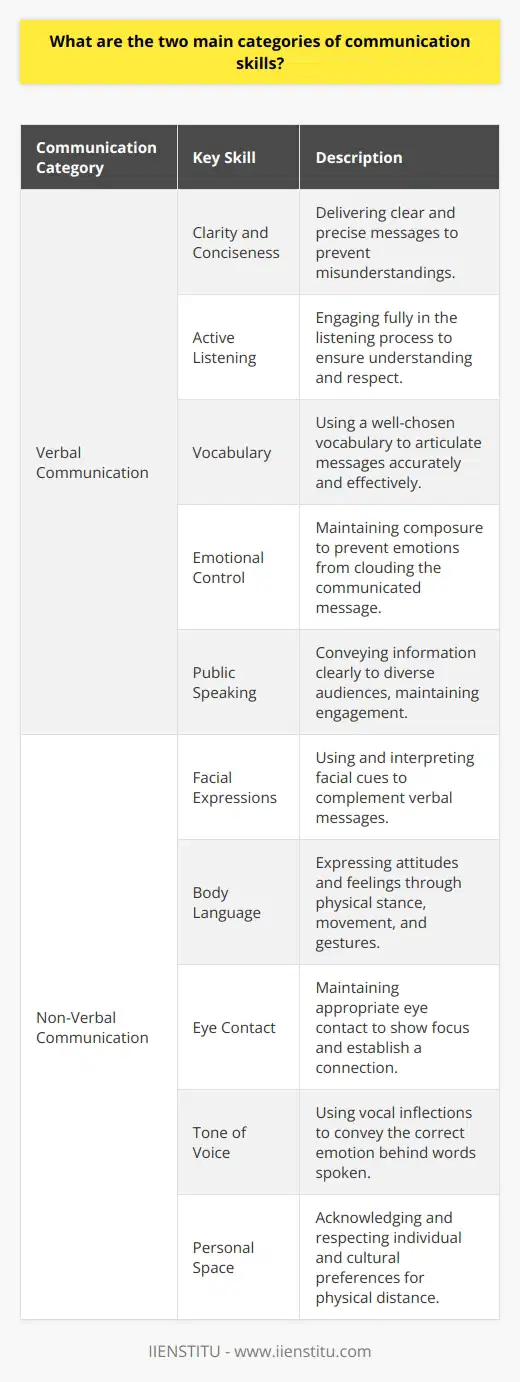
What are the two main categories of communication skills?
The two main categories of communication skills are verbal communication and non-verbal communication.
Verbal communication involves speaking and other forms of direct communication, such as presentations, negotiations, debates, and more.
Non-verbal communication is often described as body language or non-verbal cues; it includes facial expressions, gestures, posture, eye contact, and tone of voice. By mastering both forms of communication skills, one can effectively express their ideas in the business world and beyond.
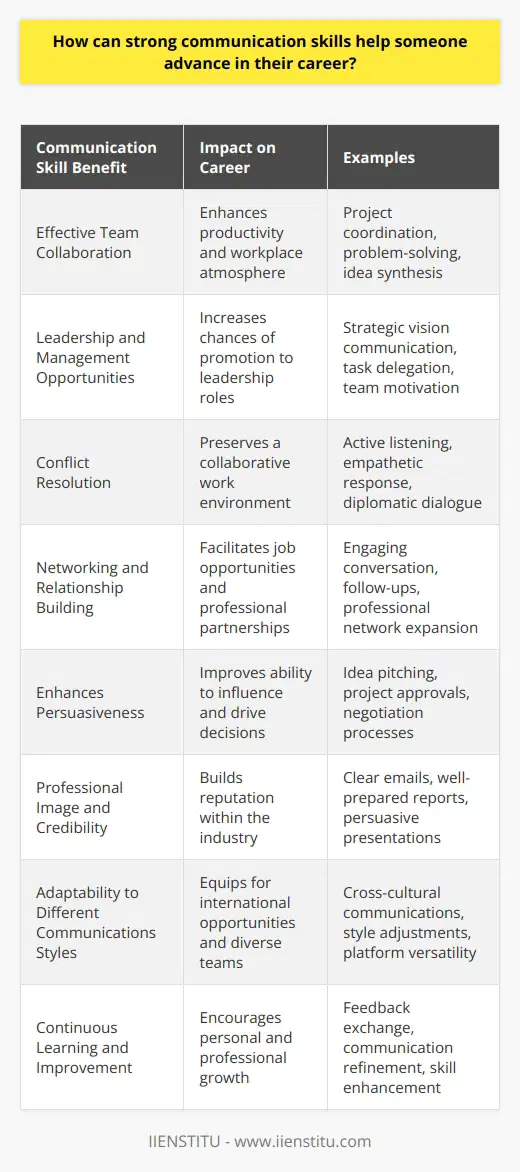
How can strong communication skills help someone advance in their career?
Strong communication skills are essential for success in the business world. With strong communicative abilities, individuals can better express their opinions in discussions and presentations as well as comprehend what others are conveying to them.
Being able to effectively share your ideas with others increases your likelihood of being taken seriously and making progress in a given field since clear communications are vital to successful collaboration.
Moreover, people with good communicative abilities will often find themselves at an advantage when it comes to networking opportunities since they know how to make a good impression on new contacts.
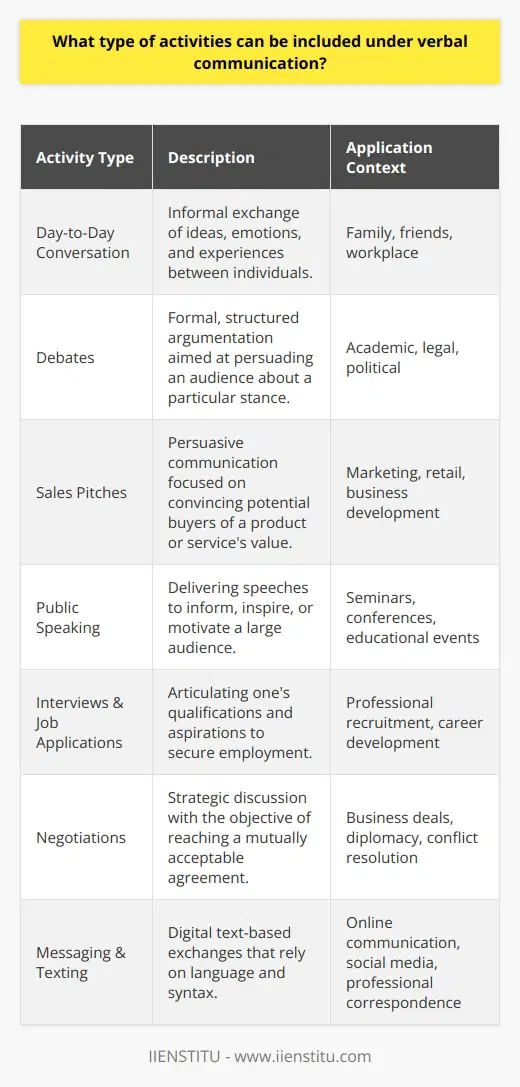
What type of activities can be included under verbal communication?
Verbal communication encompasses an array of different activities including conversations, debates, sales talks or pitches, public speaking events (e.g., seminars or conferences), interviews and job applications as well as negotiations.
Additionally, texting or messaging via electronic media such as email can also be considered a form of verbal communication since it conveys messages through written words rather than physical cues such as body language or tone of voice. However, its effectiveness relies heavily on the context and recipient's interpretation thereof.
What are the benefits of having strong communication skills?
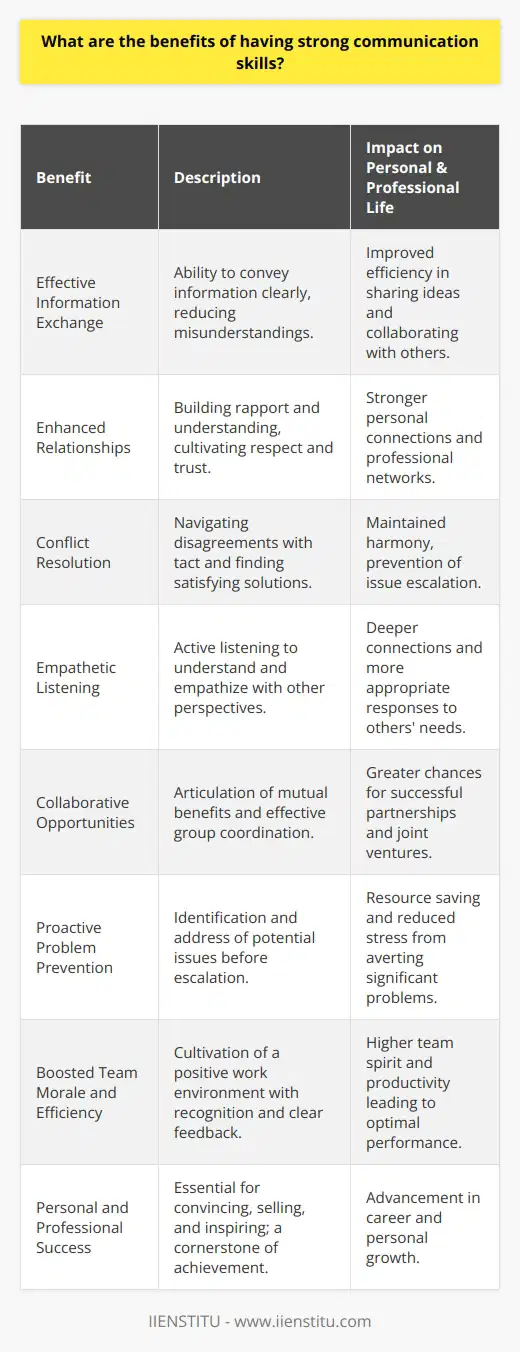
The benefits of having strong communication skills include:
Being able to effectively convey information and ideas to others.
Building strong relationships with colleagues, customers, and clients.
Being able to negotiate and resolve conflicts in a positive manner.
Being able to listen to others and understand their point of view.
Being able to identify opportunities for collaboration.
Being able to identify and address potential problems before they occur.
Improving team morale and efficiency by creating a positive work environment.
Improving personal and professional success by being able to effectively express ideas and opinions.
How can I improve my communication skills?
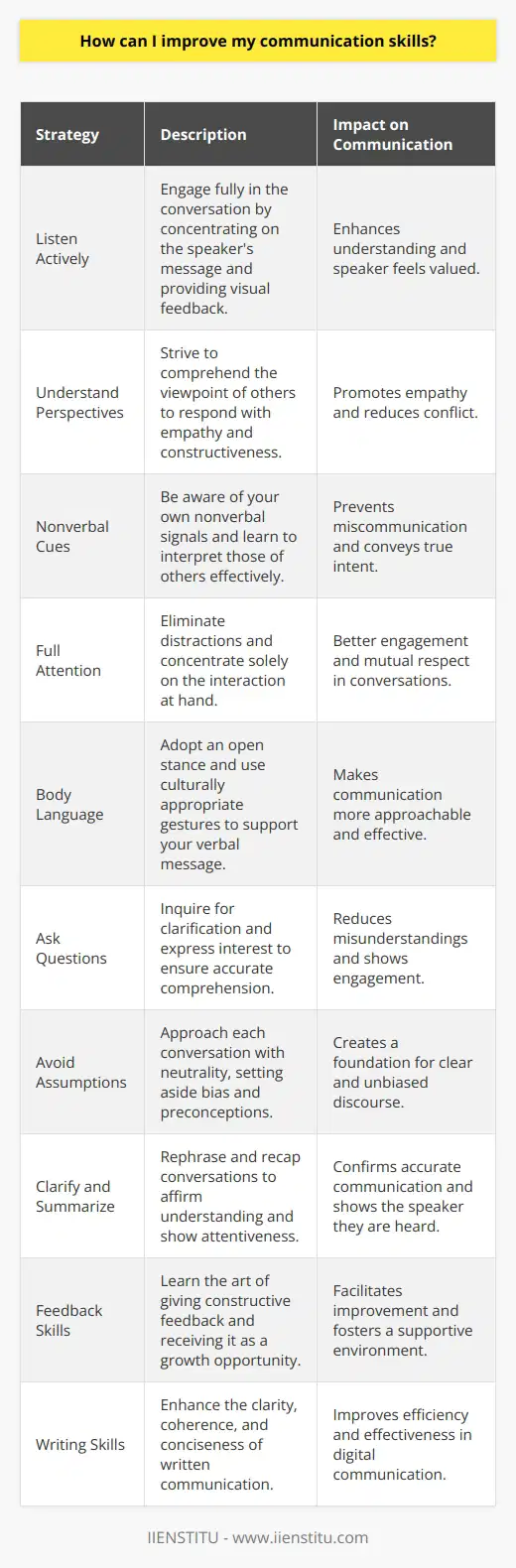
Listen actively.
Make an effort to understand the other person’s perspective.
Pay attention to nonverbal cues.
Give people your full attention.
Be mindful of your body language.
Ask questions.
Avoid making assumptions.
Practice clarifying and summarizing.
Learn how to give and receive feedback.
Improve your writing skills.
How can I practice effective communication in my daily life?
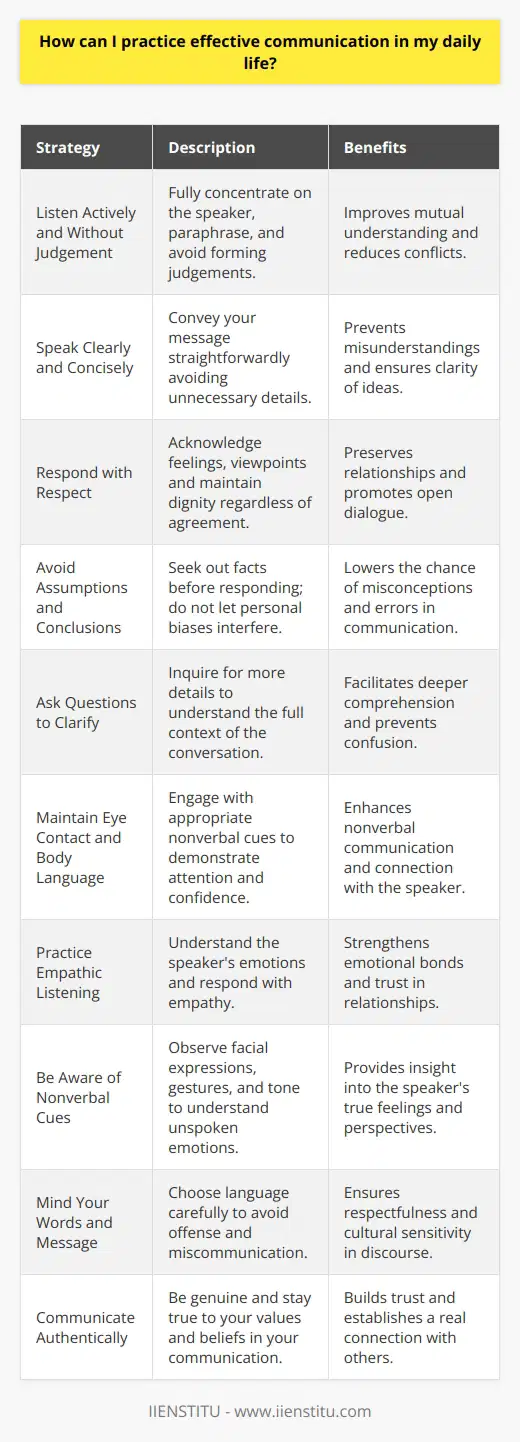
Listen actively and without judgement.
Speak clearly and concisely.
Respond to others with respect.
Avoid making assumptions or jumping to conclusions.
Ask questions to clarify understanding.
Make eye contact and maintain appropriate body language.
Practice active and empathic listening.
Be aware of nonverbal cues, such as facial expressions and tone of voice.
Be mindful of the words you use and the message you are conveying.
Speak in a way that is genuine and authentic to who you are.
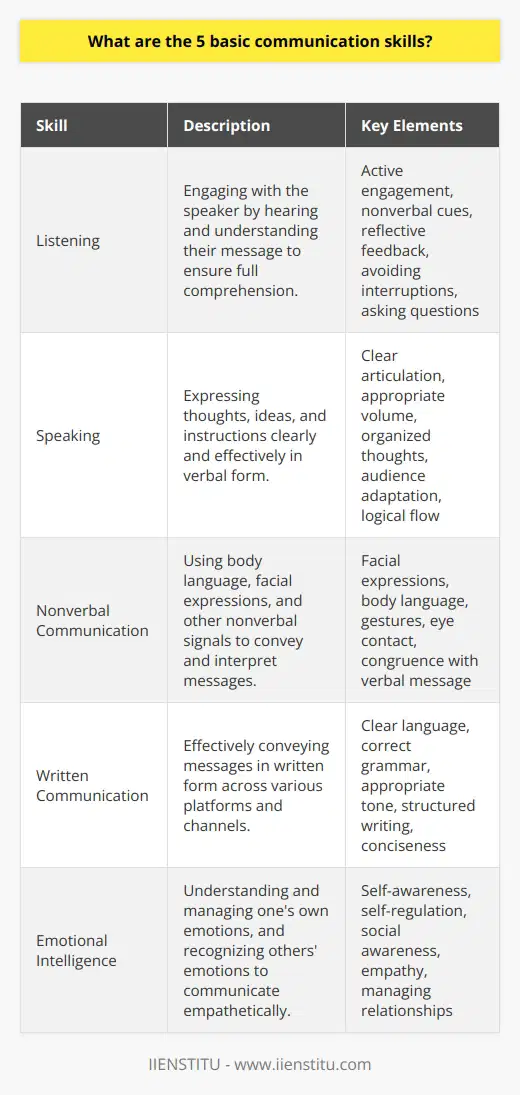
What are the 5 basic communication skills?
Basic Communication Skill: Listening
The first essential communication skill is active listening. Effective communicators pay close attention to what others are saying, ask follow-up questions, and maintain eye contact, which helps them understand the speaker's message and emotions.
Basic Communication Skill: Speaking
Another critical communication skill is speaking clearly and confidently. A good communicator articulates ideas in a logical manner, adjusts their tone and volume to suit the situation, and utilizes persuasive speech when necessary. This skill ensures that the intended message is understood.
Basic Communication Skill: Nonverbal Communication
Nonverbal communication plays an important role in conveying emotions, feelings, and attitudes. Facial expressions, gestures, postures, and eye contact help in supplementing verbal communication and reinforcing the intended message. Mastering nonverbal communication allows individuals to effectively connect with others.
Basic Communication Skill: Written Communication
Skilled written communication is crucial in professional and personal contexts. The ability to convey ideas effectively in emails, reports, and social media posts demonstrates competence and understanding. Proper grammar, punctuation, and formatting are necessary for clear, concise messages.
Basic Communication Skill: Emotional Intelligence
Lastly, emotional intelligence is a foundational communication skill. It involves recognizing one's emotions and those of others, empathizing, and managing emotions in a healthy manner. Integrating emotional intelligence in communication enhances relationships, conflict resolution, and overall communication effectiveness.
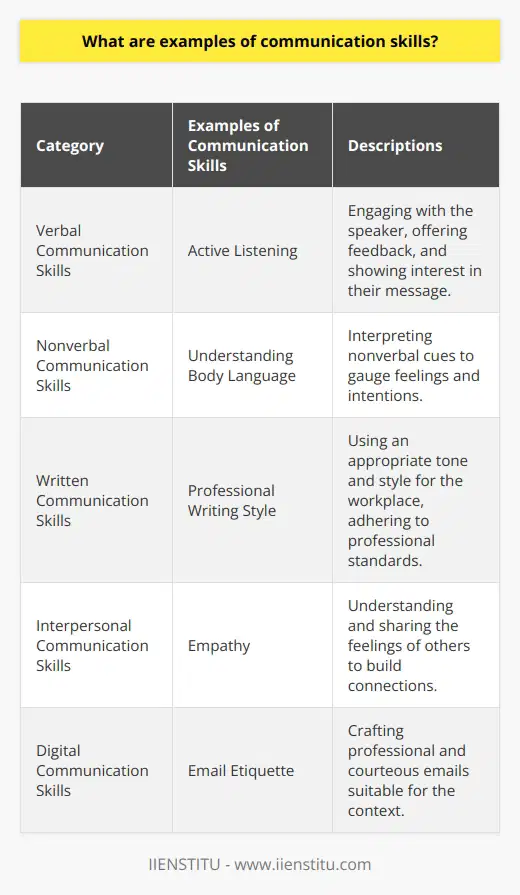
What are examples of communication skills?
Examples of Verbal Communication Skills
One aspect of communication skills lies in verbal expression, which is the ability to articulate thoughts, ideas, and feelings effectively. Examples of verbal communication skills include active listening, comprehending spoken language, and conveying information through speech. Enunciation and engaging storytelling are also valuable verbal skills that can captivate and persuade an audience.
Nonverbal Communication Skills
Nonverbal expression constitutes another critical aspect of communication. Examples of nonverbal communication skills involve the interpretation and expression of body language, facial expressions, and gestures. Furthermore, having command over tone of voice, posture, and eye contact can dramatically enhance the overall effectiveness of communication, making it easier to persuasively communicate a message.
Written Communication Skills
Another dimension of communication skills is rooted in written expression. Examples of written communication skills show the ability to write clearly, concisely, and accurately. Many industries require competence in professional writing, such as drafting emails, reports, proposals, and memos, which are essential for exchanging information within or between organizations. Possessing strong editing and proofreading skills is also crucial to ensure the written piece is error-free and easy to understand.
Interpersonal Communication Skills
Interpersonal communication skills, as the name suggests, involve interacting with others effectively. Examples of interpersonal communication skills include relationship-building, empathy, conflict resolution, and negotiation. These skills are indispensable in everyday life, work environments, and personal relationships, as they facilitate healthy communication, foster collaboration, and maintain a sense of mutual understanding.
Digital Communication Skills
Lastly, digital communication skills are vital in the current age of technology-driven interactions. Examples of digital communication skills include proficiently using social media, sending professional emails, and utilizing virtual meeting platforms such as Zoom, Microsoft Teams, or Skype. Familiarity with digital devices and platforms for written, verbal, and visual communication is essential for forming and maintaining connections in both professional and personal contexts.
In conclusion, communication skills encompass a diverse range of competencies, including verbal, nonverbal, written, interpersonal, and digital communication. Developing these skills is essential for successful personal and professional relationships, as they enhance overall effectiveness and understanding between individuals.
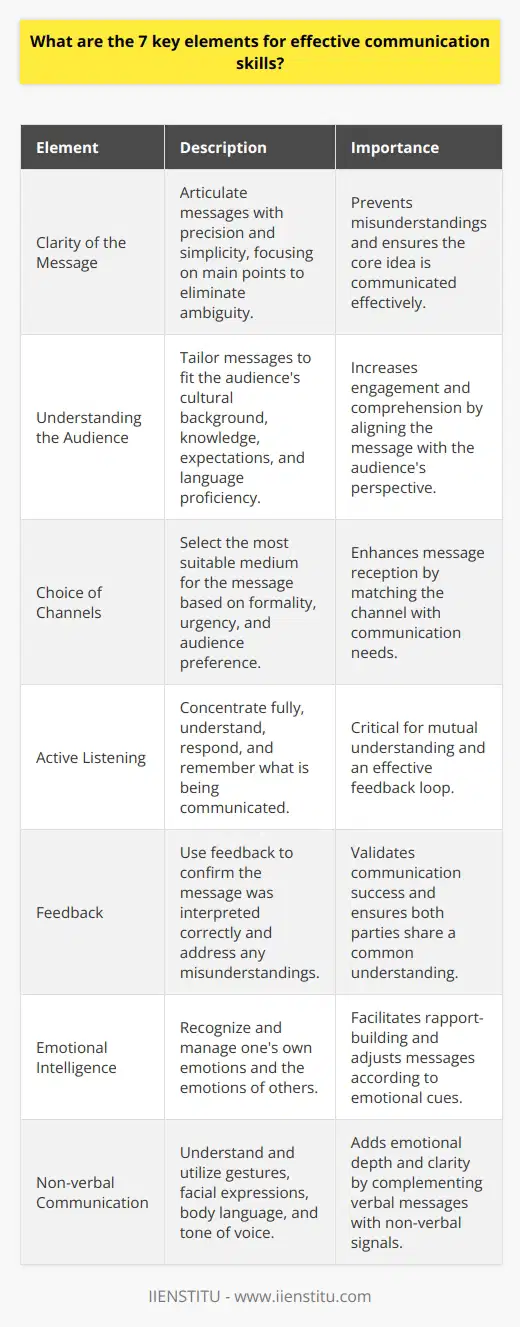
What are the 7 key elements for effective communication skills?
Understanding the Key Elements
To communicate effectively, one needs to be adept at using the seven key elements that together form the bedrock of effective communication. These elements play a crucial role in ensuring that the intended message is transmitted accurately and received correctly by the target audience.
Clarity of the Message
The first element concerns the quality of the message itself. The message must be clear, concise, and easily understood by the recipient. Ambiguity or vagueness can lead to misinterpretation and confusion, ultimately impeding the communication process.
Understanding the Audience
Knowing the target audience allows for adjustments in messaging to ensure the desired outcome. Factors such as age, culture, context, and background influence the way an audience perceives information, and catering to these factors will enhance communication effectiveness.
Choice of Channels
Effective communication also depends on choosing the appropriate channels (verbal, written, or non-verbal) for transmitting the message. Selecting the right channel based on audience, context, and message content can facilitate smooth communication.
Active Listening
This crucial element involves carefully attending to the interlocutor’s speech and responding thoughtfully and empathetically. Active listening enables an understanding of the message’s true meaning and promotes a constructive exchange of ideas.
Feedback
Obtaining feedback from the recipient ensures that the intended message is understood correctly. Feedback can be verbal (asking questions) or non-verbal (nodding in agreement), and its receipt allows one to make necessary adjustments in communication.
Emotional Intelligence
An effective communicator exhibits strong emotional intelligence, which involves empathy, self-awareness, and self-regulation. Being aware of one’s emotions and those of others helps in navigating social interactions and adjusting communication styles to cater to various situations.
Non-verbal Communication
Lastly, non-verbal cues such as facial expressions, gestures, and body language are integral to effective communication. Non-verbal signals can support or contradict the spoken message, and recognizing and interpreting these cues can help improve communication outcomes.
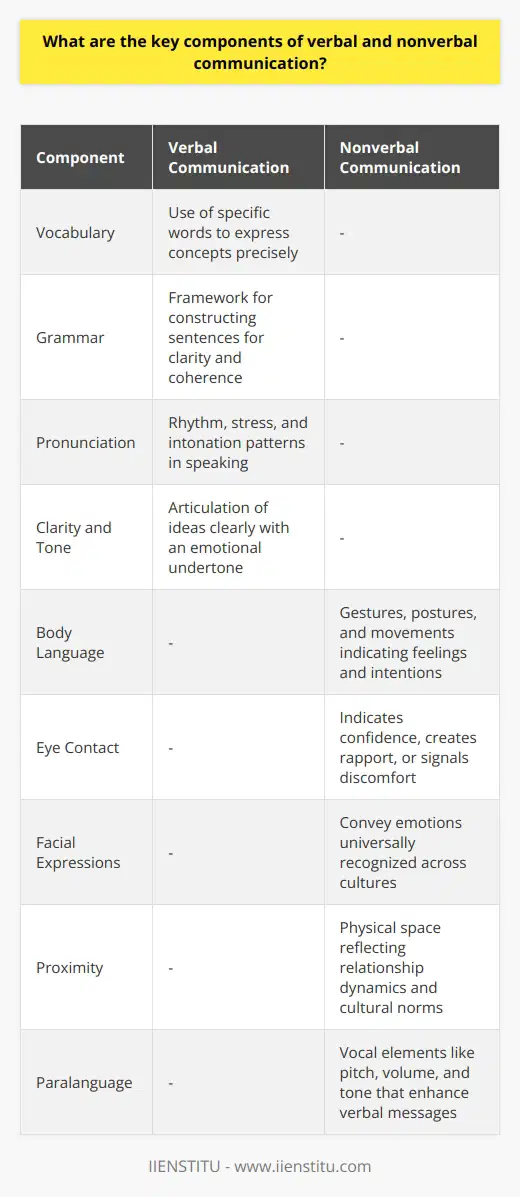
What are the key components of verbal and nonverbal communication?
Key Components of Verbal Communication
Verbal communication comprises the use of words, voice, and language to convey a message. The first key component is vocabulary, which refers to the words used by individuals to express thoughts and ideas. The second component is grammar, the system of rules that governs the structure of sentences and phrases. Pronunciation, the third component, relates to the unique sounds and intonations that people use while speaking.
Clarity and tone are also essential elements of verbal communication. Clarity focuses on making the message easy to understand, while tone demonstrates the speaker's emotions and attitudes. Additionally, the use of pauses and emphasis on certain words reflects the speaker's intention and supports effective communication.
Key Components of Nonverbal Communication
Nonverbal communication encompasses the use of visual cues, body movements, and facial expressions to convey information. The primary component is body language, which involves gestures, postures, and mannerisms that provide meaning beyond spoken words. Eye contact, another crucial aspect, demonstrates attentiveness or conveys emotions, such as trust or hostility.
Facial expressions play a significant role, as they indicate various emotions, such as happiness, sadness, anger, and surprise. Proximity, or personal space, conveys levels of intimacy or formality between communicators. For example, standing close to someone may be interpreted as a sign of comfort or closeness, while maintaining distance can indicate dislike or disinterest.
Finally, paralanguage features elements—such as pitch, volume, and tone of voice—that complement or contradict spoken language. These elements can serve to emphasize or alter the impact of verbal messages by providing additional context and meaning.
In conclusion, both verbal and nonverbal communication consist of multiple components that work in tandem to convey messages and establish relationships. Understanding these components and using them effectively can improve communication and contribute to successful interpersonal interactions.
How do cultural differences impact communication styles?
Cultural Impact on Communication Styles
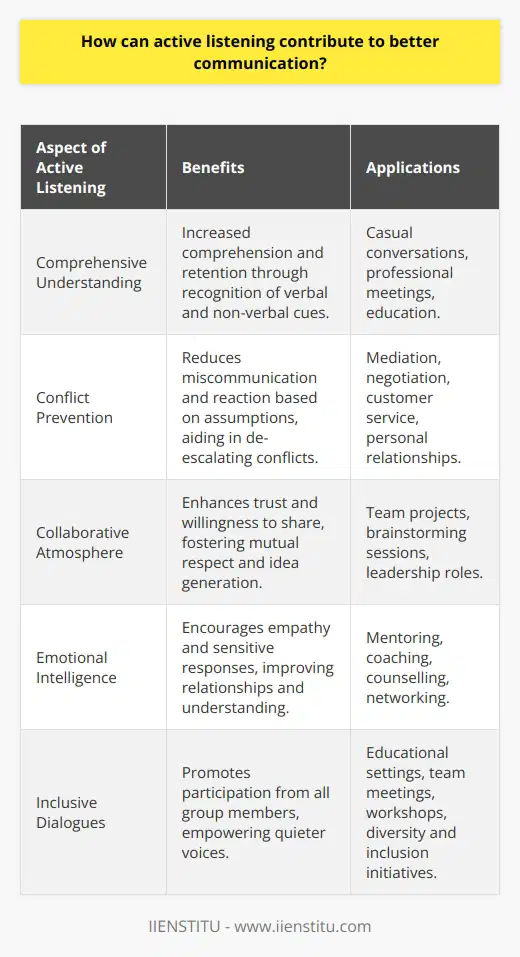
Cultural differences significantly affect communication styles through language, nonverbal cues, and social norms. Understanding these variations is crucial for effective communication in multicultural environments.
Language Barriers
Language is the backbone of any communication, and cultural differences often lead to language barriers. When interacting with people from diverse cultures, misunderstandings may arise due to differences in vocabulary, pronunciation, or even grammar. These language barriers are likely to cause confusion, misinterpretation, and potentially conflict.
Nonverbal Cues
Nonverbal communication is another crucial aspect influenced by culture. Elements such as gestures, facial expressions, body language, and eye contact often convey different meanings in different cultures. For instance, while making direct eye contact is considered polite in some cultures, it may come off as rude or aggressive in others. Therefore, being aware of local customs and nonverbal nuances is essential for effective cross-cultural communication.
Social Norms and Context
Different cultures also have unique social norms and expectations that shape communication styles. Factors like formality, personal space, and hierarchy play a significant role in engaging with individuals from other cultures. For example, some societies prioritize directness and assertiveness in communication, while others value politeness and indirectness. Also, the significance of context in communication differs across cultures; high-context cultures rely on underlying meanings while low-context cultures favor explicit messages.
To navigate these cultural differences, it is key to develop cultural intelligence and empathy. By familiarizing oneself with different communication styles and norms, individuals can foster more effective and harmonious interactions in multicultural settings. Recognizing and adapting to diverse cultural perspectives will ultimately lead to better communication and stronger relationships.
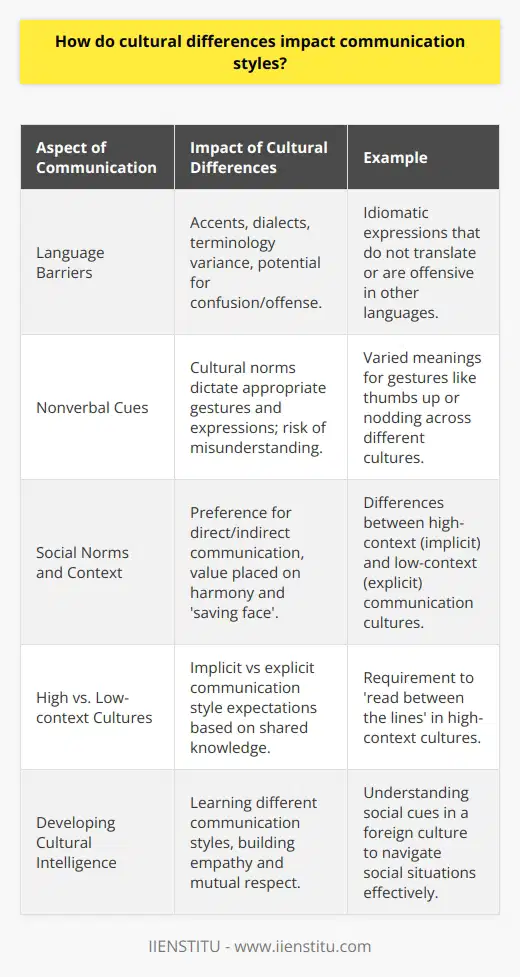
How can one adapt their communication style to effectively communicate with diverse audiences?
Understanding the Audience
Adapting one's communication style to effectively engage with diverse audiences requires an understanding of the cultural, linguistic, and psychological differences that exist within the target audience. Recognition of these factors allows for the tailoring of messages that resonates with the intended recipients.
Incorporating Cultural Differences
To accommodate cultural differences, one should be mindful of varying communication norms, traditions, and etiquette of the audience. This implies avoiding expressions or analogies that may be offensive or misinterpreted by the audience due to cultural differences. Furthermore, adopting a respectful and humble tone in communication can help create a comfortable environment for open discussions.
Addressing Language Barriers
Effective cross-cultural communication also involves addressing language barriers by employing simpler vocabulary, shorter sentences, and the avoidance of jargon. It is crucial to make use of visual aids or supplementary materials to support key messages, as they can be instrumental in bridging the language gap.
Considering Psychological Factors
Taking into account the psychological factors, such as the audience's motivational perspective, helps to position the message in a more compelling manner. One should ensure the relevance and significance of the message to the audience as the absence of such consideration can hinder the communication process. Asking for feedback or initiating dialogues can enhance the understanding of the audience’s needs.
Tailoring the Delivery Method
Lastly, the choice of the most suitable delivery method plays a significant role in determining the effectiveness of communication. The choice can include a mix of verbal, written, and digital forms of communication depending on the audience's familiarity and preference. Incorporating additional aids, such as translation services and language support platforms, can also ensure diverse audiences fully comprehend the messages being conveyed.
In conclusion, adjusting one's communication style to accommodate diverse audiences requires an understanding of cultural and linguistic differences, as well as consideration of the audience's psychological factors. Moreover, employing effective delivery methods can further enhance the efficacy of communication, leading to the formation of a strong and robust connection with diverse audiences.
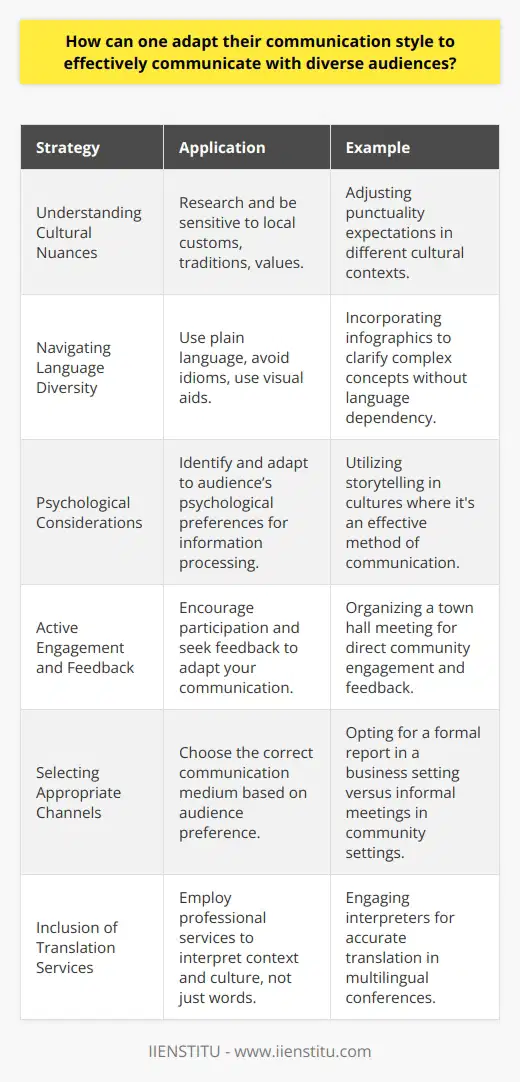
What does effective communication entail?
Effective Communication Components
Effective communication entails a combination of key elements that allow individuals to convey their thoughts, ideas, and emotions efficiently. These components include active listening, verbal and nonverbal cues, clarity, and cultural awareness.
Active Listening Skills
Active listening involves truly understanding and giving feedback to the speaker, thus demonstrating genuine interest. This skill ensures that the message is received, interpreted, and responded to accurately, minimizing misunderstandings and fostering meaningful connections.
Verbal and Nonverbal Cues
Verbal cues include the choice of words, tone, and volume, which impact the meaning and emotions conveyed. Nonverbal cues encompass body language, facial expressions, and gestures, which influence the interpretation of the message. An effective communicator should be mindful of both verbal and nonverbal cues, ensuring they align and support the intended message.
Clarity in Communication
The clarity of communication entails expressing thoughts and ideas concisely and understandably. By avoiding complex language, jargon, or ambiguous expressions, an effective communicator can prevent confusion and facilitate smooth interactions with others.
Cultural Awareness and Sensitivity
A vital aspect of effective communication involves being aware of cultural differences and adjusting communication styles accordingly to avoid misunderstandings or offense. By considering factors like power distance, communication preferences, and cultural norms, one can enhance the quality of their communication with diverse audiences.
In conclusion, effective communication involves a comprehensive understanding of multiple aspects, including active listening, verbal and nonverbal cues, clarity, and cultural sensitivity. By developing these skills, individuals can foster successful and meaningful relationships personally and professionally, bridging gaps caused by miscommunication.
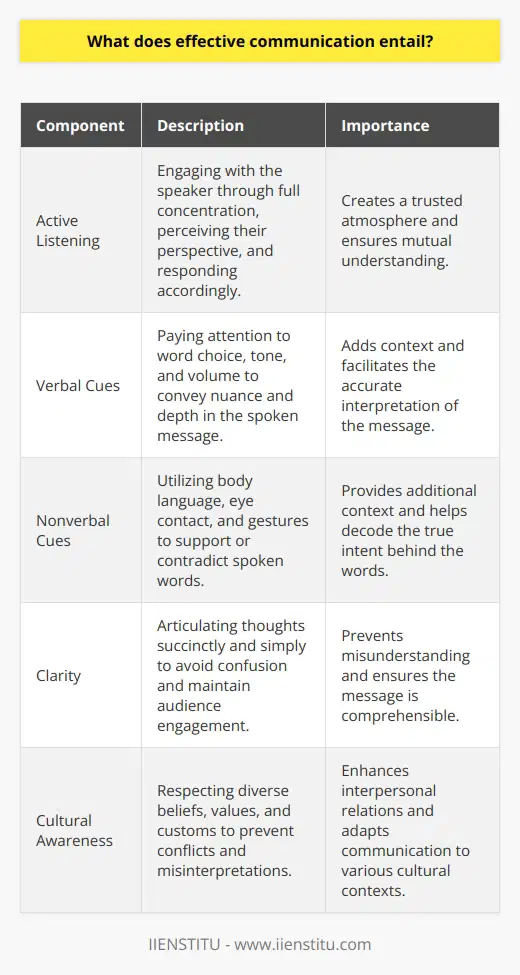
How can active listening contribute to better communication?
Active Listening Enhances Understanding
Active listening can significantly contribute to better communication by fostering a deeper understanding of the message being conveyed. When individuals engage in active listening, they devote their full attention to the speaker, not just the words being spoken, but also their tone, facial expressions, and body language. This enables them to grasp the underlying emotions and intentions behind the message, which may not be apparent through words alone.
Reducing Miscommunication
By practicing active listening, communicators can effectively minimize misinterpretations and misunderstandings that often arise from distractions or incomplete information processing. By clarifying points and asking questions, active listeners ensure that both parties reach a mutual understanding. Consequently, this reduces the need for costly and time-consuming repetitions or corrective actions resulting from unclear instructions or assumptions made in haste.
Building Stronger Relationships
Moreover, active listening helps establish trust and rapport with the speaker and demonstrates genuine interest and respect for their ideas and feelings. This, in turn, fosters a collaborative and supportive environment, enabling both parties to express themselves openly without fear of judgement or dismissal. As a result, communication becomes more effective and productive, leading to better decision-making and problem-solving capacities.
Enhancing Empathy
Furthermore, active listening stimulates empathy, as it requires individuals to place themselves in the speaker's perspective, allowing them to better understand their emotions, experiences, and needs. This empathetic understanding can encourage compassionate responses and actions, contributing to more harmonious and fruitful interactions between individuals.
Promoting Active Participation
Lastly, active listening encourages active participation in communication as it confirms that one's input is valued and understood. When individuals feel heard, they are more likely to contribute their thoughts, ideas, and opinions, leading to more robust discussions and richer collaborative efforts.
In conclusion, active listening plays a crucial role in improving communication by enhancing understanding, reducing miscommunication, building stronger relationships, fostering empathy, and promoting active participation. Implementing active listening strategies can lead to more effective and satisfying interactions, ultimately contributing to the success of personal and professional endeavors.
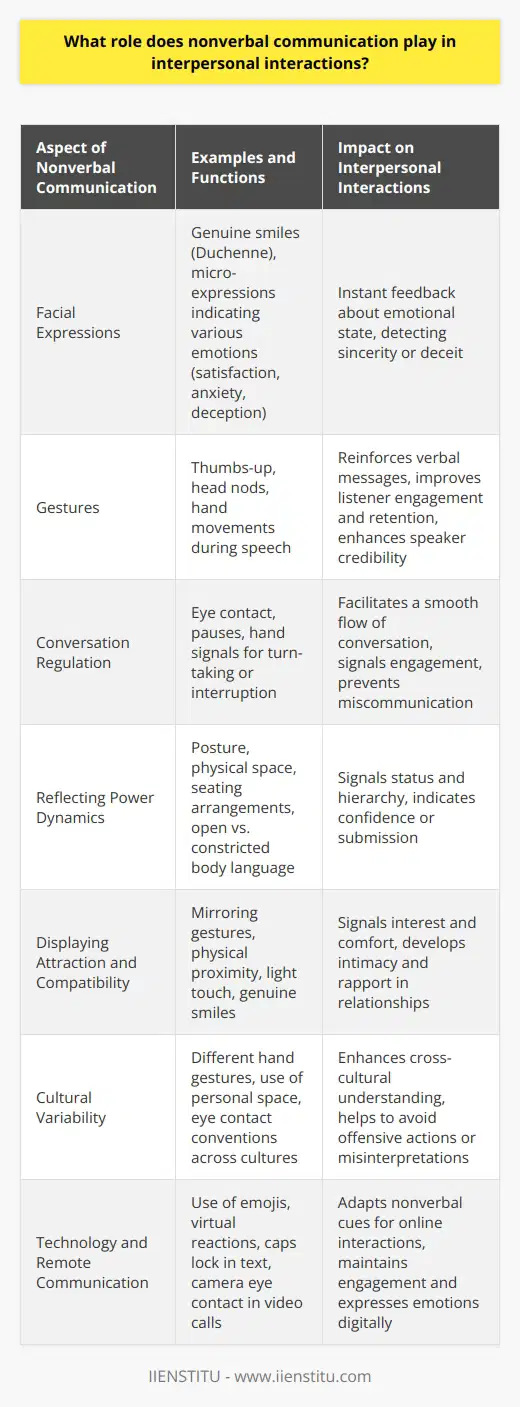
What role does nonverbal communication play in interpersonal interactions?
Role of Nonverbal Communication
In interpersonal interactions, nonverbal communication serves as a critical component that complements and extends the information conveyed through verbal communication. It encompasses various forms such as facial expressions, body posture, gestures, eye contact, and tone of voice, which facilitate the expression of emotions, attitudes, and intentions in social situations.
Expression of Emotions
Nonverbal cues are essential in expressing emotions, as they transmit feelings that are otherwise hard to verbalize. For instance, facial expressions can reveal genuine emotions such as happiness, sadness, anger, and surprise, which may not always be effectively communicated through words. This expression of emotions helps in building trust and empathy within interpersonal relationships.
Conveying Attitudes
Nonverbal signals play a significant role in conveying individual attitudes and opinions in a social context. Through gestures and body language, individuals can display their level of agreement or disagreement towards a particular topic or opinion. These nonverbal cues serve as an essential tool for obtaining feedback during conversations, enabling effective interpersonal communication.
Facilitating Intentions
Nonverbal communication also plays a key role in expressing one's intentions in social situations. For example, maintaining eye contact indicates interest and attentiveness during a conversation, while looking away may signal disinterest or disagreement. Similarly, proxemics, or the use of personal space, can convey feelings of intimacy or assertiveness, depending on the level of closeness between individuals.
Cultural Context
It is important to recognize that the significance and interpretation of nonverbal cues may be culturally specific. Hand gestures, for example, may have different meanings across various cultures, and therefore, understanding cultural context is crucial to avoid misunderstandings and misinterpretations during interpersonal interactions. This cultural awareness is vital in fostering effective communication in an increasingly globalized world.
In conclusion, nonverbal communication is an indispensable aspect of interpersonal interactions, as it plays a crucial role in expressing emotions, conveying attitudes, and facilitating intentions. By understanding and effectively utilizing nonverbal cues, individuals can enhance the quality of their interpersonal communication, fostering stronger relationships and better understanding in diverse social contexts.
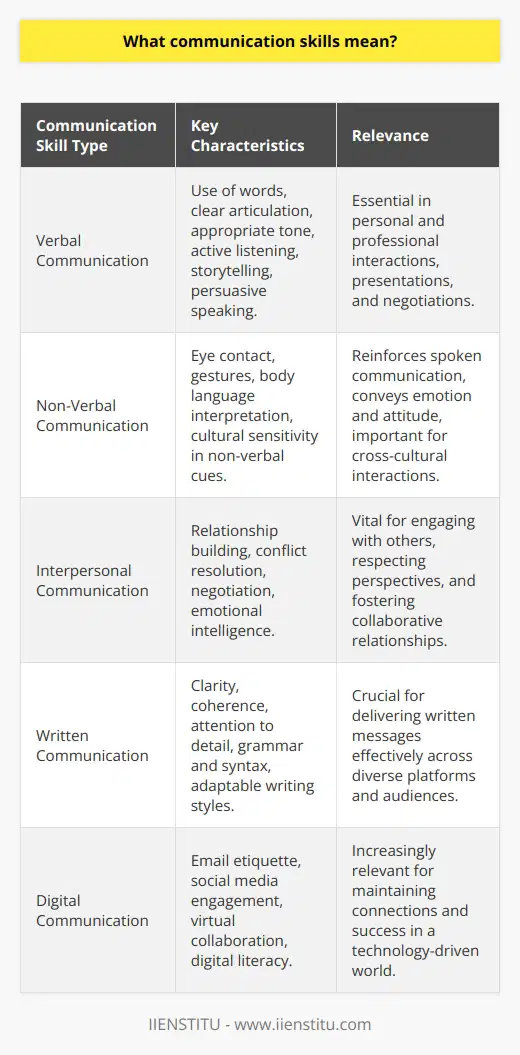
What communication skills mean?
Understanding Communication Skills
Communication skills encompass the abilities and proficiency in various aspects of transmitting information, thoughts, and ideas. These skills play a vital role in human interaction, as they serve as the foundation for conveying and decoding messages in diverse situations and contexts. In today's highly interconnected world, both effective verbal and non-verbal communication techniques are crucial for personal and professional successes.
Verbal Communication Skills
Verbal communication is the spoken or written transmission of messages using language. This form of communication is vital in expressing ideas, fostering relationships, and providing instruction. It includes elements such as vocabulary, clarity, tone, and listening skills. Active listening, in particular, is an essential skill to develop, as it enables empathetic understanding, facilitates productive discussions, and builds rapport.
Non-Verbal Communication Skills
Non-verbal communication covers all aspects of message transmission that do not rely on words, including body language, facial expressions, gestures, and eye contact. These cues can enhance or hinder the effectiveness of the verbal component, as they can convey emotions or convey contradicting signals. Mastery of non-verbal communication skills is crucial, as it can facilitate cooperation, convey sincerity, and foster positive outcomes in various social and professional interactions.
Interpersonal Communication Skills
Interpersonal communication focuses on the exchange of messages between two or more individuals. Developing strong interpersonal communication skills is vital since it influences the quality of relationships, personal well-being, and professional success. Skills such as empathy, assertiveness, and adaptability are integral to managing social dynamics effectively, navigating conflicts, and fostering trust.
Written Communication Skills
In the digital age, written communication skills are more important than ever before. With the widespread usage of electronic devices, individuals are frequently engaged in various written exchanges, including emails, social media posts, reports, and articles. Clear and concise writing, proper grammar, appropriate vocabulary, and logical organization of ideas are essential elements for conveying information accurately and effectively in written communication.
In conclusion, communication skills are indispensable tools for personal and professional development. By cultivating effective verbal, non-verbal, interpersonal, and written communication techniques, individuals can foster relationships, navigate diverse contexts, and achieve success across various domains of life.
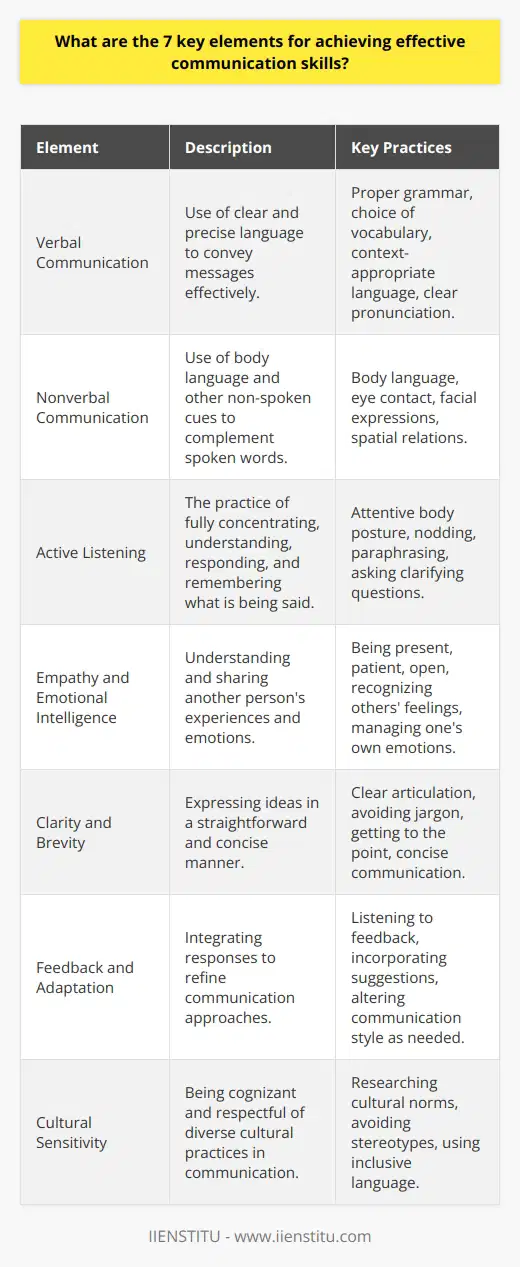
What are the 7 key elements for achieving effective communication skills?
Introduction
Effective communication is essential for success in personal and professional life. Achieving effective communication skills involves mastering seven key elements.
Verbal Communication
Verbal communication involves choosing the right words, producing clear speech, and using an appropriate tone of voice. This ensures that the message is accurately conveyed and easily understood by the recipient.
Nonverbal Communication
Nonverbal communication comprises facial expressions, gestures, body language, and eye contact. These elements help convey emotions and attitudes that support or contradict the verbal message, influencing the listener's perception.
Active Listening
Active listening requires giving full attention to the speaker, hearing and understanding their message, and providing feedback or asking clarifying questions. This helps to prevent misunderstandings and shows respect for the speaker's perspective.
Empathy and Emotional Intelligence
Empathy and emotional intelligence enable individuals to identify and understand the feelings and emotions of others. Demonstrating empathy fosters strong relationships, facilitates conflict resolution, and fosters a supportive environment for communication.
Clarity and Brevity
Clarity and brevity involve expressing thoughts and ideas in a concise, straightforward manner. This reduces the chances of misinterpretation and keeps the listener engaged.
Feedback and Adaptation
Effective communicators continuously seek feedback from others, enabling them to adapt their communication style and message as needed. This helps ensure that their messages are well-received and easy to understand.
Cultural Sensitivity
Cultural sensitivity involves understanding diverse cultural backgrounds and considering the impact of cultural differences on communication. This fosters inclusivity and encourages open and respectful dialogue.
Conclusion
Mastering these seven key elements enables individuals to communicate effectively, strengthening relationships, enhancing collaboration, and contributing to personal and professional success.
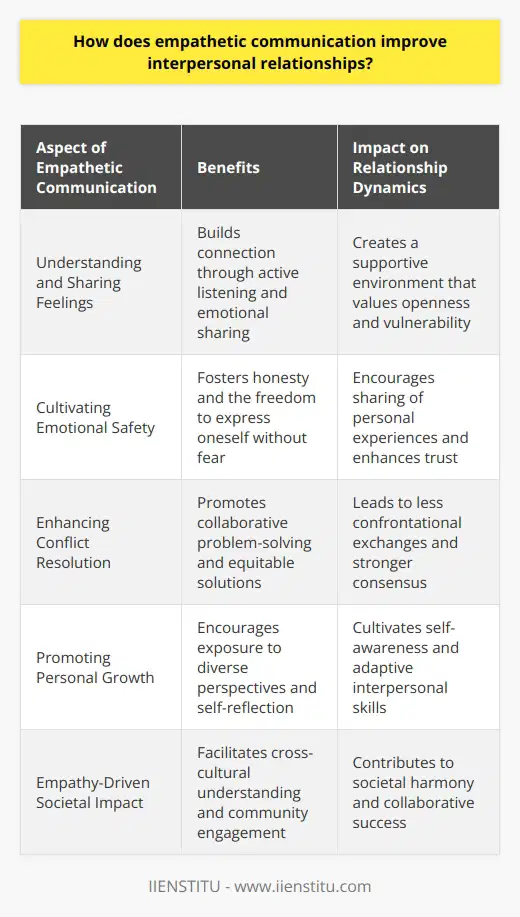
How does empathetic communication improve interpersonal relationships?
Empathy in Communication
Empathetic communication is key to establishing and maintaining healthy interpersonal relationships. By actively practicing empathy, individuals demonstrate understanding, compassion, and support towards others, fostering positive connections.
Emotional Understanding
Exercising empathy allows one to see the world from another person's perspective, enabling an emotional understanding of their experiences. By genuinely appreciating others' emotions, we cultivate emotional intelligence, which enhances our empathetic communication skills. This awareness facilitates open, honest discussions, mitigating misunderstandings and promoting conflict resolution.
Deepening Connections
Empathetic communication fosters stronger personal bonds, enhancing the ability to build rapport with others. Such connections contribute to the development of teamwork and collaboration, as individuals feel valued and acknowledged. This leads to boosted self-esteem and confidence among members of the relationship, further solidifying interpersonal connections.
Trust Building
When individuals engage in empathetic communication, it shows sincerity and commitment to the relationship. This transparency promotes trust, essential in establishing and maintaining healthy interpersonal relationships. Trust enables open sharing of feelings, thoughts, and concerns, providing a solid foundation for deep, meaningful connections.
Reducing Stress
Empathy also plays a crucial role in reducing stress within interpersonal relationships. By creating an environment of emotional support and understanding, empathetic communication acts as a buffer against stressors. This, in turn, reduces negative emotions and contributes to the overall well-being of all parties involved.
Increasing Cooperation
When people feel understood and valued through empathetic communication, they become more willing to cooperate and collaborate. This heightened sense of camaraderie is vital in strengthening interpersonal relationships by creating a team spirit and fostering a sense of belonging.
In conclusion, empathetic communication significantly improves interpersonal relationships by deepening emotional understanding, fostering trust, enhancing emotional intelligence, and promoting cooperation. Implementing this approach helps reduce stress and creates a supportive environment, essential to sustaining meaningful connections.
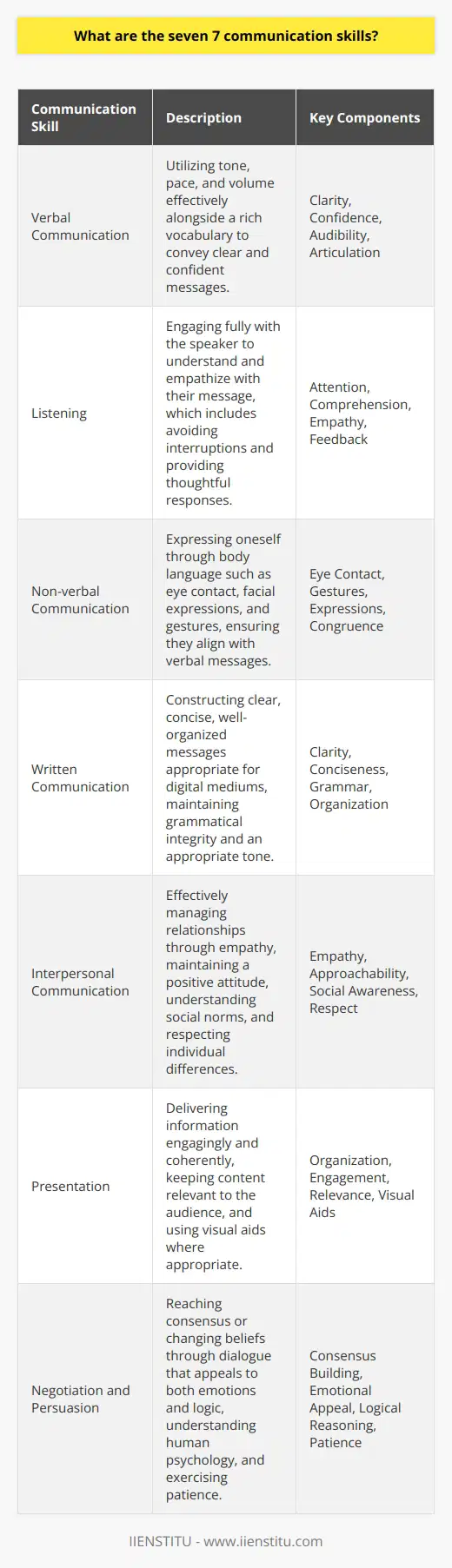
What are the seven 7 communication skills?
Verbal Communication Skills
Verbal skills are vital for transmitting thoughts, ideas, and feelings. A well-developed vocabulary ensures clarity during communication.
Listening Skills
Excellent communication necessitates active listening, allowing one to interpret the speaker's intent and respond adequately.
Non-verbal Communication Skills
Non-verbal communication involves eye contact, facial expressions, and body gestures. These signals can often speak louder than words.
Written Communication Skills
Clear and concise written communication avoids confusion and misunderstanding. This involves articulation of ideas through emails, reports, and memos.
Interpersonal Communication Skills
Interpersonal skills refer to the ability to interact with others effectively. They are essential for fostering relationships in personal and professional settings.
Presentation Skills
Being able to present information in a clear, confident, and engaging manner is crucial. Presentation skills involve planning, preparation, practice and excellent delivery.
Negotiation and Persuasion Skills
Negotiation and persuasion skills are necessary to reach successful resolutions and influence others' perspectives. They involve tact, diplomacy, and emotional intelligence.
In summary, the seven communication skills shape our ability to interact with others. The emphasis should always be on clear, concise, and effective communication no matter the method or context. These skills can be enhanced through practice, self-awareness, and feedback.
What are communication skills and examples?
Communication Skills Overview
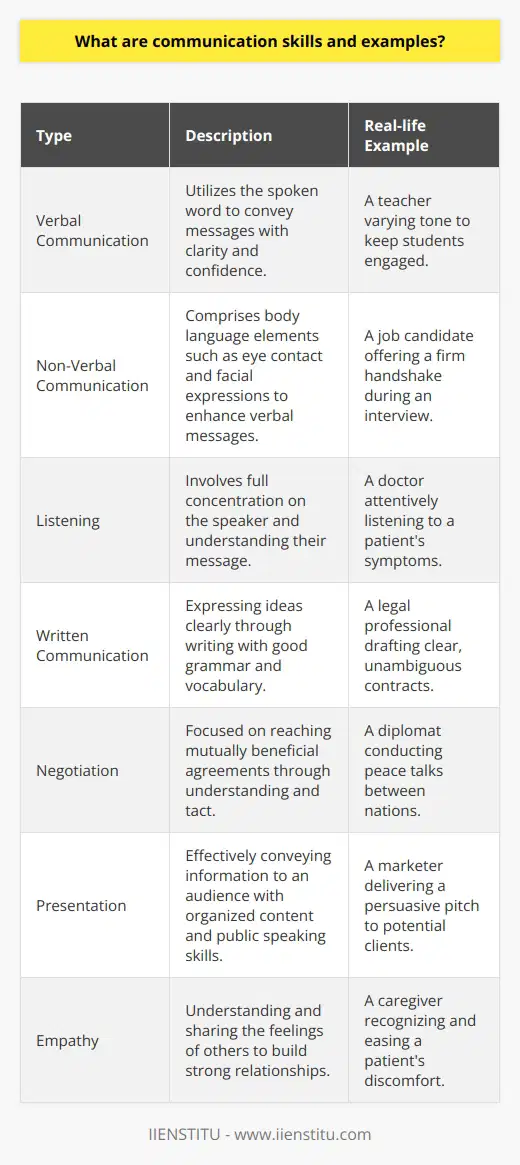
Communication skills refer to one's ability to convey information effectively and clearly. These skills involve speaking, listening, observing and empathizing. It is vital to serve both professional and personal areas of life.
Verbal Skills
Verbal communication includes speaking concisely, clearly, confidently, and respectfully. For instance, a boss explaining a new project to his or her team demonstrates this skill. Here, sureness and lucidity in speech are crucial.
Non-Verbal Skills
Non-verbal skills focus on body language, facial expressions, silence and hand gestures. For example, a speaker maintaining eye contact during a presentation showcases non-verbal communication skills.
Listening Skills
Listening skills involve not only hearing but understanding and evaluating spoken information. This can be seen in a therapy session where the counselor will use active listening to gain a full understanding of the client's issues.
Written Skills
Written communication skills mean crafting clear and comprehensive messages or documents. An example is an office email that is concise, well-structured and error-free.
Negotiation Skills
Negotiation calls for diplomacy, problem-solving skills and understanding of the counterparts' perspective. Practiced in business deals or dispute resolution, negotiation is a vital communication skill.
Presentation Skills
Presentation skills involve articulating ideas or information to a group. A lecturer delivering a insightful lecture in an engaging manner exhibits effective presentation skills.
Empathy
It involves understanding and sharing the feelings of others. This skill can be seen in a supportive friend lending an empathetic ear to a distressed peer.
Overall, communication skills are essential in all aspects of life. They foster relationships, facilitate understanding and nurture professional growth. Training and practice can enhance these skills, leading to more competent and effective communication.
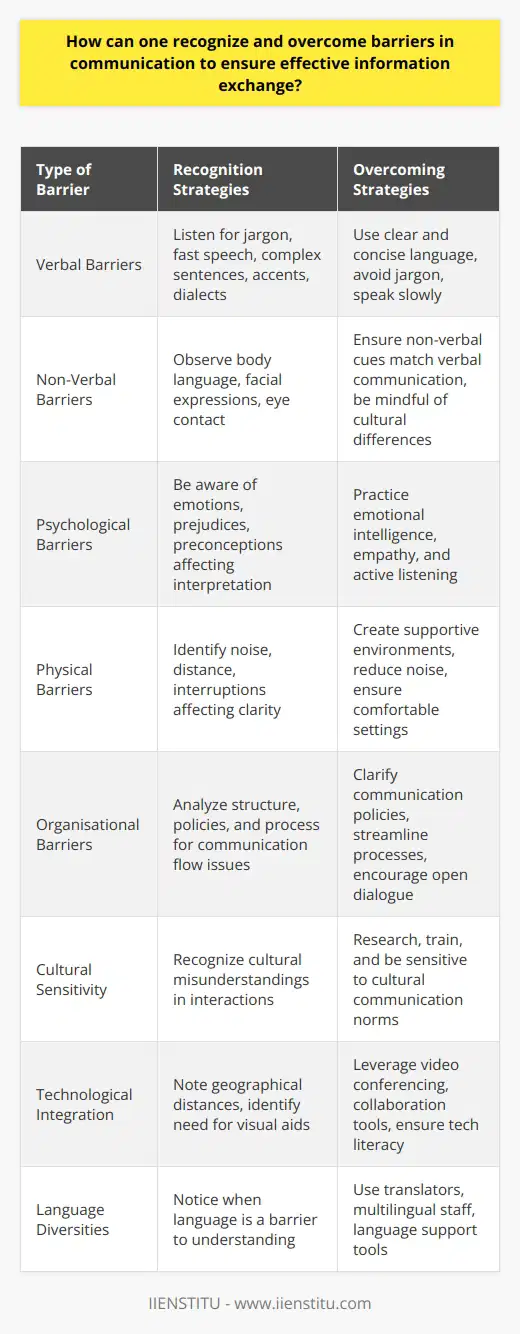
How can one recognize and overcome barriers in communication to ensure effective information exchange?
Identification of Communication Barriers
To identify communication barriers effectively, individuals should consider both verbal and non-verbal cues. Misunderstandings often arise from poor listening skills, lack of clarity, language differences, and cultural variances. Furthermore, one must factor in psychological and physical barriers such as stress, health, and personal biases. Recognizing these areas is the first step to overcoming the challenges posed.
Eliminating Verbal and Non-Verbal Barriers
Develop listening skills for more accurate assimilation of verbal messages. Clarifying doubtful areas and summarizing information can increase understanding. When dealing with language differences, consider utilizing translation tools or services. Ensure the use of universal non-verbal cues to minimize misunderstandings across cultures.
Confronting Psychological and Physical Blocks
Psychologically, individuals must create a conscious effort to keep an open mind disregarding personal biases or stereotypes. Stress management tactics and health maintenance can effectively deal with physical barriers, as poor health or stress may lead to reduced concentration, affecting communication negatively.
Utilization of Technologies
Technology can help streamline and overcome communication barriers. Instant messaging and video conferencing software, for instance, may provide real-time communication across different geographical locations. Furthermore, the use of technology may eliminate language barriers through automatic translation capabilities.
Final Thoughts
Overcoming communication barriers is a continuous process requiring consistent effort. By identifying possible barriers, honing in on verbal and non-verbal cues, confronting psychological and physical blocks and leveraging technology, one can improve the effectiveness of information exchange significantly. It is important to keep refining these skills and strategies to ensure a vibrant and effective communication environment.