
The business world is constantly changing. From my own experience, I've learned that to succeed today, you need to be adaptable and committed to continuous learning. As an HR professional, I've seen firsthand how vital our role is in this dynamic environment. HR isn't just about recruiting or managing employee relations; it's about shaping an organization's culture, supporting employee growth, and driving the strategies that lead to success.
Throughout my career, I've encountered various challenges and opportunities that have reinforced the importance of ongoing professional development. Staying current, keeping up with industry trends, and continuously enhancing our skills aren't just things we do to check a box—they are essential for moving forward in our careers and making a meaningful impact on our organizations.
The Evolving Role of HR
Over the years, I've seen the role of HR evolve significantly. What started as a focus on payroll and employee relations has expanded into a strategic role that requires managing a diverse workforce, fostering a culture that can adapt to change, and providing valuable insights that help steer the organization in the right direction. I've had to familiarize myself with new concepts and practices, like integrating technology into HR functions, prioritizing employee wellness, and promoting inclusivity in the workplace.
The shift to remote work, for example, was a huge adjustment. Managing teams that aren't physically present required me to think creatively about maintaining engagement, accurately assessing performance, and keeping the company culture alive. I remember how focusing on employee wellness became more critical than ever before and how diversity and inclusion initiatives became significant as we realized that a diverse team could bring richer perspectives and solutions.
I recall working with a global technology firm that quickly had to adapt to remote work. We implemented digital collaboration tools, launched virtual wellness programs, and conducted inclusion training for all employees. The results were precise—higher employee engagement and better teamwork. This experience showed me just how crucial it is to have an HR strategy that can adapt to the changing landscape.
The Importance of Ongoing Professional Development in HR
In my experience, professional development is not just an option—it's necessary for anyone in HR. Staying informed about legal and ethical standards is critical to protecting our organizations from risks. Understanding labor laws, workplace ethics, and data protection regulations has been a crucial part of my job, and it needs constant attention as these areas evolve.
The talent market is incredibly competitive, and refining recruitment and retention strategies are crucial. I've had to learn how to identify top talent better and develop ways to keep them engaged, which has been essential in reducing turnover and building solid teams. Strong communication and interpersonal skills have also been invaluable, especially when navigating conflicts, negotiating, and supporting employees.
Most Searched Keyword For Employee Benefits Package Overview
Long Tail Keyword: Hr Vendor Management Strategies For Optimal Efficiency
I've also seen how continuous learning directly impacts career progression. Colleagues who invest in their professional growth tend to move up faster and take on more strategic roles. This not only improves their career prospects but also enhances the overall performance of their HR departments, contributing to the success of their organizations.
Professional Development Strategies for HR Professionals
There are many ways to approach professional development in HR. Over the years, I've found that attending specialized training and workshops tailored to specific HR skills has provided me with practical knowledge to apply directly to my work. Attending HR conferences and networking events has also been valuable, as it's allowed me to learn about the latest practices and connect with other professionals in the field.
Pursuing advanced degrees or certifications, like SHRM-CP or PHR, has significantly invested in my career. These credentials have boosted my credibility and opened up new opportunities for advancement. They reflect a deep commitment to the HR profession and signal to employers that you're serious about staying at the forefront of the industry.
In addition to formal education, I've found self-directed learning incredibly effective. Online courses, webinars, podcasts, and industry-specific books contributed to my professional development. These resources allow me to tailor my education to my specific needs and schedule, which has been particularly helpful when balancing work and personal life.
Overcoming Barriers to Professional Development
Of course, there are challenges when it comes to professional development. I've experienced difficulty finding time to learn new skills or the financial burden of paying for courses. However, I've learned to seek out microlearning opportunities—short, focused sessions that fit a busy schedule. I've also taken advantage of employer-sponsored training programs and free online resources whenever possible.
Convincing organizations to support professional development can sometimes take time and effort. In those cases, I've found that presenting clear evidence—such as case studies or data showing the return on investment—can help make the case. Demonstrating how professional development programs can improve performance and drive business outcomes often helps get the necessary support.
Conclusion
The HR field constantly changes, and staying committed to professional growth is essential. From my journey, dedicating yourself to continuous learning is the surest way to advance your career and make a lasting impact in your organization. By embracing the opportunities for professional development and overcoming the obstacles that come with it, HR professionals can strengthen their role as critical strategic partners within their organizations. So, take the leap—invest in your growth and enjoy the journey of learning and discovery at the heart of the HR profession.
15 Key Considerations for Success Before Launching Your Business - LIFE THEORY 46 Skyboy46. https://www.skyboy46.com/post/15-key-considerations-for-success-before-launching-your-business-life-theory-46
Frequently Asked Questions
What are the key skills and competences required for successful career advancement in HR?
Essential Skills for Career Advancement in HR
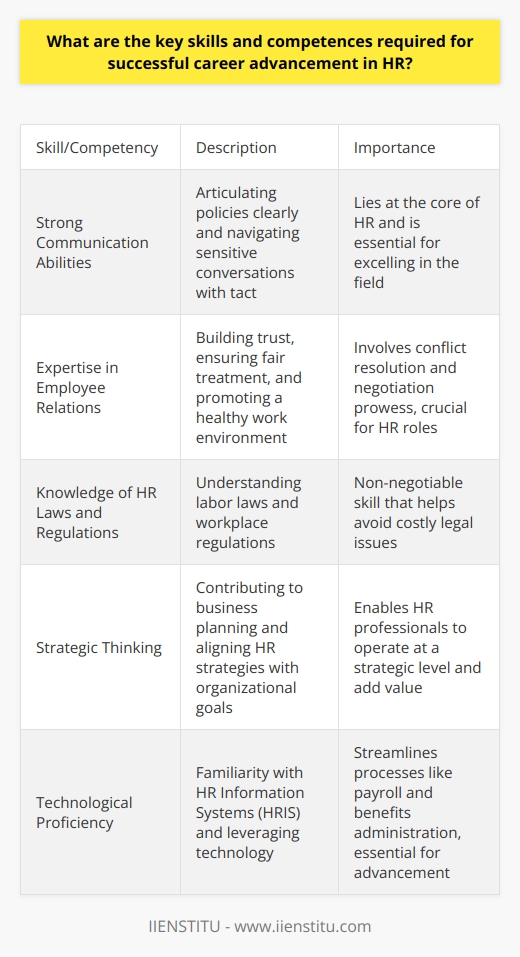
Advancing in human resources (HR) requires specific skills. Professionals must develop these to succeed. They comprise a blend of soft and hard competencies. Understanding these skills can aid career progression.
Strong Communication Abilities
Effective communication lies at HR's core. Professionals articulate policies clearly. They navigate sensitive conversations with tact. If you wish to excel, refine your communication skills.
Expertise in Employee Relations
Building trust is crucial in HR roles. Employee relations expertise helps. It ensures fair treatment. It promotes a healthy work environment. This skill involves conflict resolution and negotiation prowess.
Knowledge of HR Laws and Regulations
HR professionals must grasp legal guidelines. It includes knowledge of labor laws and workplace regulations. Mastery in these areas is non-negotiable. It helps to avoid costly legal issues.
Strategic Thinking
HR operates at a strategic level. Successful professionals contribute to business planning. They align HR strategies with organizational goals. Think strategically to add value.
Technological Proficiency
Technology underpins modern HR functions. Familiarity with HR Information Systems (HRIS) is beneficial. It streamlines processes like payroll and benefits administration. Be tech-savvy to advance.
Talent Management and Acquisition
Acquiring and retaining top talent is key. Knowing how to identify, attract, and keep talent matters. This skill set drives organizational success.
Leadership and Management Skills
Managing teams requires leadership qualities. HR professionals often lead initiatives. They influence culture change. Effective leaders inspire others. Assure your leadership skills are up to par.
Cultural Competency
A global workforce needs cultural awareness. HR must navigate cultural complexities. Competency in this area fosters inclusivity. It also drives engagement.
Data Analysis and Interpretation
Data informs HR decisions. Understanding metrics and analytics is important. It enables evidence-based decision making. If you can analyze data, you will thrive.
Change Management
Organizations constantly evolve. HR leads change management efforts. You must guide through transitions smoothly. Addressing employee concerns is a part of this.
Continuing Education and Learning Agility
The HR landscape changes fast. Professionals stay updated with continued learning. This commitment demonstrates learning agility. Always be willing to learn.
Developing these competencies can be a career game-changer. They make HR professionals invaluable. Aim to cultivate these skills for success in HR.
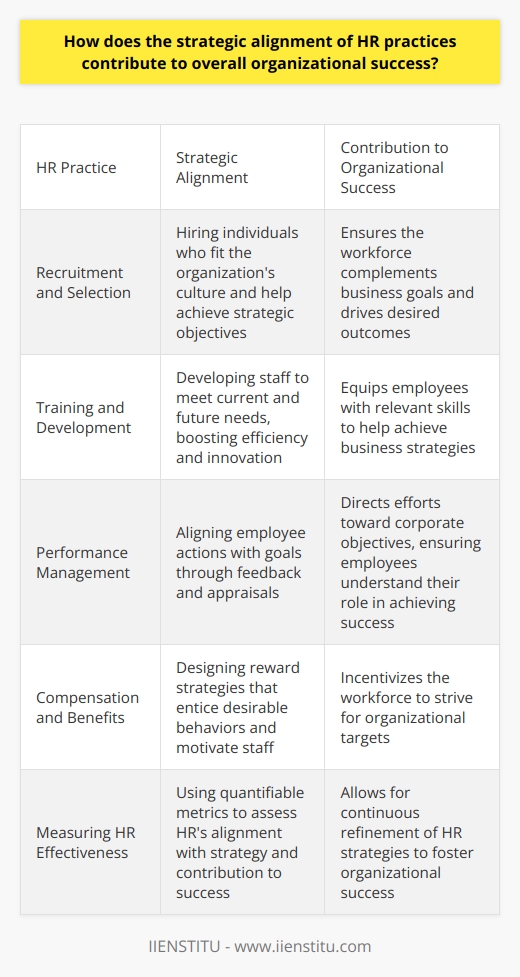
How does the strategic alignment of HR practices contribute to overall organizational success?
Strategic Alignment of HR Practices
Human resources (HR) strategies ensure corporate objectives are met. Strategies aligned with organizational goals enhance success. They provide a roadmap for HR activities. HR becomes a strategic partner, not just an administrative function.
Contributing to Organizational Goals
HR strategies drive business outcomes. Clear goals aid HR in contributing effectively. Practices tailored to organization needs foster this alignment. Let's discuss how strategic HR enhances success.
- Recruitment and Selection
Aligned HR hires individuals who fit the organization's culture. These individuals help achieve strategic objectives. By focusing on strategic needs, HR ensures the workforce complements business goals.
- Training and Development
HR must develop staff to meet current and future needs. Effective training programs boost efficiency and innovation. Employees gain relevant skills to help achieve business strategies.
- Performance Management
Systematic performance management aligns employee actions with goals. Feedback and appraisals direct efforts toward corporate objectives. Employees understand their role in achieving success.
- Compensation and Benefits
Reward strategies entice desirable behaviors. Pay structures aligned with business goals motivate staff. An incentivized workforce strives for organizational targets.
- Labor Relations
Positive labor relations are crucial for success. HR policies fostering good relations reduce conflicts. A peaceful work environment supports stable operations.
- Compliance and Risk Management
Adherence to laws and regulations is fundamental. HR minimizes legal risks by ensuring compliance. This protects the organization from potential lawsuits and fines.
Empowering Employees and Fostering Innovation
Employee empowerment incites engagement. Engaged employees display high productivity. They possess a strong connection to their work and their company. Innovation flourishes in such an environment.
Innovation is key for competitive advantage. HR can cultivate a culture of innovation. Training programs encouraging creativity play a role here. HR practices that respect and reward innovative contributions make a difference.
Engagement and innovation lead to higher performance. Thus, strategic HR alignment aids in retaining a competitive edge.
Ensuring Adaptability and Sustainability
Organizations must adapt to survive. HR practices responsive to change secure this adaptability. Training for new skills prepares for market shifts. Succession planning ensures leadership continuity.
Sustainability of the workforce is a modern HR focus. Strategies for employee well-being and career development are vital. A sustainable workforce is productive over time.
Measuring HR Effectiveness
Quantifiable metrics indicate HR's alignment with strategy. These metrics measure HR's contribution to success. Examples include turnover rates, employee satisfaction, and training ROI.
Analyzing metrics allows for strategy refinement. HR thus continuously contributes to organizational success.
Conclusion
Strategic alignment of HR practices is vital for success. Recruitment, training, and engagement are key components. A comprehensive approach ensures a competitive and sustainable workforce. This strategic partnership between HR and the organization fosters success.
How does understanding the broader business landscape influence the role and impact of an HR professional in organisational growth and development?
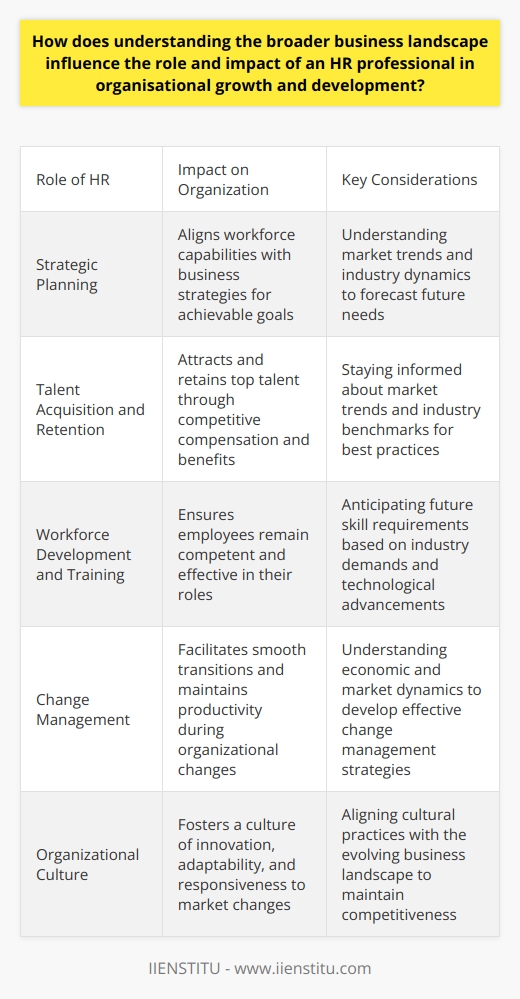
Understanding the broader business landscape is imperative for HR professionals. It helps them align their strategies with organizational goals and respond effectively to changes in the market. When HR professionals grasp the whole business picture, they contribute significantly to organizational growth and development.
The Role of HR in Business Strategy
HR professionals shape the workforce to meet business objectives. They identify skills necessary for future success. These professionals ensure that the right people fill the right roles at the right time. Understanding the market equips HR with knowledge to forecast staffing needs. They thus become strategic partners in the business.
Talent Acquisition and Retention
A savvy HR professional knows market trends affect talent acquisition. They use industry insights to attract and retain top talent. Competitive compensation and benefits stem from this knowledge. A solid grasp of the broader economic environment informs these decisions. Employees feel valued. They tend to stay longer.
Workforce Development and Training
Training and development align with industry demands. HR professionals foresee the skills employees will need. They craft training programs accordingly. Workers stay competent and effective. Career progression structures stem from such understanding. They help in retaining high-performing staff.
Change Management
Organizations constantly face change. HR plays a key role in managing this change. Knowledge of economic and market dynamics informs change management strategies. HR ensures staff understand and accept changes. They alleviate fears and resistance. This eases transitions and maintains productivity.
Organizational Culture
HR shapes and maintains organizational culture. Knowledge of business landscapes guides these practices. HR fosters a culture responsive to market changes. They build cultures of innovation and adaptability. Employees feel prepared for shifts in the business environment.
Impact on Organizational Growth and Development
Strategic Planning
HR contributes to strategic planning. They provide insights on workforce capabilities. This helps in crafting achievable business strategies.
Risk Management
Risk management is crucial for business continuity. HR identifies risks from shifts in the workforce. They plan for labour shortages or regulatory changes. This preparation reduces potential negative impacts on the organization.
Competitive Advantage
HR can establish a competitive advantage. They benchmark company practices against industry standards. This ensures the organization leads in best practices. Employees feel proud. They provide better service. The company stands out in the market.
Innovation
A well-informed HR department encourages innovation. They push for policies that support creativity. This stems from their understanding of market needs. Employees innovate. The organization stays ahead of competitors.
Conclusion
HR professionals impact organizational growth when they understand the business environment. They become strategic partners. They attract the best talent. They plan for future needs. HR shapes the workforce for optimal performance. This leads to organizational success. An informed HR department is a powerful tool in business development.