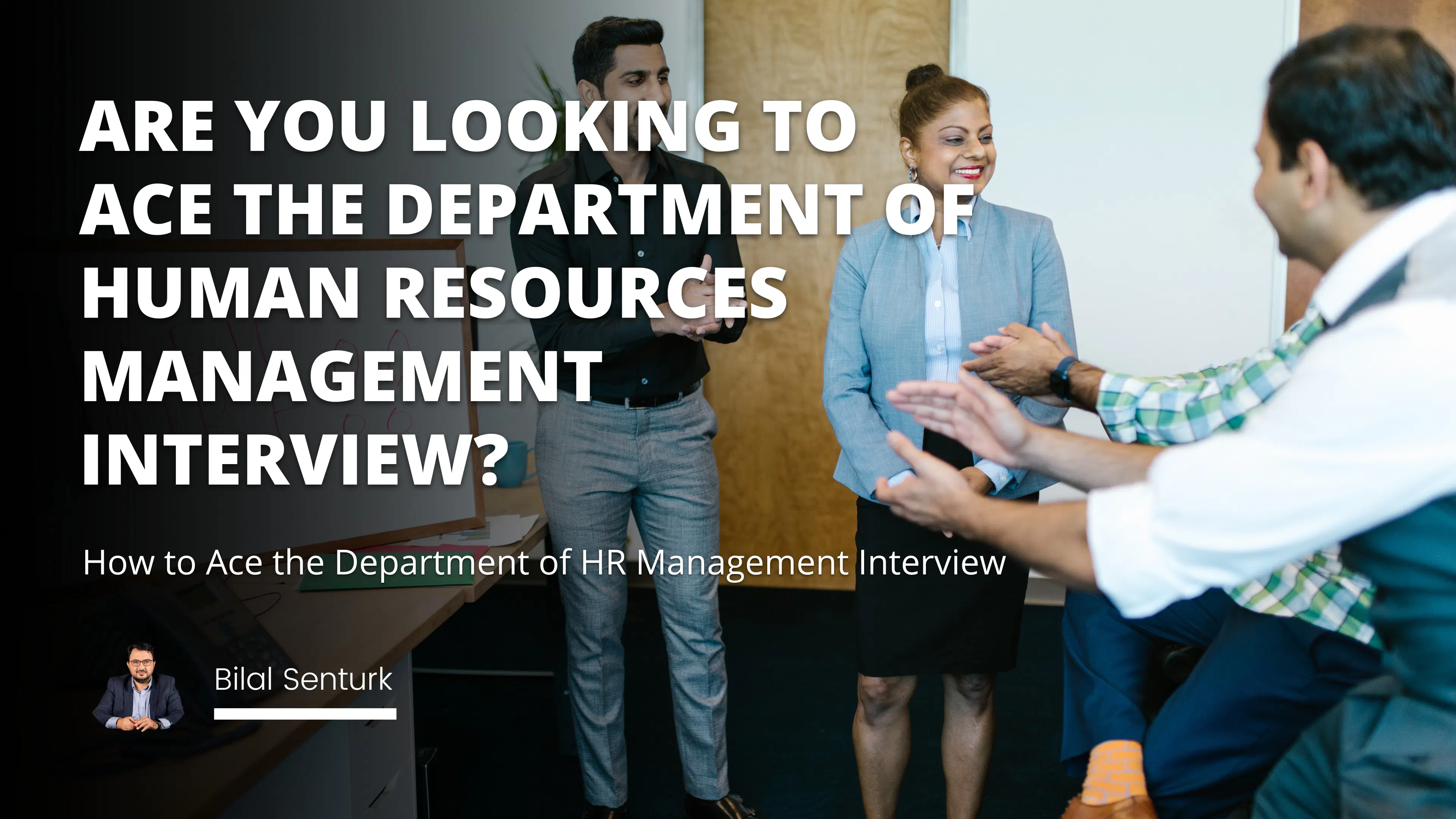
Are you looking for a new job in the human resources department? If so, you're likely wondering what kind of questions you'll be asked in the interview. In this post, we will provide an overview of the types of questions that are typically asked in a human resources management interview, as well as tips on how to answer them. Let's get started!
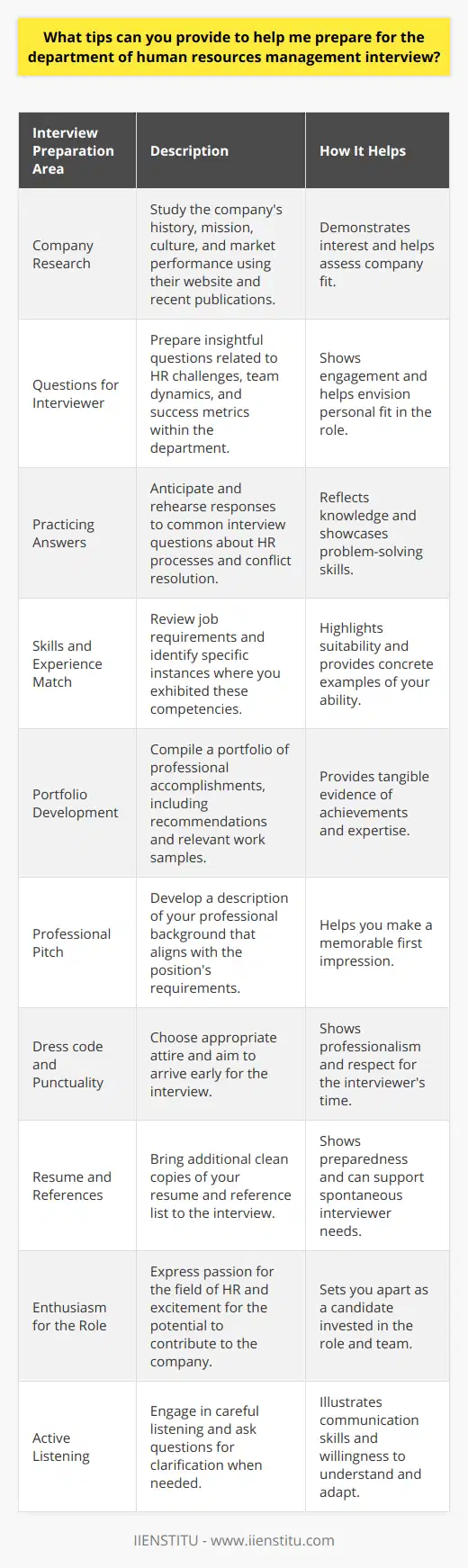
Research the company and understand their mission statement
Department of Human Resources Management is a research company that aims to help businesses improve their human resources management practices. The company was founded in 2001 by Dr. John W. Boudreau and Dr. Richard M. Hoffer, who are both experts in the field of human resources management.
Department of Human Resources Management offers a variety of research-based services to businesses, including consulting, training, and workshops. The company's mission is to "provide businesses with the tools and knowledge they need to manage their human resources effectively." Department of Human Resources Management has worked with a number of major companies, including Walmart and Coca-Cola.
In addition, the company has been featured in a number of publications, such as The Wall Street Journal and Forbes. Department of Human Resources Management is headquartered in Boston, Massachusetts.
Prepare a list of questions to ask during the interview
When seeking a position in the field of human resources management, it is important to be prepared with thoughtful questions to ask during the interview process. Doing so will demonstrate your interest in the role and company, and will help you gain a better understanding of whether or not the position is a good fit for you. Some Department of Human Resources Management may recommend asking about the company's policies on topics like vacation time, remote work, promotion opportunities, and continuing education.
Other questions could include inquiries about the team dynamic and what day-to-day responsibilities would look like in the role. Asking questions during an interview is also a chance to get a sense of the company culture and whether it aligns with your own values. By being prepared with thoughtful questions, you can make a great impression and gather valuable information during the interview process.
Dress for success and be on your best behavior
When interviewing for a position in the human resources department, it is important to dress for success and be on your best behavior. First impressions are crucial, and dressing appropriately will show that you take the interview seriously. Additionally, being polite and respectful will make a positive impression on your interviewer.
In order to ace the interview, it is important to research the company and understand their mission statement. Doing so will demonstrate your interest in the role and company, and will help you better understand what kind of answers will impress your interviewer. Additionally, preparing a list of thoughtful questions to ask during the interview process will show that you are serious about the role.
By dressing appropriately, being polite, and doing your research, you can make a great impression and set yourself up for success in the Department of Human Resources Management interview process.
Arrive on time and be respectful to everyone you meet
When interviewing for a position in the human resources department, it is important to arrive on time and be respectful to everyone you meet. First impressions are crucial, and arriving on time will show that you take the interview seriously. Additionally, being polite and respectful will make a positive impression on your interviewer.
In order to ace the interview, it is important to research the company and understand their mission statement. Doing so will demonstrate your interest in the role and company, and will help you better understand what kind of answers will impress your interviewer. Additionally, preparing a list of thoughtful questions to ask during the interview process will show that you are serious about the role.
By arriving on time, doing your research, and being respectful, you can make a great impression and set yourself up for success in the Department of Human Resources Management interview process.
Give specific examples of times when you have demonstrated the desired skills or qualities
Article on how to ace an interview for a position in the Department of Human Resources Management.
When interviewing for a position in the Department of Human Resources Management, it is important to come prepared. One of the best ways to do that is to be aware of the kinds of questions that will be asked and to have specific examples of times when you have demonstrated the desired skills or qualities.
The interviewer will likely want to know why you are interested in working in human resources and what qualities make you a good fit for the role. It is important to be able to talk about your skills and experience, as well as your motivations for wanting to pursue a career in human resources.
Being able to give specific examples of times when you have exhibited the desired skills or qualities will help you stand out from the other candidates. It is also important to be aware of the company's policies on topics like vacation time, remote work, promotion opportunities, and continuing education.
By doing your research and being prepared with thoughtful questions and specific examples, you can set yourself up for success in an interview for a position in the Department of Human Resources Management.
Thank the interviewer for their time and express your interest in the position
Thanking the interviewer for their time and expressing your interest in the position are two important steps in aceing an interview for a position in the Department of Human Resources Management. By thanking the interviewer for their time, you are showing that you appreciate their efforts and are taking the interview seriously. Additionally, expressing your interest in the position will show that you are a good fit for the role.
It is important to remember that the interviewer is trying to get to know you as well as you are trying to get to know them. As such, be sure to ask questions about the company and the role. This will help you better understand what kind of environment you would be working in and whether or not the role is a good fit for you.
By being polite, respectful, and prepared, you can make a great impression on your interviewer and set yourself up for success in the Department of Human Resources Management interview process.
If you're looking to ace your next interview for a position in the Department of Human Resources Management, make sure to come prepared. One of the best ways to do that is by being aware of the types of questions that will be asked and having specific examples of times when you have demonstrated the desired skills or qualities.
Additionally, doing your research on the company and preparing thoughtful questions to ask during the interview process will help you stand out from other candidates. Thanking the interviewer for their time and expressing your interest in the position are two important steps in making a great impression on your interviewer. By following these tips, you can set yourself up for success in securing your dream job!
The Department of Human Resources Management offers a course that can help you to understand the perspective of an HR professional. This course is designed to give you an overview of the functions of an HR department and the challenges that HR professionals face. You will learn about topics such as recruitment, training, and employee relations, and you will gain a better understanding of the role of HR in an organization.
The course is taught by experienced HR professionals, and you will have the opportunity to ask questions and get feedback from them. If you are interested in learning more about human resource management, this course is a great way to get started.
Related Course: Human Resources Course
Frequently Asked Questions
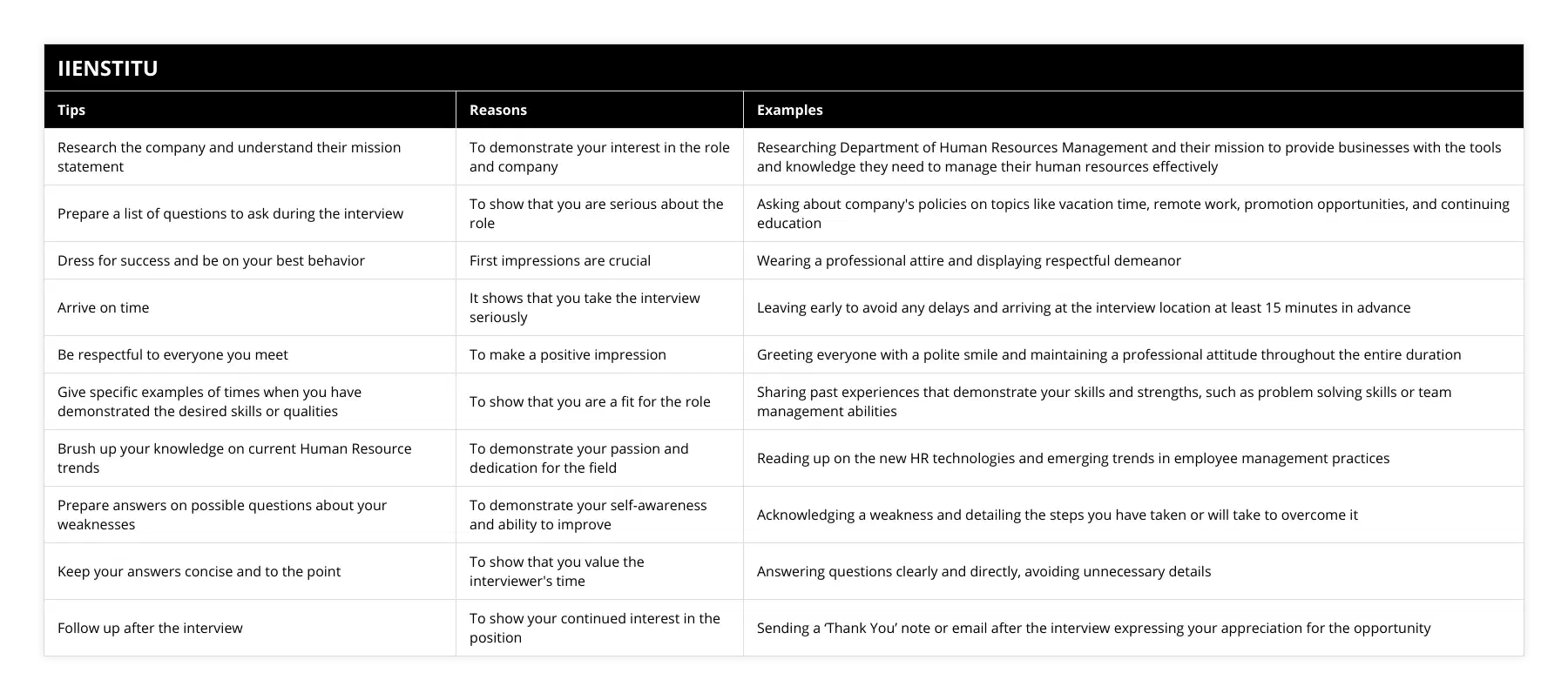
What qualities should I emphasize during the interview for the department of human resources management?
-Strong interpersonal skills
-Excellent communication skills
-The ability to be organized and pay attention to detail
-The ability to remain calm and professional under pressure
-Understanding of labor laws and regulations
-Strong problem-solving skills
-The ability to be flexible and adaptable to changing needs
-Proficiency in computer programs such as Microsoft Office
-Ability to multitask and work as part of a team
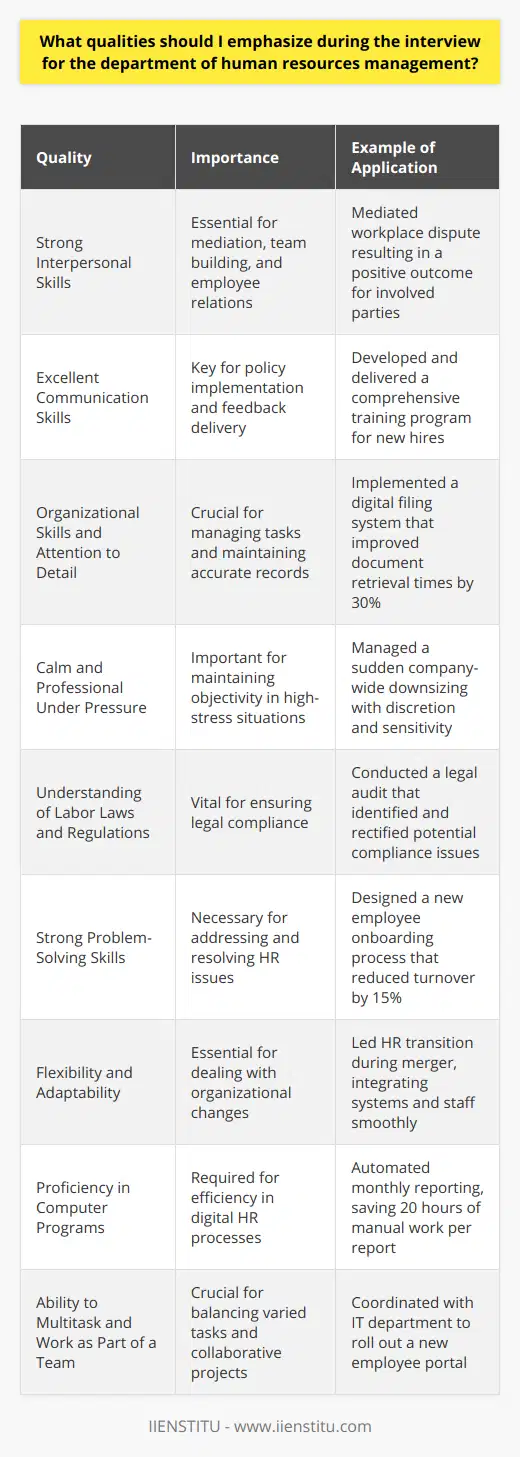
What type of questions should I expect to be asked during the department of human resources management interview?
Typical questions that may be asked during a human resources management interview include:
What experience do you have with personnel management?
How do you handle employee conflicts?
Describe a successful HR project you have completed.
What strategies do you use to motivate employees?
How do you ensure compliance with employment laws?
What challenges have you faced in HR management?
What techniques do you use to recruit and hire top talent?
How do you ensure that employees are properly trained?
What strategies do you use to foster a positive culture in the workplace?
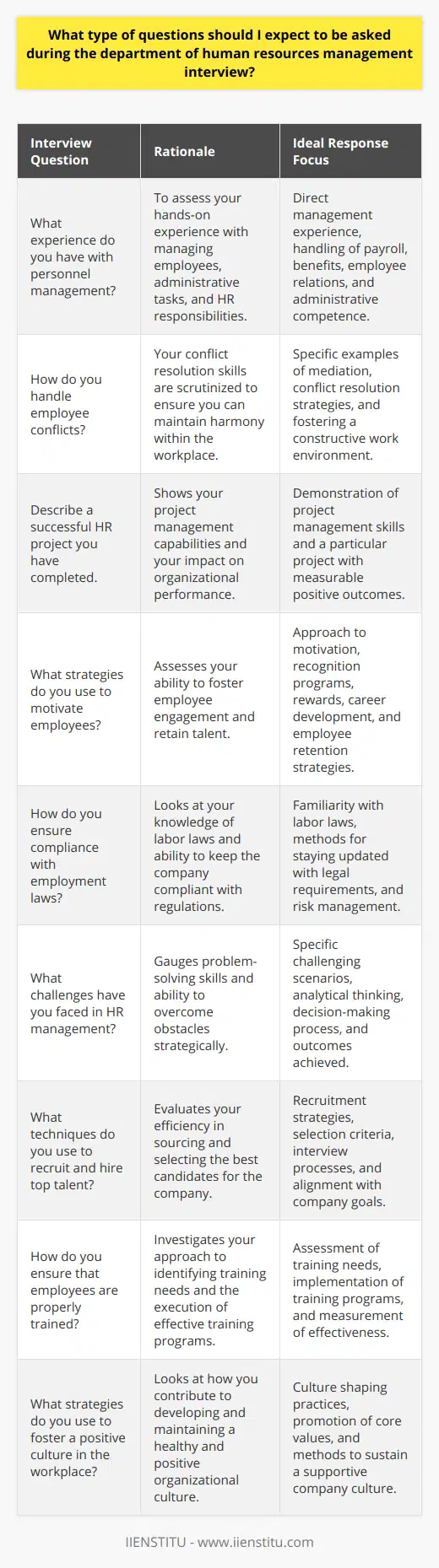
What tips can you provide to help me prepare for the department of human resources management interview?
Research the company's history and mission.
Prepare a list of questions to ask the interviewer.
Practice answers to common interview questions.
Consider the position requirements and your ability to fulfill them.
Prepare a portfolio of accomplishments and successes.
Rehearse your introduction and summarize your qualifications.
Dress professionally and arrive early.
Bring extra copies of your resume and references.
Demonstrate enthusiasm and interest in the position.
Listen carefully and ask clarifying questions to show your understanding.
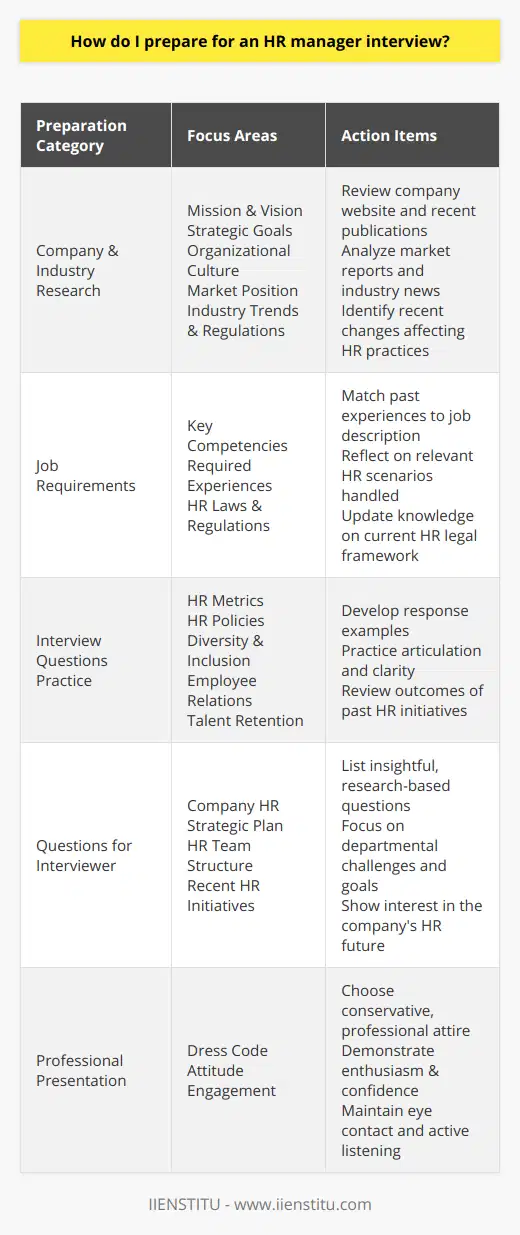
How do I prepare for an HR manager interview?
Subheading: Research the Company and Industry
To prepare for an HR manager interview, start by conducting thorough research on the company and its industry. Familiarize yourself with the organization's culture, values, and goals to demonstrate a deep understanding of its needs and expectations. Reviewing the company's social media channels, press releases, and annual reports can provide valuable insights in this regard. Furthermore, learn about the industry's key trends, challenges, and opportunities to effectively address any related questions during the interview.
Subheading: Understand the Job Requirements
Next, study the job description carefully to identify the most important skills, experiences, and qualities sought by the employer. By understanding the core requirements, one can tailor their responses to showcase relevant skills and achievements. Prepare to give specific examples that demonstrate these skills and abilities, as this allows the interviewer to envision one's potential success in the role. It is also essential to be familiar with HR laws, regulations, and best practices to showcase one's expertise in the field.
Subheading: Practice Common HR Interview Questions
Preparing for an HR manager interview requires practicing answers to common HR-related interview questions, including both behavioral and technical queries. Anticipate questions on organizational culture, employee relations, conflict resolution, talent acquisition, and employee development, among others. In addition, prepare for inquiries about previous HR experiences, how one has added value to a company, and how one stays current with HR trends and industry changes. Practice answering these questions concisely and confidently, incorporating real-life examples to illustrate points whenever possible.
Subheading: Prepare Questions for the Interviewer
An interview is a two-way conversation, so it is important to prepare thoughtful questions for the interviewer as well. By asking questions about the company's HR challenges, team dynamics, or strategic objectives, one can demonstrate genuine interest in the role and the company. Additionally, inquire about advancement opportunities and training programs, as this can help in gauging the organization's commitment to professional development.
Subheading: Dress Professionally and Maintain a Positive Attitude
Lastly, ensure to dress professionally in business attire for the interview, as this creates a favorable first impression. Make a conscious effort to maintain a positive attitude throughout the interview, exhibiting enthusiasm for the role and the company. Be punctual, courteous and maintain eye contact to demonstrate confidence and professionalism. By combining thorough preparation and a winning demeanor, one stands a strong chance of succeeding in an HR manager interview.
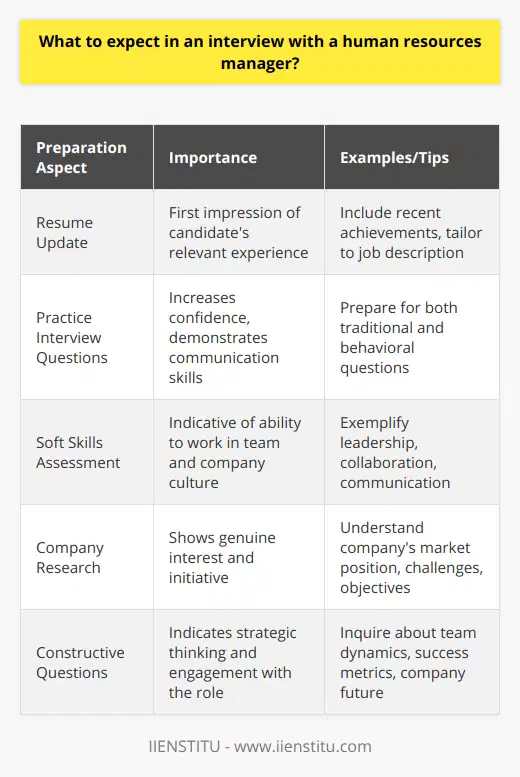
What to expect in an interview with a human resources manager?
Preparing for the Interview
Before attending an interview with a human resources manager, it is vital to understand their role in the hiring process. HR managers are responsible for identifying qualified candidates for job openings and ensuring that these employees will be a good fit for the company culture. By understanding their priorities and responsibilities, candidates can best prepare for such an interview.
Common Interview Questions
Candidates can expect questions about their experience, skills, and career goals. These questions are designed to gather information about the candidate from a human resources perspective. Some common interview questions may include: 'What skill sets do you possess that will contribute to our company's success?' and 'Where do you see yourself in five years?'
Assessing Cultural Fit
During the interview, the HR manager will likely attempt to assess the candidate's cultural fit within the organization. This evaluation may involve hypothetical scenarios or behavioral-based questions to determine how a candidate would react in specific situations. Examples may include: 'Describe a time when you dealt with conflict in the workplace,' and 'How do you handle tight deadlines or high-pressure environments?'
Highlighting Soft Skills
HR managers often prioritize soft skills, such as communication, teamwork, and adaptability when selecting candidates. To showcase these skills during the interview, candidates should provide examples of past experiences where they demonstrated their ability to work effectively with others, adapt to new situations, or communicate effectively in both verbal and written forms.
Demonstrating Research and Interest in the Company
Another significant aspect of an HR interview is demonstrating knowledge about the company and enthusiasm for the role. Candidates should research the organization's values, products, and overall culture to convey genuine interest and show that they would make a positive addition to the team.
Asking Questions
Finally, it is essential for candidates to ask questions during the interview to engage with the HR manager and further demonstrate their interest in the company. By inquiring about specifics such as company culture, expectations for the role, or opportunities for growth, candidates can solidify their positions as strong contenders for the position.
In conclusion, a candidate should prepare for an HR interview by understanding the manager's priorities, expecting common questions, emphasizing soft skills, demonstrating company knowledge, and asking thoughtful questions. By doing so, they will be better equipped to make a positive impression and increase their chances of success in securing the desired position.
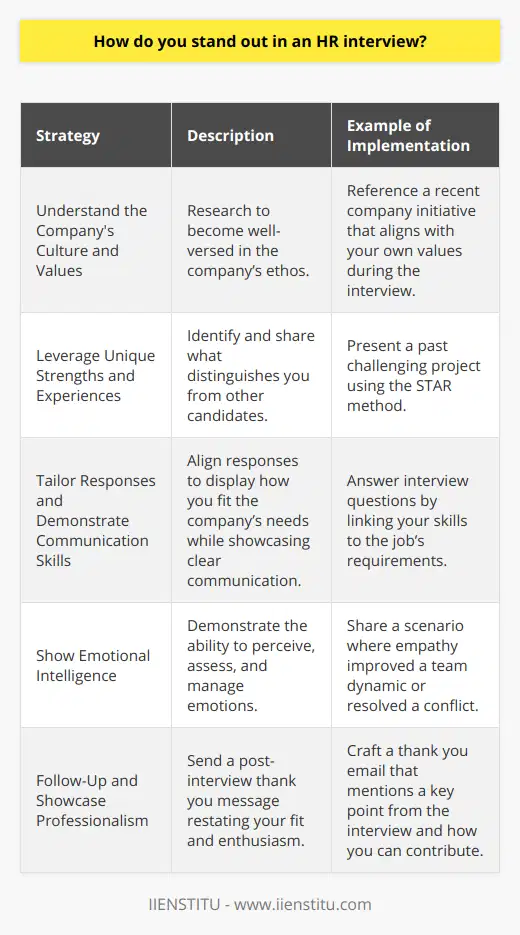
How do you stand out in an HR interview?
Understanding the Company's Culture and Values
One way to stand out in an HR interview is to demonstrate a comprehensive understanding of the company’s culture and values. This entails researching the organization, pinpointing its mission and vision, and aligning your personal goals and beliefs with the company's overall objectives. By showcasing your ability to resonate with the company's core tenets, you can create a positive impression on the HR interviewer.
Leveraging Unique Strengths and Experiences
In an HR interview, highlighting your unique strengths and experiences that set you apart from other candidates can give you an edge. This requires self-reflection and an honest assessment of your personal and professional achievements. Consider showcasing instances where you have demonstrated leadership, teamwork, or innovative solutions to challenges. Providing specific examples will enable the interviewer to see your value and potential to contribute to the company.
Tailoring Responses and Demonstrating Communication Skills
Proper communication is essential in establishing an effective working relationship with the HR interviewer. To stand out, tailor your responses to the specific questions asked, while emphasizing your ability to fit the position and organizational culture. Speak confidently, engage with the interviewer by maintaining eye contact, and convey enthusiasm and passion for the role. Additionally, active listening and posing relevant questions about the company and the position can demonstrate your genuine interest in the opportunity.
Showing Emotional Intelligence
Emotional intelligence is increasingly valued in today's workplace, and highlighting your competency in this area can give you a competitive edge in an HR interview. Discuss how you have successfully navigated challenging interpersonal situations, such as conflict resolution, providing feedback, or working in diverse teams. Demonstrating empathy, self-awareness, and adaptability will make a favorable impression on the HR interviewer.
Following-Up and Showcasing Professionalism
Lastly, standing out in an HR interview is not limited to the actual interaction, but extends beyond the meeting. Following up with a thoughtful email or a handwritten note to express gratitude for the opportunity and reinforce your interest in the position can leave a lasting positive impression on the interviewer. This demonstrates professionalism and serves as an excellent reminder of your candidacy.
In conclusion, standing out in an HR interview requires a combination of research, self-awareness, strong communication skills, and professionalism. By understanding the company and its culture, showcasing your unique strengths and experiences, and fostering strong interpersonal connections, you can leave a lasting impression on the interviewer and significantly increase your chances of success in obtaining the desired position.