

1. Home
  2. Blog
  3. Achieving Management Excellence: Essential Skills for Success

Achieving Management Excellence: Essential Skills for Success

Dr. Murray CraigDr. Murray Craig
March 16, 2023
Updated: March 20, 2024
4 min read
Achieving Management Excellence: Essential Skills for Success
Loading...

Management excellence and managerial excellence are often used interchangeably to describe the pinnacle of leadership and organizational success. This blog post will explore the essential skills needed to achieve management excellence and provide a roadmap for aspiring managers to cultivate these skills. Through a combination of theoretical understanding and practical application, leaders can excel in their roles and foster success for their teams and organizations.

Related Course: Online Leadership Course

Emotional Intelligence: The Foundation of Management Excellence

A. Understanding Emotions: Self-awareness and Empathy

Management excellence requires a deep understanding of one's emotions, strengths, and weaknesses. Self-awareness enables managers to recognize their impact on others and adapt their behavior accordingly. Simultaneously, empathy allows them to understand and respond to the emotions of their team members, fostering trust and collaboration.

B. Emotional Regulation: Managing Stress and Conflict

The ability to regulate emotions is vital for maintaining composure during high-pressure situations. Effective managers can manage stress and address conflicts with confidence, ensuring that their teams remain focused and productive.

Communication: The Art of Effective Dialogue

A. Active Listening: The Key to Strong Relationships

Active listening is a critical skill for fostering open communication and building strong relationships with team members. By genuinely understanding and acknowledging others' perspectives, managers can address concerns and provide effective guidance.

B. Articulating Ideas: Clarity and Persuasion

A crucial aspect of managerial excellence is the ability to articulate ideas with clarity and persuasion. This skill enables managers to convey their vision, goals, and expectations effectively, inspiring and motivating their teams to achieve success.

Decision-making: Navigating Complex Scenarios

A. Critical Thinking: Analyzing Information and Assessing Options

Critical thinking is essential for managers to analyze information and assess various options when faced with complex scenarios. By systematically evaluating potential outcomes, leaders can make informed decisions that align with organizational objectives.

B. Decisiveness: Balancing Speed and Accuracy

Decisiveness is a vital skill for managerial excellence, as it allows managers to make timely decisions with confidence. Striking the right balance between speed and accuracy is crucial to avoid costly delays or missteps.

Delegation: Empowering and Trusting Your Team

A. Identifying Strengths: Capitalizing on Individual Expertise

Effective delegation starts with identifying the strengths and expertise of individual team members. By assigning tasks that align with these strengths, managers can ensure optimal productivity and success.

B. Monitoring Progress: Providing Support and Accountability

While delegation involves entrusting tasks to others, it does not mean relinquishing responsibility. Managers must monitor progress and provide support as needed, fostering a culture of accountability and continuous improvement.

Adaptability: Embracing Change and Uncertainty

A. Resilience: Overcoming Challenges and Learning from Mistakes

Management excellence requires resilience in the face of challenges and setbacks. By learning from mistakes and adapting their approach, managers can drive their teams forward and achieve long-term success.

B. Flexibility: Responding to Shifting Priorities and Demands

In a constantly evolving business landscape, adaptability is crucial. Managers must demonstrate flexibility, adjusting their strategies and priorities to respond to changing circumstances while keeping their teams focused and motivated.

Conclusion

Management excellence is not an innate ability but rather a collection of skills that can be developed and refined over time. By cultivating emotional intelligence, communication, decision-making, delegation, and adaptability, aspiring leaders can guide their teams to new heights of success. With dedication and continuous learning, anyone can achieve managerial excellence and drive their organization toward a brighter future.

Emotional Intelligence, Understanding Emotions, Managers able to understand their emotions and empathize with teammates foster trust and collaboration, Emotional Intelligence, Emotional Regulation, Managers with the ability to regulate emotions handle high-pressure situations well, leading to more focused, productive teams, Communication, Active Listening, Active listening builds strong relationships and facilitates open communication, paving the way for effective guidance and problem-solving, Communication, Articulating Ideas, Clear, persuasive articulation of ideas allows managers to convey goals effectively, inspiring and motivating their teams, Decision-making, Critical Thinking, Critical thinking enables managers to analyze complex scenarios and make informed decisions that align with organizational objectives, Decision-making, Decisiveness, Decisiveness lets managers make timely decisions, striking a balance between speed and accuracy to avoid delays or mistakes, Delegation, Identifying Strengths, Effective delegation based on individual strengths optimizes productivity and increases the likelihood of success, Delegation, Monitoring Progress, By monitoring progress, managers provide necessary support and foster a culture of accountability, leading to continuous improvement, Adaptability, Resilience, Resilient managers learn from mistakes and adapt, driving teams towards successful outcomes despite challenges, Adaptability, Flexibility, Flexible managers adjust strategies to shifting business landscapes while keeping teams focused and motivated

Frequently Asked Questions

What is the relationship between management excellence and organizational success?

Management excellence leads to more effective decision-making, communication, and collaboration, which in turn drives organizational success by fostering a high-performing and motivated workforce.

How can managers develop emotional intelligence?

Managers can develop emotional intelligence by practicing self-awareness, empathy, and emotional regulation through introspection, active listening, and seeking feedback from others.
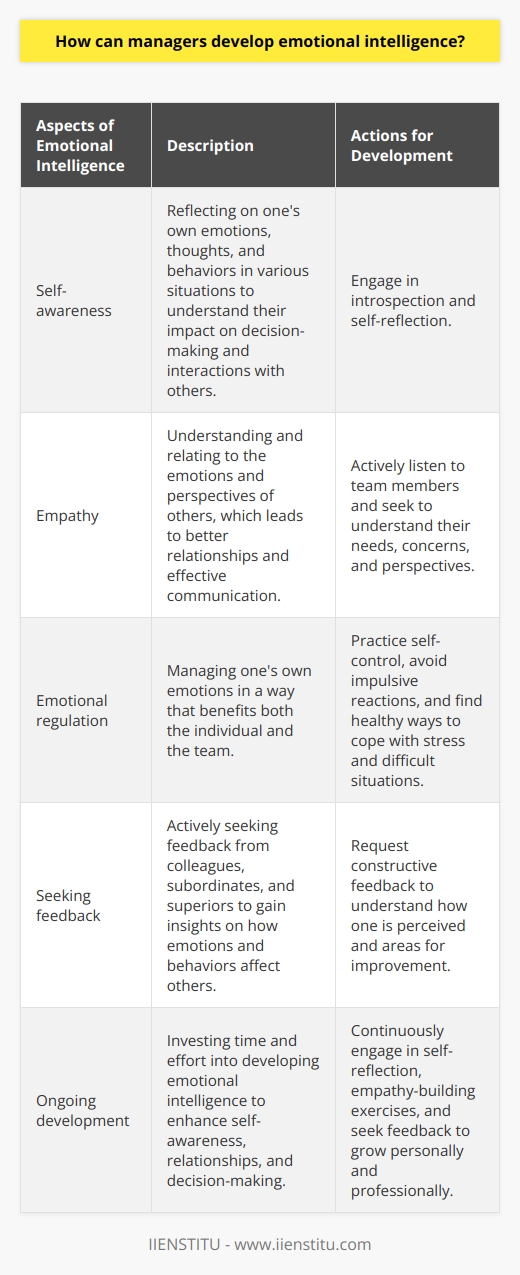
Self-awareness is the first step in developing emotional intelligence for managers. They should take the time to reflect on their own emotions, thoughts, and behaviors in different situations. This can be achieved through introspection and self-reflection. By understanding their own emotions, managers become more aware of how these emotions can impact their decision-making and interactions with others.Empathy is another important aspect of emotional intelligence that managers can develop. Understanding and being able to relate to the emotions and perspectives of others is crucial in developing strong relationships and effective communication. Managers can enhance their empathy by actively listening to their team members, seeking to understand their needs, concerns, and perspectives. This requires them to put themselves in the shoes of their employees and view situations from their perspectives.Emotional regulation is also key in developing emotional intelligence. Managers should strive to regulate their own emotions in a way that benefits themselves and their team. This involves recognizing and managing their own emotional triggers, emotions, and responses. Managers can achieve emotional regulation by practicing self-control, avoiding impulsive reactions, and finding healthy ways to cope with stress and difficult situations.Seeking feedback from others is another valuable tactic for managers to develop their emotional intelligence. Constructive feedback from colleagues, subordinates, and superiors can provide valuable insights into how their emotions and behaviors affect others. By actively seeking feedback, managers can gain a better understanding of how they are perceived by others and areas they can improve upon.In conclusion, managers can develop emotional intelligence by practicing self-awareness, empathy, emotional regulation, and seeking feedback from others. By investing time and effort into developing their emotional intelligence, managers can enhance their self-awareness, build stronger relationships, and make more informed decisions. Developing emotional intelligence is an ongoing process that can lead to improved personal and professional growth for managers.
How does adaptability contribute to management excellence?

Adaptability allows managers to navigate changing business landscapes, respond to shifting priorities, and remain resilient in the face of challenges, ensuring that they can guide their teams through uncertainty and maintain a focus on organizational objectives.
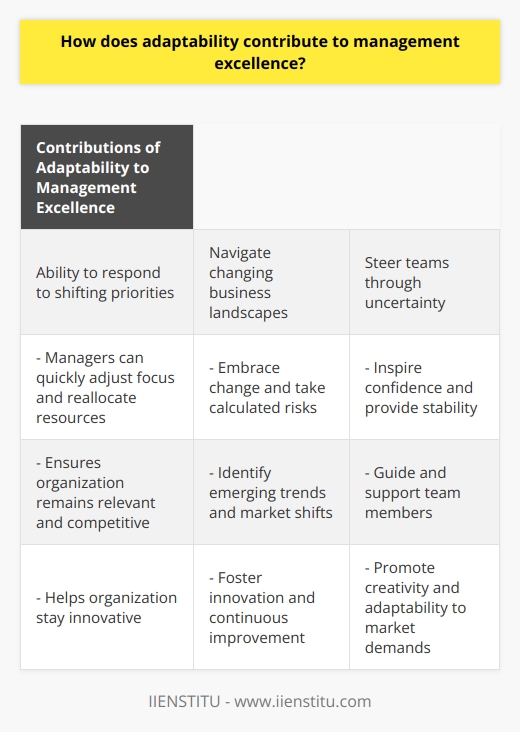

Adaptability plays a crucial role in achieving management excellence. In a rapidly changing business environment, managers need to be flexible and open-minded to effectively lead their teams and attain organizational objectives. By being adaptable, managers can navigate through various challenges and unexpected situations, staying ahead of the curve.One key aspect of adaptability is the ability to respond to shifting priorities. In the dynamic business world, priorities often change as new opportunities arise or external factors impact the company. Managers who are adaptable can quickly adjust their focus and reallocate resources to address these new priorities. This helps to ensure that the organization remains relevant and competitive in an ever-evolving market.The ability to navigate changing business landscapes is also crucial for management excellence. Adaptable managers are not afraid to embrace change and take calculated risks. They actively seek out new opportunities and innovation, incorporating them into their strategies and operations. By doing so, managers can keep their organizations one step ahead, identifying emerging trends and market shifts before they become widespread.Furthermore, adaptability enables managers to steer their teams through uncertainty. In times of crisis or during periods of significant change, employees may feel anxious or apprehensive. A skilled manager who can adapt their leadership style can inspire confidence and provide a sense of stability. They are able to communicate effectively, assuring their team members that they are there to guide and support them through challenging times.By being adaptable, managers can also foster a culture of innovation and learning within their organizations. They encourage their teams to embrace new ideas, challenge the status quo, and continuously improve. This mindset promotes creativity and helps the organization stay innovative, remaining relevant and adaptable to changing market demands.Ultimately, adaptability is a cornerstone of management excellence. It allows managers to effectively respond to shifting priorities, navigate changing business landscapes, guide their teams through uncertainty, and foster a culture of innovation. Embracing adaptability is crucial for organizations to thrive in a rapidly evolving and competitive business environment.

Related Articles

Organizational Goals: Effective Business Strategies

Organizational Goals: Effective Business Strategies

March 16, 2023
Fundamentals Of Management: Pathway to Organizational Success

Fundamentals Of Management: Pathway to Organizational Success

March 16, 2023
Leadership Styles: Exploring Approaches for Effective Management

Leadership Styles: Exploring Approaches for Effective Management

March 16, 2023
IIENSTITU LogoIIENSTITU

Professional online education platform to advance your career

Course CategoriesBlog CategoriesCorporate TrainingSupportUnsubscribePoliciesCertificate VerificationContactAbout InstitutePrivacy and Security PolicyDistance Sales ContractCancellation and Return TermsMembership Agreement
Follow Us:
figin

© 2012–2025 IIENSTITU - All rights reserved

IIENSTITU
IIENSTITU
CoursesInstructorsCertificateBlog
IIENSTITU
Login
Download CSV
Table with 10 rows and 3 columns
Emotional IntelligenceUnderstanding EmotionsManagers able to understand their emotions and empathize with teammates foster trust and collaboration.
Emotional IntelligenceEmotional RegulationManagers with the ability to regulate emotions handle high-pressure situations well, leading to more focused, productive teams.
CommunicationActive ListeningActive listening builds strong relationships and facilitates open communication, paving the way for effective guidance and problem-solving.
CommunicationArticulating IdeasClear, persuasive articulation of ideas allows managers to convey goals effectively, inspiring and motivating their teams.
Decision-makingCritical ThinkingCritical thinking enables managers to analyze complex scenarios and make informed decisions that align with organizational objectives.
Decision-makingDecisivenessDecisiveness lets managers make timely decisions, striking a balance between speed and accuracy to avoid delays or mistakes.
DelegationIdentifying StrengthsEffective delegation based on individual strengths optimizes productivity and increases the likelihood of success.
DelegationMonitoring ProgressBy monitoring progress, managers provide necessary support and foster a culture of accountability, leading to continuous improvement.
AdaptabilityResilienceResilient managers learn from mistakes and adapt, driving teams towards successful outcomes despite challenges.
AdaptabilityFlexibilityFlexible managers adjust strategies to shifting business landscapes while keeping teams focused and motivated.
Skill AreaEmotional Intelligence
Key AspectUnderstanding Emotions
Implication for Management ExcellenceManagers able to understand their emotions and empathize with teammates foster trust and collaboration.
Skill AreaEmotional Intelligence
Key AspectEmotional Regulation
Implication for Management ExcellenceManagers with the ability to regulate emotions handle high-pressure situations well, leading to more focused, productive teams.
Skill AreaCommunication
Key AspectActive Listening
Implication for Management ExcellenceActive listening builds strong relationships and facilitates open communication, paving the way for effective guidance and problem-solving.
Skill AreaCommunication
Key AspectArticulating Ideas
Implication for Management ExcellenceClear, persuasive articulation of ideas allows managers to convey goals effectively, inspiring and motivating their teams.
Skill AreaDecision-making
Key AspectCritical Thinking
Implication for Management ExcellenceCritical thinking enables managers to analyze complex scenarios and make informed decisions that align with organizational objectives.
Skill AreaDecision-making
Key AspectDecisiveness
Implication for Management ExcellenceDecisiveness lets managers make timely decisions, striking a balance between speed and accuracy to avoid delays or mistakes.
Skill AreaDelegation
Key AspectIdentifying Strengths
Implication for Management ExcellenceEffective delegation based on individual strengths optimizes productivity and increases the likelihood of success.
Skill AreaDelegation
Key AspectMonitoring Progress
Implication for Management ExcellenceBy monitoring progress, managers provide necessary support and foster a culture of accountability, leading to continuous improvement.
Skill AreaAdaptability
Key AspectResilience
Implication for Management ExcellenceResilient managers learn from mistakes and adapt, driving teams towards successful outcomes despite challenges.
Skill AreaAdaptability
Key AspectFlexibility
Implication for Management ExcellenceFlexible managers adjust strategies to shifting business landscapes while keeping teams focused and motivated.